Always consult a manufacturer SDS. Read our Full Liability Disclaimer
Complex Mixture (Hydrocarbons)
Hazard Level & Hazards:
When we create or update chemical disposal entries, our H-code hazard list is generous. We list hazards that may be just below regular cutoffs and would otherwise normally be unlisted. We do this to provide hobbyists a wider scope of safety risks that may still be relevant, despite normally being omitted. Our GHS icons, however, are congruent with typical legal labeling requirements of the respective chemical.
Low
- H304: May be fatal if swallowed and enters airways
- H317: May cause an allergic skin reaction
- H350: May cause cancer
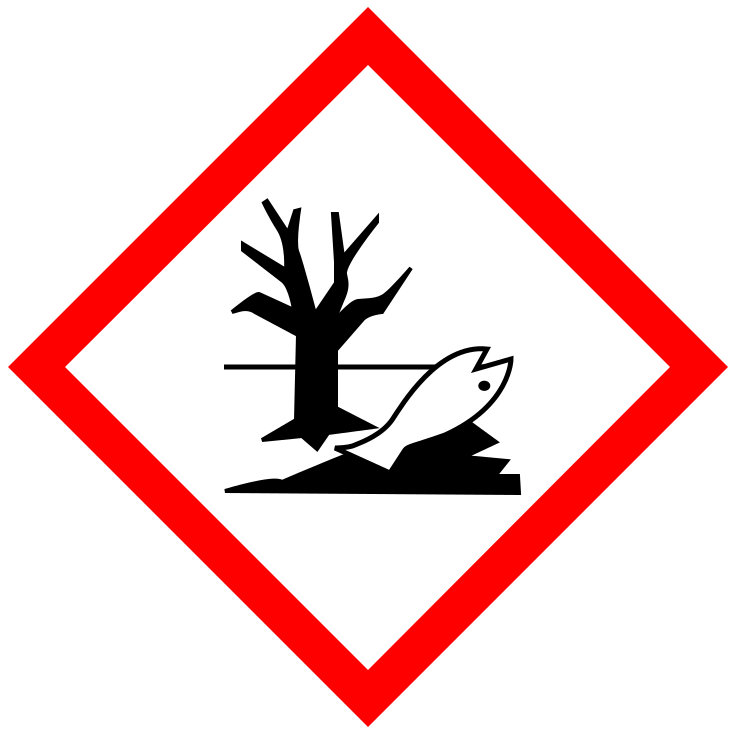
- H411: Toxic to aquatic life with long lasting effects

Disposal Method
Never pour down a drain or on the ground. This is illegal in nearly all jurisdictions. Drain the oil into a pan and transfer it to a clean, sealable, plastic container (like the one the new oil came in). Do not mix with antifreeze, paint, or solvents, this makes it unrecyclable. Many auto parts stores like Autozone, Advanced Auto, or service centers accept used oil for free recycling.
Neutralizing Agent
None. For spills, use oil-absorbent granules or kitty litter.
Storage Precautions
Store in a tightly sealed, leak-proof container. Keep the container in a cool place away from heat sources or open flames. Keep out of reach of children and pets.
Ideal Storage Container
HDPE. Review our chemical storage container guide for more information about container types and materials.
Other Names
Used Engine Oil, Waste Oil, Crankcase Oil
Additional Tips
- The Halogen Cross-Contamination Trap: Never mix used oil with chlorinated solvents (like methylene chloride or chloroform). Even a small amount (above 1,000 ppm) triggers strict hazardous waste regulations. This makes the oil nearly impossible for standard centers to recycle. More dangerously, if you attempt to burn off the oil later, these halogens can form dioxins and furans.
- The Sediment Heavy Metal Gradient: If you store used oil in a large container, heavy metals (Lead, Cadmium, Antimony) and carbon soot will settle at the bottom over months. If you are decanting the top layer for a project (like oil-tempering metal or a custom oil bath), beware that the sludge at the bottom has a toxic concentration many times higher than the top layer. Never agitate the container before use if you want the cleanest fraction.
- Sulfuric Acid Sludge Reaction: Old-school oil re-refining sometimes involves adding concentrated sulfuric acid to precipitate impurities. However, for the hobbyist, this is high-risk. Used oil contains additives and wear metals that can catalyze a rapid, exothermic sulfonation reaction. This can lead to a boil-over of hot, acidic oil and the release of SO₂ gas. Unless you have a precise temperature-controlled setup and scrubbing, avoid acid-treating used oil.
Incompatible Chemicals / Dangerous Combinations
- Liquid Oxygen / Oxidizers Detonation – Hydrocarbons and liquid oxygen are a classic LoX/Fuel explosive. Even contact with solid chlorates/nitrates can make the oil friction sensitive.
- Nitric Acid (HNO₃) Runaway/Fire – Nitric acid will vigorously oxidize the hydrocarbons and additives, producing heat and dense, toxic red NOₓ clouds. It can also form unstable nitrated organics
- Pool Chlorine (Hypochlorites) Toxic Gas / Flash Fire – Mixing oil with Calcium Hypochlorite can cause a rapid exothermic reaction. The heat can vaporize the oil into a flammable mist while releasing toxic chlorine gas.
- Brake Fluid (Glycol-Ethers) Recycling Sabotage – Not immediately explosive, but brake fluid is a “chemical poison” to oil recycling. It prevents the separation of water and oil during processing, often turning the batch into an unrecyclable emulsion
- Gasoline / Solvents Flash Point Depression – Adding even 1% gasoline to used motor oil can drop its flash point from over 150°C to room temperature, turning a stable liquid into a high-fire-risk volatile.
- Strong Alkalis (Lye/NaOH) Heat and Splattering – Used oil is sometimes slightly acidic. Adding concentrated lye causes an exothermic neutralization and saponification of additives, which can cause the mixture to spit or boil over.
Resources