Always consult a manufacturer SDS. Read our Full Liability Disclaimer
Hazard Level & Hazards:
When we create or update chemical disposal entries, our H-code hazard list is generous. We list hazards that may be just below regular cutoffs and would otherwise normally be unlisted. We do this to provide hobbyists a wider scope of safety risks that may still be relevant, despite normally being omitted. Our GHS icons, however, are congruent with typical legal labeling requirements of the respective chemical.
High
- H272: May intensify fire; oxidizer
- H290: May be corrosive to metals
- H314: Causes severe skin burns and eye damage
- H400: Very toxic to aquatic life
- H410: Very toxic to aquatic life with long lasting effects
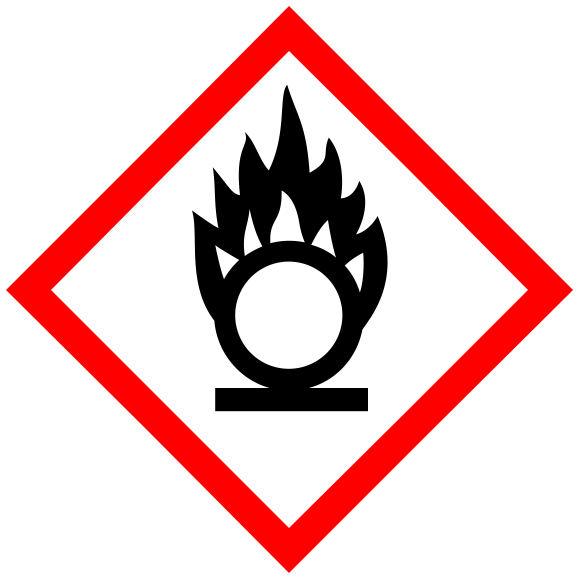
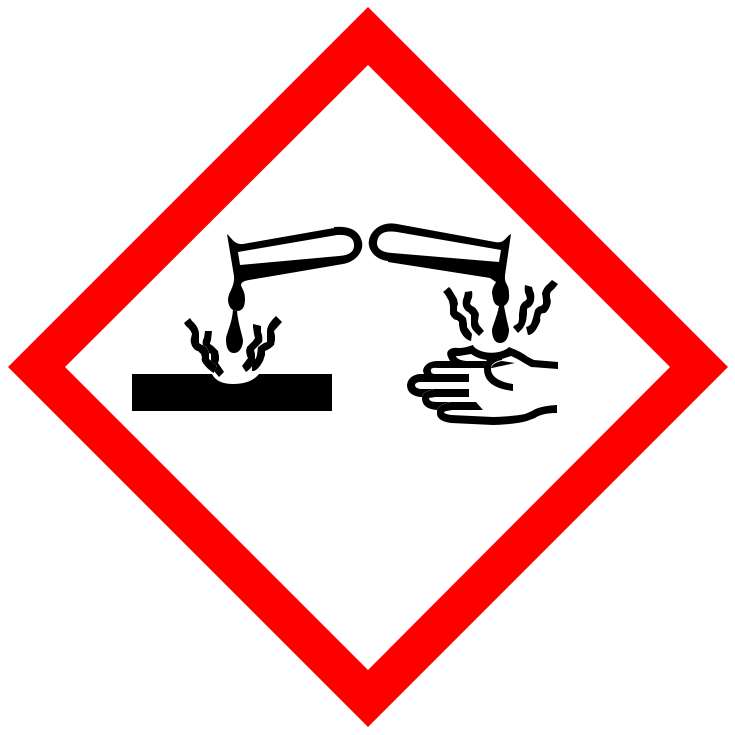
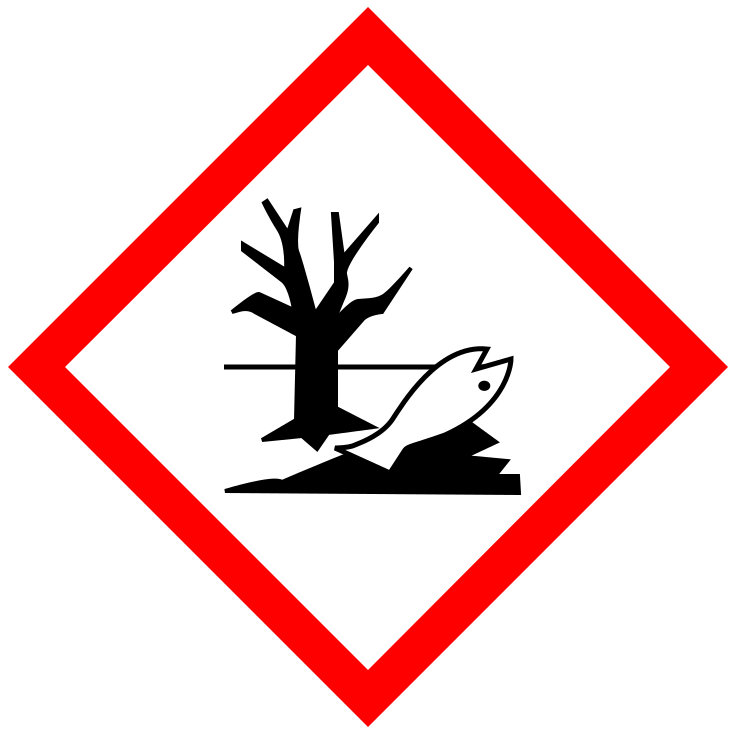
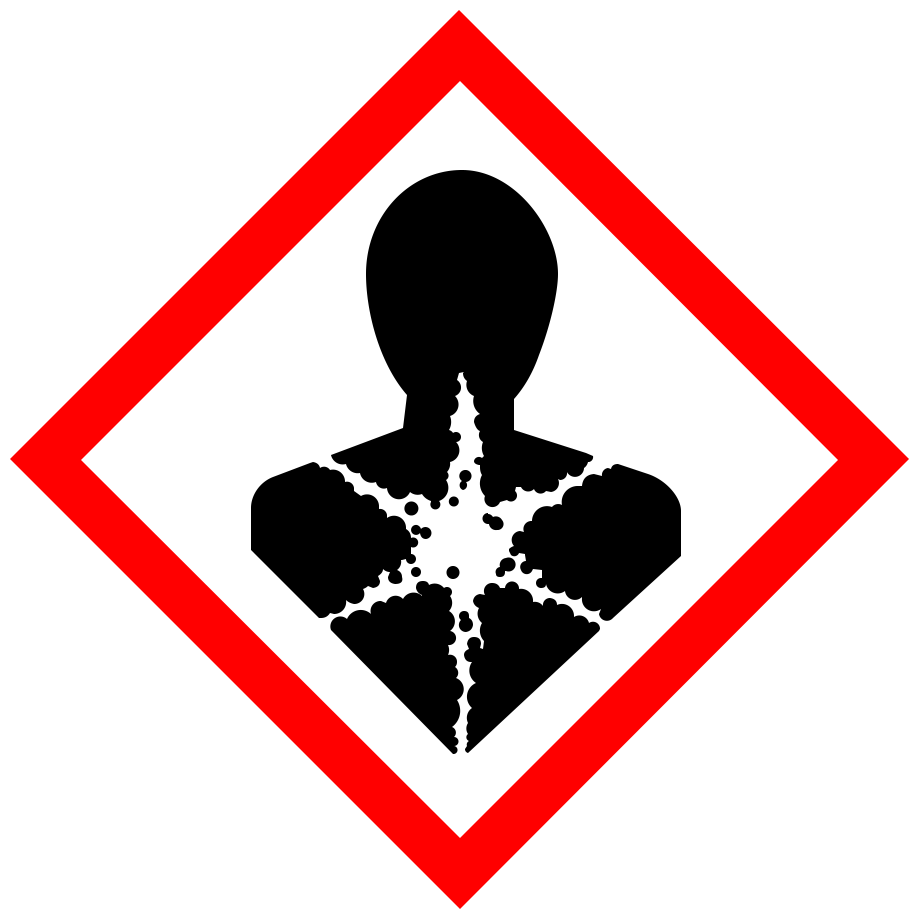
Disposal Method
Never pour down the drain, as silver is a heavy metal and is tightly regulated. To recover the silver as silver chloride, add sodium chloride (table salt). To dispose, keep as a solution or a solid in a labeled container. Bring the container to your local household hazardous waste (HHW) facility. Keep separate from any organic solvents or flammables during transport.
Neutralizing Agent
For spills, use large amounts of water. To render it non-oxidizing for disposal, treat with sodium chloride (table salt).
Storage Precautions
Keep in amber borosilicate glass. You must use either a PTFE stopper or a PTFE sleeve. If you don’t have a PTFE stopper or sleeve that fits one of your amber containers, you can take a small piece of PTFE thread seal tape (the white tape used in plumbing), wrap it around the frosted portion of your bottle stopper, and firmly press it into your bottle. This is temporary. Store in a cool, dark place. Keep away from any organic solvents or flammables. Ensure the cap is non-metallic. PTFE lined cap is ideal.
Ideal Storage Container
Borosilicate Glass. Review our chemical storage container guide for more information about container types and materials.
Other Names
Lunar Caustic, Silver(I) nitrate
Additional Tips
- The Tollens’ Explosion Window: If you are making silver mirrors using Tollens’ Reagent (ammoniacal silver nitrate), you must acidify and dispose of the solution immediately after use. If left to stand for more than a few hours, or if allowed to evaporate, it forms Silver Nitride (Ag₃N). This is a “touch-explosive” black crystal that can detonate from the slight vibration of moving the beaker.
- The Ghost Stain Prevention: Silver nitrate stains are invisible at first. You won’t know you’ve spilled it until UV light from the sun or overhead lamps reduces the silver ions to metallic silver 20 minutes later. Tip: Keep a spray bottle of saturated Sodium Thiosulfate (photographic “fixer”) or a dilute solution of Potassium Ferricyanide handy. Spritzing a suspect area immediately will complex the silver and prevent the permanent black stigmata on your workbench or hands.
- The Distilled Water Requirement: Never use tap water to make silver nitrate solutions. The trace chlorine in tap water will immediately react to form Silver Chloride (AgCl), a cloudy white precipitate. Not only does this waste your expensive silver (especially with recent prices) but can interfere with the sensitivity of your experiments. Always use double-distilled or deionized water
Incompatible Chemicals / Dangerous Combinations
- Ammonia (Concentrated) (NH₃) Explosion – Forms Fulminating Silver or Silver Nitride. These are among the most sensitive primary explosives known; even sitting in a beaker, they can spontaneously detonate
- Acetylene Gas (C₂H₂) Explosion – Forms Silver Acetylide. This is a highly shock-sensitive explosive. Hobbyists working with torches or gas generation must ensure no silver salts are nearby.
- Ethanol / Alcohols Explosion – In the presence of nitric acid (often found in AgNO₃ prep), alcohols can form Silver Fulminate. This is the “snap” in firecrackers and is extremely sensitive to heat and friction.
- Magnesium Powder Spontaneous Fire – A mixture of silver nitrate and magnesium powder can ignite or explode with only a single drop of water as a catalyst.
- Reducing Agents (e.g., Hydrazine) Violent Reaction – Rapidly reduces silver ions to metal, often with extreme heat release and splashing of corrosive liquid.
- Essential Oils / Sugars Pressure / Fire – As a strong oxidizer, AgNO₃ can react exothermically with organic oils or concentrated sugars, potentially leading to fires in storage.
Resources