Always consult a manufacturer SDS. Read our Full Liability Disclaimer
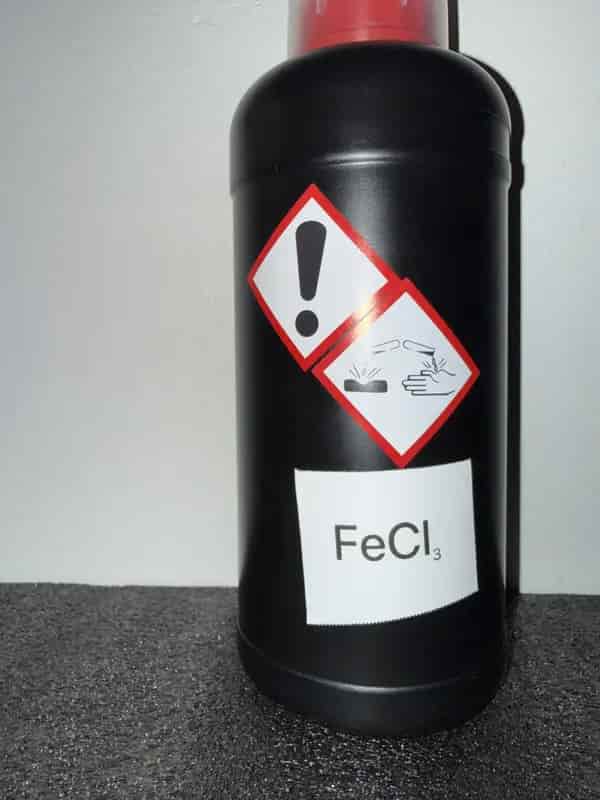
Hazard Level & Hazards:
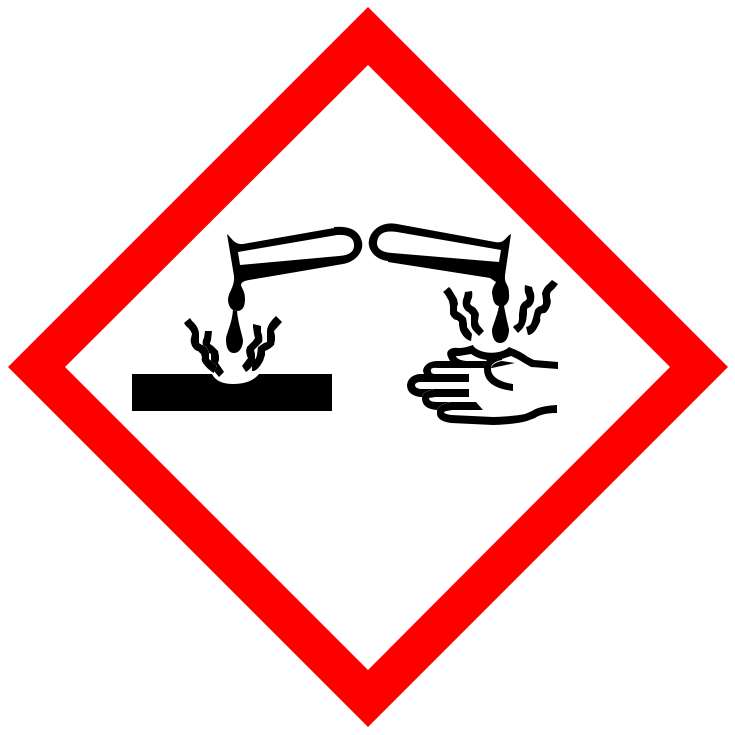
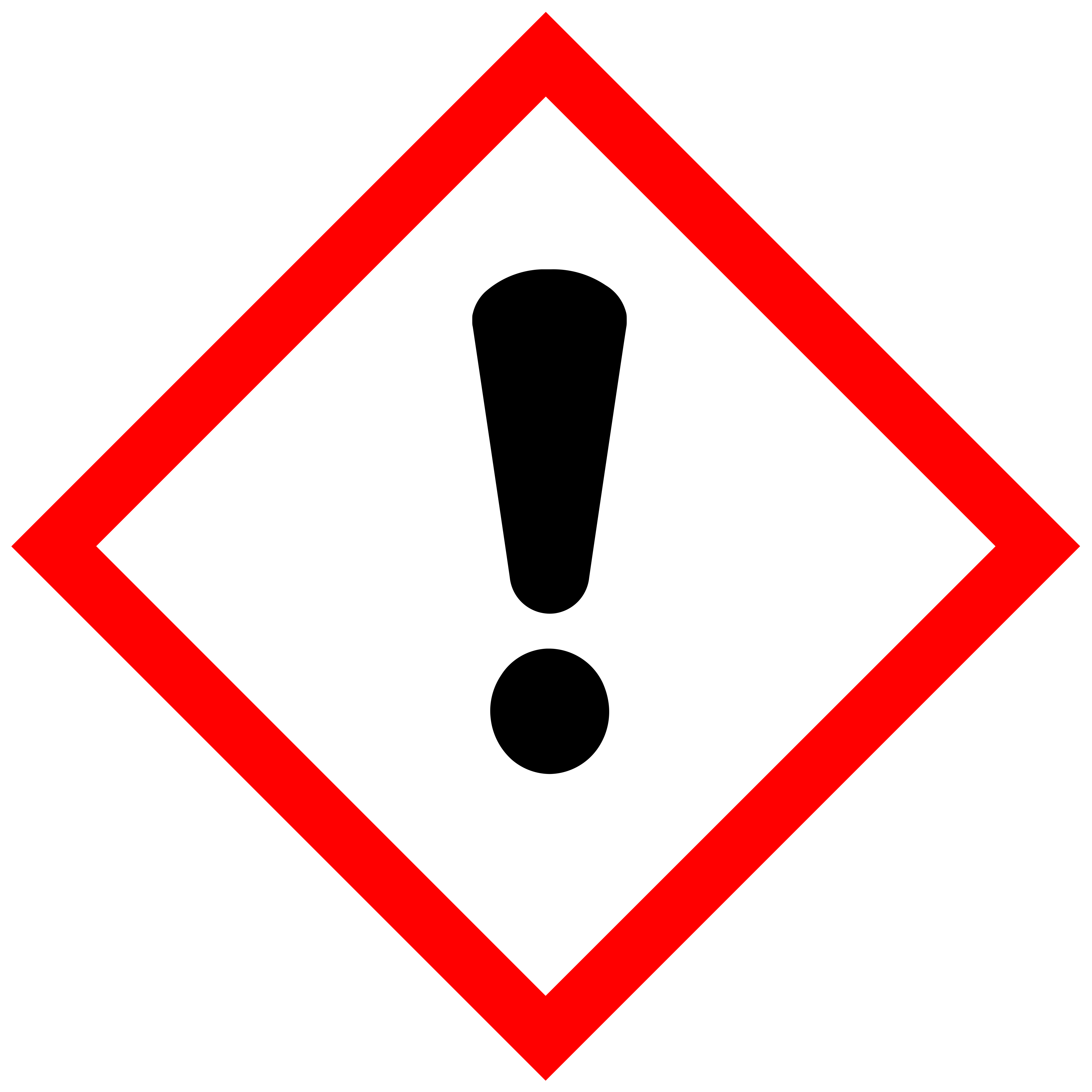
When we create or update chemical disposal entries, our H-code hazard list is generous. We list hazards that may be just below regular cutoffs and would otherwise normally be unlisted. We do this to provide hobbyists a wider scope of safety risks that may still be relevant, despite normally being omitted. Our GHS icons, however, are congruent with typical legal labeling requirements of the respective chemical.
High
- H290: May be corrosive to metals
- H302: Harmful if swallowed
- H315: Causes skin irritation
- H318: Causes serious eye damage
- H402: Harmful to aquatic life
Disposal Method
Never pour down the drain, even if diluted. Slowly add a base like sodium carbonate or sodium bicarbonate (baking soda) until the pH is neutral. The resulting sludge and liquid should be put into a sealed HDPE container. Label as “Used Etchant (Ferric Chloride/Copper)” and take to a household hazardous waste (HHW) facility.
Neutralizing Agent
Sodium Carbonate (Washing Soda), OR Sodium Bicarbonate (baking soda)
Storage Precautions
Store in an HDPE container in a cool, dry, dark place. Keep the container tightly closed. Employ secondary containment. Will stain everything brown on contact.
Ideal Storage Container
HDPE. Review our chemical storage container guide for more information about container types and materials.
Other Names
Iron(III) chloride, Molysite, Flores martis
Additional Tips
- While fresh Ferric Chloride is bad for the environment, “Spent“ Ferric Chloride (after etching copper) is illegal to pour down the drain in almost every jurisdiction because it is saturated with Copper Chloride.
- Will stain everything it touches. Keep a spray bottle of water and baking soda nearby to neutralize drips on countertops.
- Do not boil it to “speed up” etching. It can release hydrogen chloride gas.
- Anhydrous (dry powder) ferric chloride is extremely hygroscopic. If you leave a jar open it will pull enough water from the air to turn into a sludge. When you eventually add water to this concentrated sludge or the dry powder, the heat of hydration is high enough to boil the water instantly. This leads to acid spitting. Always add the powder to a large volume of water slowly.
- Hobbyists often store spent etchant (ferric chloride saturated with copper) in sealed plastic bottles. If there is any unreacted acid or scrap aluminum/zinc bits in the waste, Hydrogen gas (H₂) will slowly build up. Unlike other liquids, etchant waste should be stored in a container with a vented cap or checked frequently to prevent the bottle from pillowing and eventually bursting
Incompatible Chemicals / Dangerous Combinations
- Alkali Metals (Na, K) Explosion – Reacts violently upon contact with metallic sodium or potassium
- Allyl Chloride Violent Polymerization – Ferric chloride acts as a catalyst that triggers a rapid runaway polymerization of allyl chloride. This releases massive heat and can potentially explode the container
- Aluminum & Magnesium Explosive Gas / Heat – Rapidly attacks these metals, generating significant heat and large volumes of flammable hydrogen gas.
- Ethylene Oxide Explosion – Catalyzes the violent rearrangement and polymerization of ethylene oxide, which can lead to a catastrophic pressure explosion.
- Sodium Azide Toxic/Explosive Salts – Can form unstable or toxic metal azides. In acidic conditions (which FeCl₃ provides), it also releases Hydrazoic Acid gas, which is both toxic and explosive
- Strong Bases (NaOH, KOH) Violent Spattering – A vigorous exothermic neutralization occurs. It also precipitates thick iron hydroxide sludge that can cause bumping (sudden boiling) in the beaker.
- Potassium Permanganate Toxic Gas – As a strong oxidizer, mixing it with the chloride ions in FeCl₃ can drive the release of toxic Chlorine gas (Cl₂).