Always consult a manufacturer SDS. Read our Full Liability Disclaimer
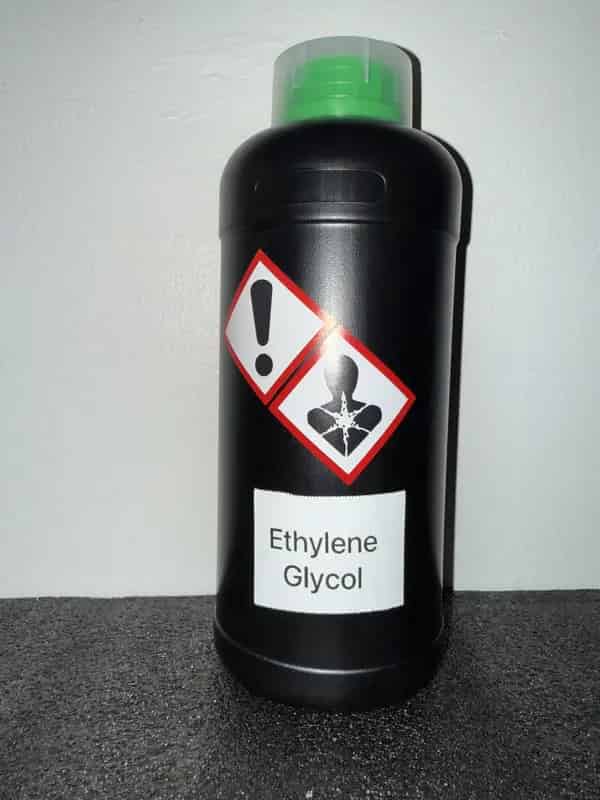
Hazard Level & Hazards:
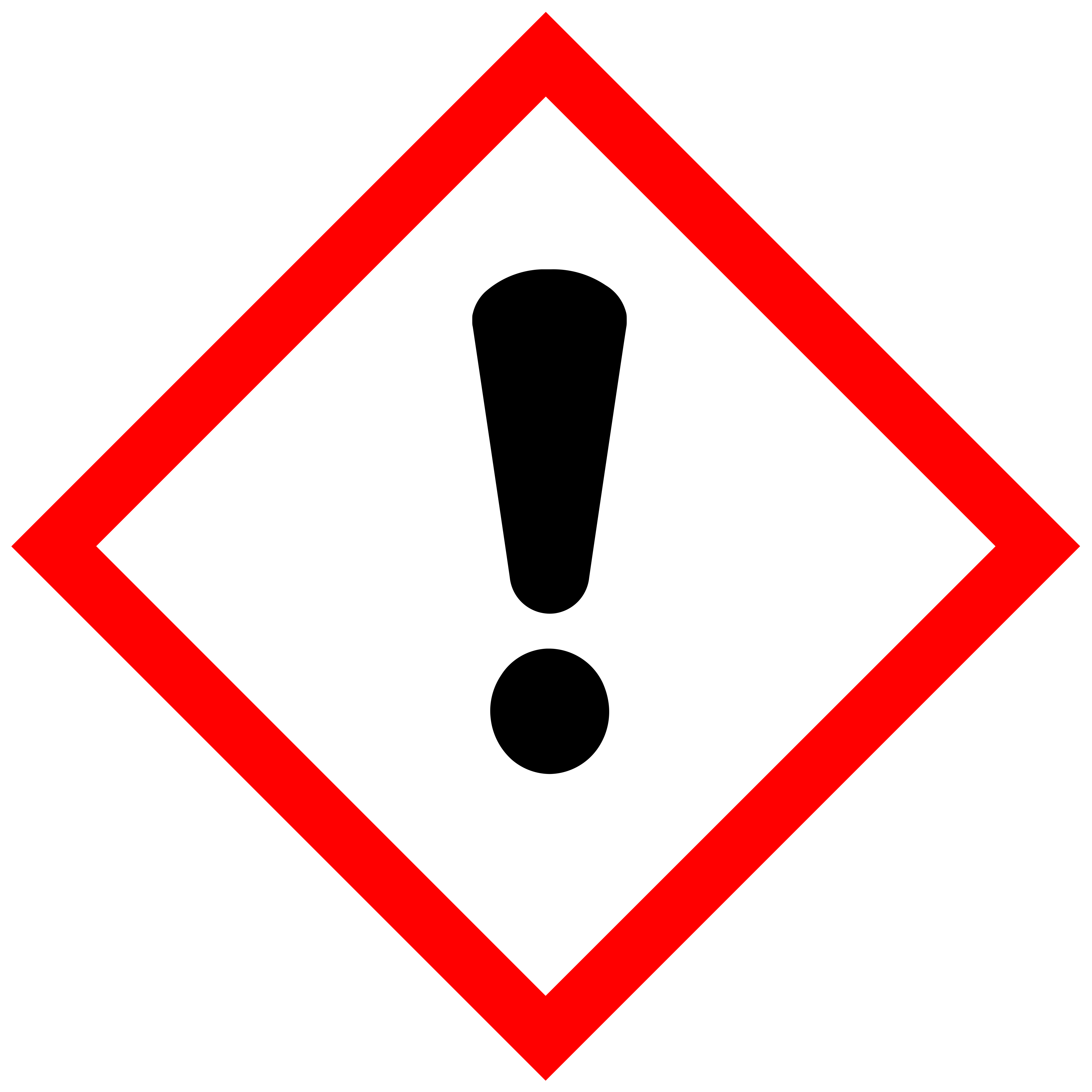
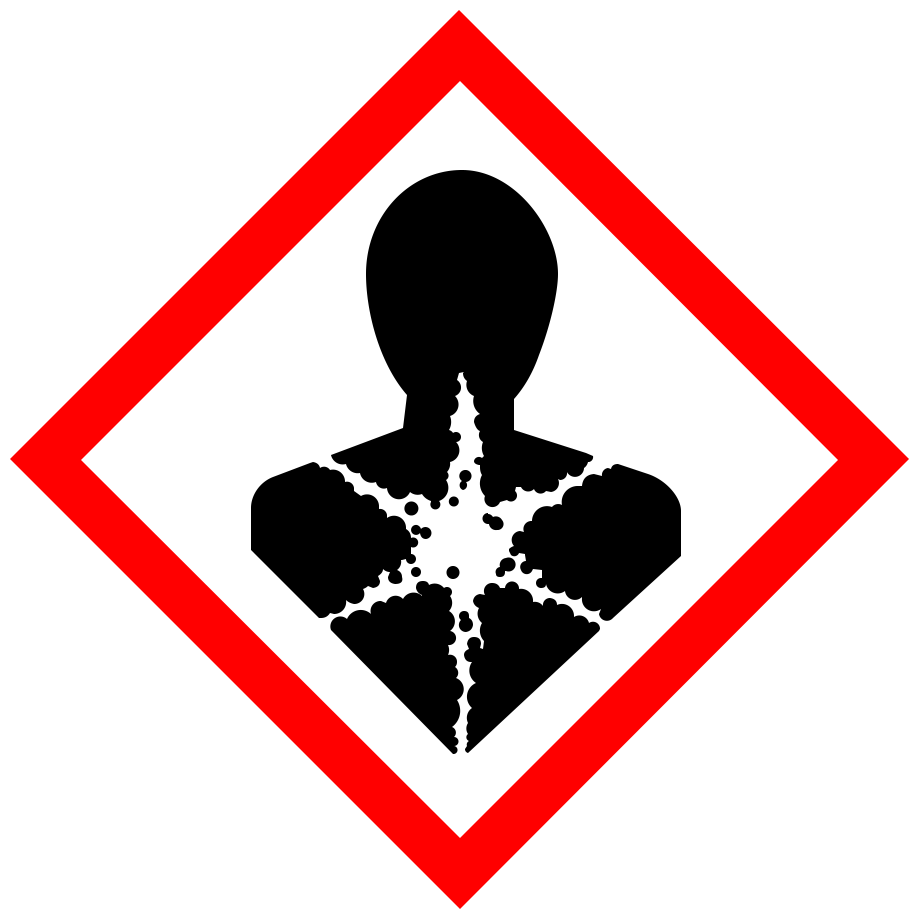
When we create or update chemical disposal entries, our H-code hazard list is generous. We list hazards that may be just below regular cutoffs and would otherwise normally be unlisted. We do this to provide hobbyists a wider scope of safety risks that may still be relevant, despite normally being omitted. Our GHS icons, however, are congruent with typical legal labeling requirements of the respective chemical.
Medium
- H302: Harmful if swallowed
- H372: Causes damage to organs through prolonged or repeated exposure
- H402: Harmful to aquatic life
Disposal Method
Never pour into a septic system or into a storm drain. Keep the antifreeze separate from any other chemicals. Mixed fluids often get rejected by recycling centers and instead get handled as expensive hazardous waste. Some service centers accept used antifreeze, but not as many as those that accept used oil. If you cannot find a service center to take the antifreeze, it must be taken to a household hazardous waste (HHW) facility. Keep the antifreeze in a sealed HDPE bottle and follow transport instructions found on our HHW facility page.
Neutralizing Agent
None. For spills, use an absorbent like kitty litter. Wash the area thoroughly with water to remove the sweet scent that attracts animals.
Storage Precautions
Keep stored inside the original container or a clearly labeled HDPE bottle. Never store in food or drink containers. Ensure the cap is child-proof and the container is stored on a high shelf away from pets.
Ideal Storage Container
HDPE. Review our chemical storage container guide for more information about container types and materials.
Other Names
Ethylene Glycol, Engine Coolant, Radiator Fluid
Additional Tips
- The “Silver-Copper” Ignition Hazard Do not use antifreeze in a cooling loop that involves DC-energized silvered copper wires. Under certain conditions, aqueous ethylene glycol can undergo electrolysis at the surface of the silvered wire, leading to local overheating and spontaneous ignition of the fluid.
- Oxalic Acid Precipitation Risk When ethylene glycol degrades (either through heat or oxidation), it forms Oxalic Acid. If your waste container also contains calcium salts or hard water, you will precipitate Calcium Oxalate. Calcium oxalate is a tenacious, needle-like crystalline sludge that is notoriously difficult to clean out of glassware and can clog drains or filters
- The pH “Death Spiral” Hobbyists sometimes reuse antifreeze for cooling reflux condensers or distillation baths. Always use pH test strips. Once the pH drops below 7.0, the glycol has begun “thermal cracking” into glycolic and formic acids. Not only is it now corrosive to your equipment, but these organic acids are significantly more reactive (and potentially volatile) than the original glycol.
Incompatible Chemicals/Dangerous Combinations
- Potassium Permanganate (KMnO₄) Spontaneous Fire – hypergolic reaction. Mixing the two often results in a delay of a few seconds followed by a violent, intense purple flame.
- Strong Nitric Acid (HNO₃) Explosion/Toxic Gas – Can form glycol nitrates (explosive esters) or undergo a runaway oxidation releasing dense, toxic red NOₓ clouds.
- Chloruric/Perchloric Acid Explosion – Violent oxidation. Mixing glycol with perchlorates or perchloric acid creates a shock-sensitive explosive mixture.
- Sodium Peroxide (Na₂O₂) Flash Fire – Similar to permanganate. The high oxygen density causes immediate ignition of the glycol “fuel.”
- Chromium Trioxide (CrO₃) Violent Ignition – Contact with “chromic acid” solutions or solid CrO₃ will cause the glycol to burst into flames almost instantly.
- Chlorinated Lime / Pool Chlorine Toxic Gas/Fire – Mixing with Calcium Hypochlorite can cause a rapid exothermic reaction, releasing toxic chlorine gas and potentially igniting.
- Strong Bases (NaOH/KOH) Exothermic Polymerization – Not always explosive. Adding concentrated lye to glycol causes a “runaway” heat release that can crack glass containers or cause “bumping” (boiling over).