Always consult a manufacturer SDS. Read our Full Liability Disclaimer
Hazard Level & Hazards:
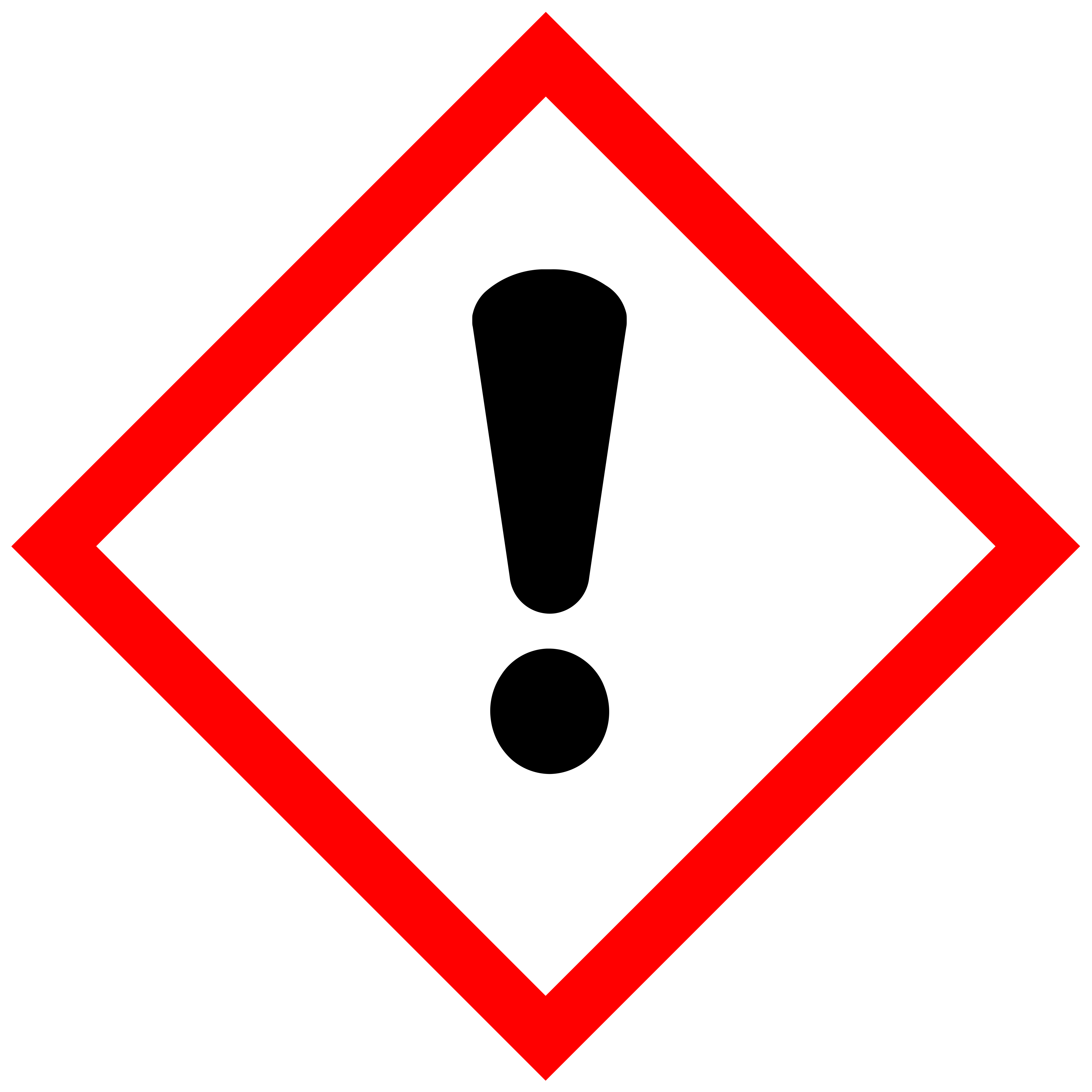
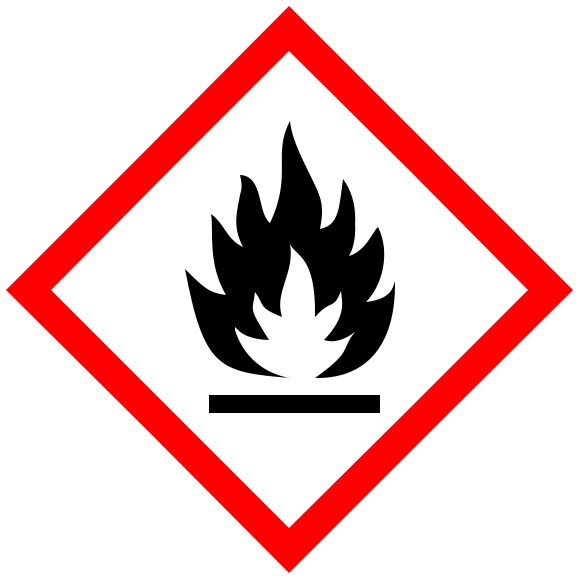
When we create or update chemical disposal entries, our H-code hazard list is generous. We list hazards that may be just below regular cutoffs and would otherwise normally be unlisted. We do this to provide hobbyists a wider scope of safety risks that may still be relevant, despite normally being omitted. Our GHS icons, however, are congruent with typical legal labeling requirements of the respective chemical.
Medium
- H225: Highly flammable liquid and vapor
- H302: Harmful if swallowed
- H319: Causes serious eye irritation
- H336: May cause drowsiness or dizziness
Disposal Method
While hobbyists often evaporate small amounts outdoors in a well-ventilated area, this is against many environmental regulations since it is a volatile organic compound. This is considered an illegal disposal in many jurisdictions. Significant amounts should be taken, in a sealed container, to a household waste facility (HHW). Never pour down the drain or put it in the trash.
Neutralizing Agent
Not Applicable. Dilute with water if spilt on surfaces.
Storage Precautions
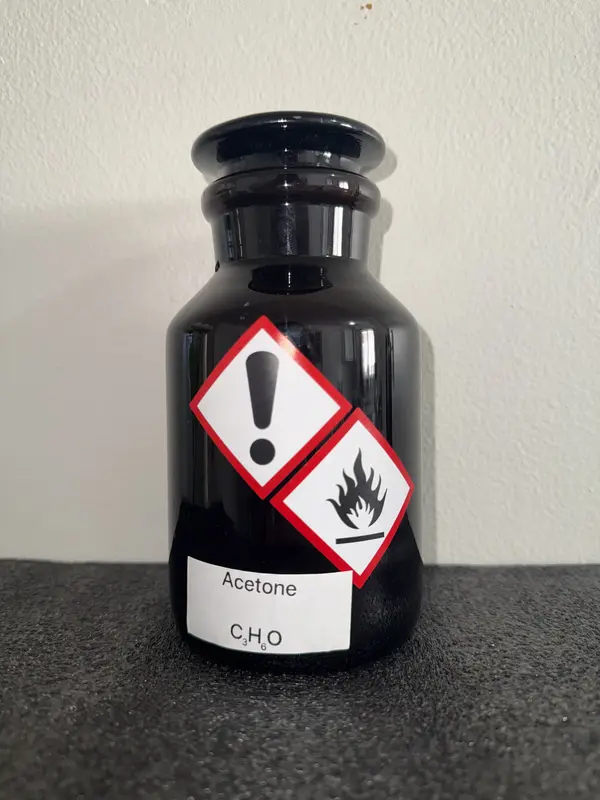
Keep in a sealed and labeled glass or metal container. Keep cool and well ventilated. Keep away from sparks and open flames.
Ideal Container Type
Borosilicate Glass. Review our chemical storage container guide for more information about container types and materials.
Other Names
Dimethyl Ketone, Methyl Ketone, Nail Polish Remover, Paint Thinner, pyroacetic spirit
Additional Tips
- Acetone vapor is heavier than air. It can crawl along a workbench and find a pilot light or a spark from a tool across the room
- Acetone dissolves almost all common plastics (ABS, PS, PC) except for HDPE and PP.
- Never throw acetone-soaked rags directly into a trash can. They should be allowed to evaporate fully outdoors in a safe spot before being trashed to prevent spontaneous combustion.
- Hobbyists often mix acetone with dry ice to create a cooling bath (approx. -78°C). However, acetone has a high thermal expansion coefficient. If you seal a cooling bath container even slightly, the sublimation of the CO₂ mixed with the volatile acetone vapor can create a massive pressure spike. Always use an open-top Dewar or a container with a loose-fitting lid.
Incompatible Chemicals / Dangerous Combinations
- Hydrogen Peroxide (H₂O₂) Primary Explosion – Forms TATP (Acetone Peroxide). This is an unstable white powder that can detonate from heat, friction, or even a static spark
- Nitric Acid (HNO₃) Explosion / Fire – A violent exothermic reaction that can lead to a runaway explosion. It produces toxic NOₓ gases and can ignite the acetone fuel.
- Chloroform + Base Violent Explosion – Mixing acetone with Chloroform in the presence of a base (like NaOH) triggers a runaway exothermic reaction that can shatter glassware.
- Concentrated Sulfuric Acid (H₂SO₄) Polymerization / Heat – Causes acetone to condense and polymerize rapidly, releasing heat and potentially spraying hot acid.
- Bleach (Hypochlorites) Toxic Chloroform – Triggers the haloform reaction, generating heat and creating Chloroform. In a confined space, the fumes can cause loss of consciousness.
- Chromic Acid (CrO₃) Spontaneous Ignition – As a strong oxidizer, contact with acetone leads to immediate fire. This is a common risk when cleaning glassware with chromic acid solutions.
- Bromine / Iodine Tear Gas Formation – Reacts to form Bromoacetone or Iodoacetone, which are potent lachrymators (tear gases) that will irritate the eyes and lungs severely.