Always consult a manufacturer SDS. Read our Full Liability Disclaimer
Solder flux is not a single chemical. Disposal depends on whether your product is rosin-based, water-soluble, no-clean, or acid plumbing flux. Check the label or SDS before proceeding.
| Flux type | Common ingredients | Corrosive? | Typical disposal approach |
|---|---|---|---|
| Rosin (R / RMA / RA) | Rosin (colophony) + activators | Low | Let small residues harden/solidify; dispose as household trash where allowed. |
| No-clean | Modified resins + low-residue activators | Low | Small residues can usually be trashed once solid; avoid drains unless label says water-washable. |
| Water-soluble (OA) | Organic acids (e.g., citric/adipic) + glycol carriers | Moderate | Prefer HHW if unknown/contaminated; small amounts may be neutralized and diluted per local rules. |
| Acid / Plumbing flux | Zinc chloride / ammonium chloride, acid salts/pastes | High | HHW recommended; do not drain-dispose; keep away from metals and concrete. |
N/A – Variable
Hazard Level & Hazards:
When we create or update chemical disposal entries, our H-code hazard list is generous. We list hazards that may be just below regular cutoffs and would otherwise normally be unlisted. We do this to provide hobbyists a wider scope of safety risks that may still be relevant, despite normally being omitted. Our GHS icons, however, are congruent with typical legal labeling requirements of the respective chemical.
Medium
- H314: Causes severe skin burns and eye damage
- H315: Causes skin irritation
- H317: May cause an allergic skin reaction
- H319: Causes serious eye irritation
- H335: May cause respiratory irritation
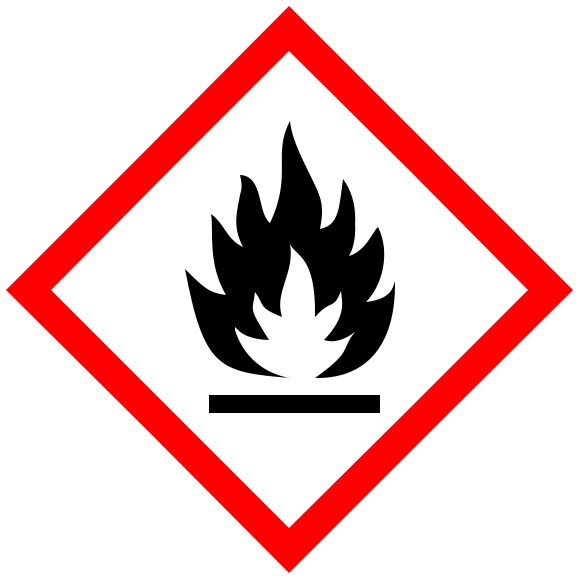
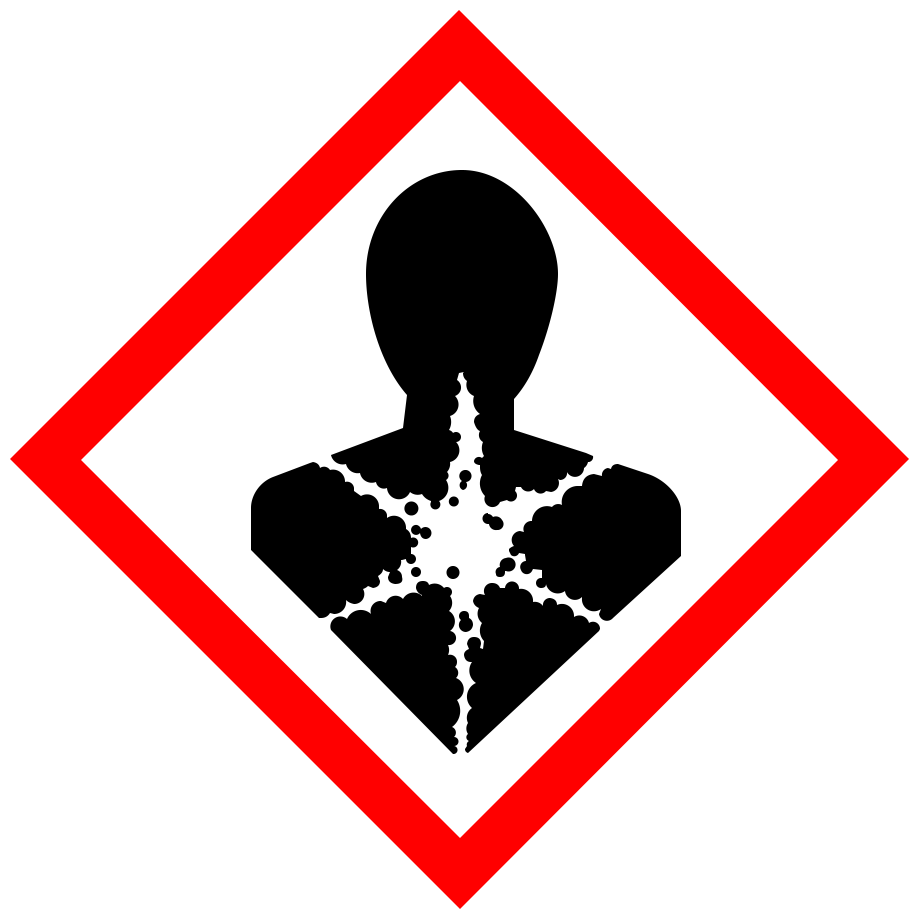

Disposal Method
Rosin-Based & No-Clean Flux (Electronics)
- Allow liquid residues to evaporate completely in a well-ventilated area away from ignition sources, heat, or flammable materials
- Solidified residues usually can be disposed of in household trash (check local regulations).
- Do not wash large amounts down the drain.
- If it is heavily contaminated with solder, metal particles, or solvents, taking to a household hazardous waste (HHW) facility is recommended.
- Small amounts
- Dilute with water
- Neutralize cautiously with baking soda until fizzing stops.
- Heavily dilute before sanitary sewer disposal if allowed locally (check regulations)
- Larger quantities and/or impurities
- Take to a local household hazardous waste (HHW) facility
- Do not dispose down the drain
- Do not dump outdoors
- Small, hardened residues may be trash-disposed if completely dry.
- For liquid products, take to a household hazardous waste (HHW) facility
Neutralizing Agent
Depends on type: Rosin / No-clean types cannot be neutralized. Water-soluble (organic acid) types can be neutralized with baking soda (small amounts only). For acid plumbing flux types, baking soda neutralization can be useful for spills. but disposal at a hazardous household waste facility is ideal.
Storage Precautions
Keep in a HDPE container or the original container. Keep container tightly sealed. Keep in a well-ventilated area. Keep away from heat, metals, and oxidizers. Acid plumbing flux should be stored separately from electronics materials due to corrosive vapors.
Ideal Storage Container
HDPE. Review our chemical storage container guide for more information about container types and materials.
Other Names
Additional Tips
- Acid or organic-acid fluxes can be neutralized chemically, but neutralization is exothermic. Improper scaling can cause splatter or aerosolization. Industrial users should use controlled neutralization systems, not open containers.
- Avoid drain disposal unless explicitly allowed. Water-soluble flux is often misunderstood. Water-soluble flux does not mean drain disposable. Always check local wastewater authority guidance before disposal.
- Rosin and no-clean flux often contain isopropanol or ethanol carriers. During disposal or consolidation use grounded containers, avoid sparks, and ensure adequate ventilation.
- Many fluxes degrade within 1–2 years. Expired flux may perform poorly, may corrode containers, and can complicate waste classifications.
Flux waste from jobs often contains lead, copper, tin, zinc, or other metals. Once contaminated, the waste may be regulated based on metal content, not just the flux chemistry.
Incompatible Chemicals/Dangerous Combinations
For rosin-based flux
- Strong Oxidizers Fire Hazard – Acts as a fuel for the oxidizer. This can result in rapid and/or violent combustion.
- Strong bases (Sodium hydroxide) Corrosive – Bases saponify resin acids, generating heat and corrosive degradation products.
- Halogenated oxidizers (Hypochlorites) Toxic Gas – Can generate toxic halogenated gases under acidic conditions.
- Metal powders (fine aluminum, magnesium) Combustion – Solvent vapors can ignite in the presence of reactive metals.
- Ammonia Toxic Gas – Particularly with Acid / Plumbing flux. Reaction can form chloramines and other toxic nitrogen chlorides.