Always consult a manufacturer SDS. Read our Full Liability Disclaimer
Hazard Level & Hazards:
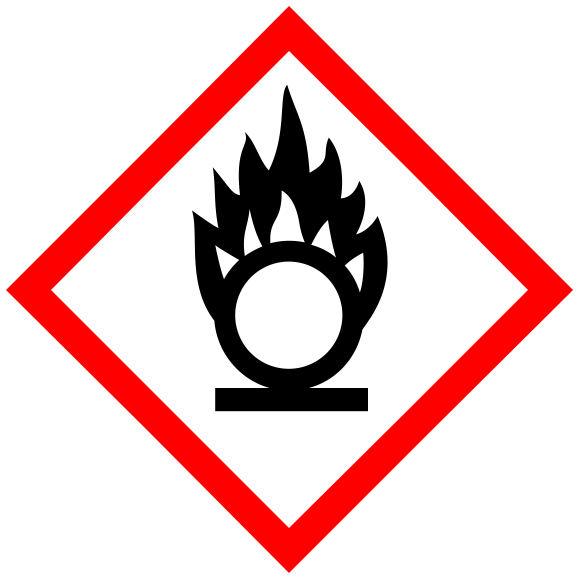
When we create or update chemical disposal entries, our H-code hazard list is generous. We list hazards that may be just below regular cutoffs and would otherwise normally be unlisted. We do this to provide hobbyists a wider scope of safety risks that may still be relevant, despite normally being omitted. Our GHS icons, however, are congruent with typical legal labeling requirements of the respective chemical.
Medium
- H272: May intensify fire; oxidizer
Disposal Method
For small amounts (a few tablespoons to a cup):
- Potassium nitrate is highly water-soluble and breaks down into potassium and nitrate ions, which are common in wastewater systems.
- Wear gloves and eye protection
- Dissolve the potassium nitrate completely in a large container of warm water.
- Slowly pour the fully dissolved solution down a sanitary sewer drain (sink or toilet) while running plenty of additional water.’
- Continue flushing with water for 1–2 minutes.
- If it is pure potassium nitrate sold for gardening
- It can be diluted and used as a fertilizer according to label directions.
- Apply lightly and water thoroughly.
- Avoid overapplication (excess nitrates can run off and contribute to water pollution).
Neutralizing Agent
N/A. In the event of spills: Wear PPE. Keep away from flames, heat, and combustible materials. Avoid breathing dust. For dry spills: Do NOT sweep up if it creates dust clouds. Lightly mist with water (don’t soak). Carefully scoop up with plastic scoop. Place in clean container or dissolve in water following steps above. For wet spills: Absorb with paper towels, rags, or an inert absorbent (cat litter, vermiculite). Place in sealed bag. Follow disposal instructions above.
Storage Precautions
Keep in tightly sealed HDPE container in a dry place away from any heat sources, flames, or combustible materials.
Ideal Storage Container
HDPE. Review our chemical storage container guide for more information about container types and materials.
Other Names
Saltpeter, Saltpetre, Niter, Nitre, Stump remover, Nitrate of potash, E252, Refined niter.
Additional Tips
- With regard to disposal, the key concept most people miss: complete dissolution first, then heavy dilution. Make sure it is completely dissolved and heavily diluted.
- People assume K nitrate is poisonous. It’s not highly toxic in small quantities. The bigger risks are: Accelerating fires, reacting with fuels, and being stored near flammables
- Moisture changes everything. Dry powder = oxidizer + dust hazard. Dissolved in water = essentially fertilizer solution
- Don’t Dump It on Soil “Because It’s Fertilizer.” Excess nitrate runoff contributes to Algae blooms, groundwater contamination, and local nutrient loading
- If soil already tests high in nitrogen, adding more can stress plants, reduce flowering/fruiting, increase leaching risk.
- Some stump removers are potassium nitrate. Some are sodium metabisulfite. Some are blends. Check the ingredient list before assuming disposal methods.
- Vacuum motors + oxidizer dust = unnecessary risk. Dampen lightly before collecting.
- Keep away from garage chemicals
Incompatible Chemicals/Dangerous Combinations
- Fuels (Charcoal, sulfur, sugar, sawdust) Combustion / Explosion – When mixed with combustible organic materials or fuels, potassium nitrate supplies oxygen to the reaction, increasing burn rate. Finely divided mixtures can ignite easily and may explode under confinement or friction.
- Strong Reducing Agents (Aluminum powder, magnesium, zinc dust) Violent – Finely divided metals or other strong reducing agents can react rapidly because nitrate provides oxygen. These mixtures can ignite from friction, static discharge, or heat and may burn very hot.
- Ammonium Salts (Ammonium nitrate, ammonium chloride) Decomposition / instability – Can form unstable compositions that may decompose readily under heat. Some ammonium-containing mixtures increase the risk of runaway decomposition if contaminated or confined.
- Strong Acids (Sulfuric acid, hydrochloric acid) Toxic Gas – Strong acids can convert nitrate into nitric acid in situ. Under certain conditions this may release nitrogen oxides (NOx), which are toxic brown gases that irritate lungs and can cause delayed respiratory injury.
- Organic Liquids (Glycerin, antifreeze, alcohols) Fire Accelerant – Organic liquids act as fuel. If the mixture dries or becomes concentrated and is heated, combustion risk increases.
- Cyanides (Sodium cyanide) Toxic Gas – Under acidic or heated conditions, nitrate-containing mixtures involving cyanides can increase risk of hydrogen cyanide release. This is a very toxic gas.