Always consult a manufacturer SDS. Read our Full Liability Disclaimer
Hazard Level & Hazards:
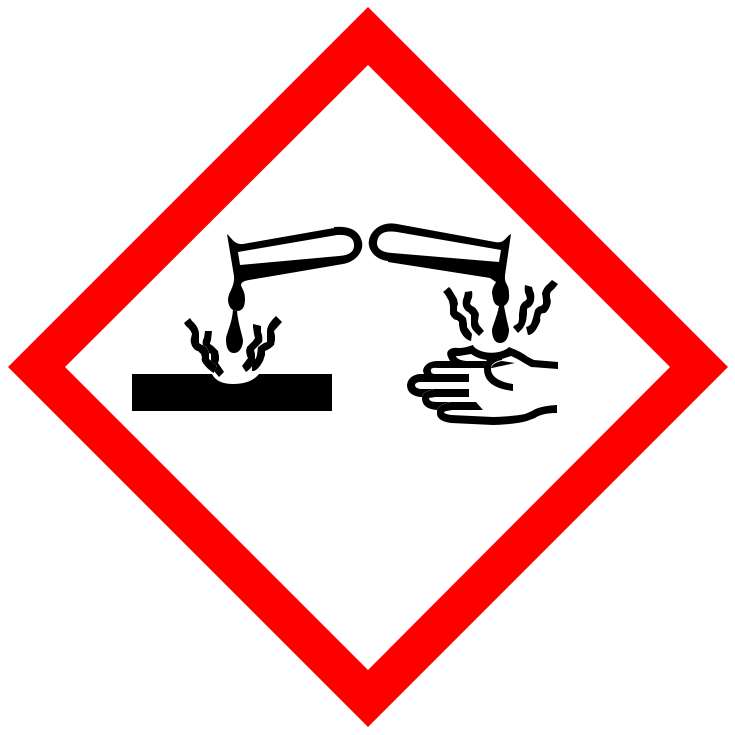
When we create or update chemical disposal entries, our H-code hazard list is generous. We list hazards that may be just below regular cutoffs and would otherwise normally be unlisted. We do this to provide hobbyists a wider scope of safety risks that may still be relevant, despite normally being omitted. Our GHS icons, however, are congruent with typical legal labeling requirements of the respective chemical.
Medium
- H290: May be corrosive to metals
- H302: Harmful if swallowed
- H314: Causes severe skin burns and eye damage
- H318: Causes serious eye damage
- H402: Harmful to aquatic life

Disposal Method
For any KOH solutions of high concentration (>40%), OR any large quantities, OR any solution with impurities or other chemicals, the potassium hydroxide should be taken to a household hazardous waste (HHW) facility. Visit our page on HHW facilities for information about how to transport chemicals safely and typical expectations at HHW facilities.If absolutely necessary, the key to home disposal is dilution and neutralization. Note that this should only be done with very small amounts of pure, low concentration KOH and only if HHW disposal is not feasible.
- Using a large plastic or glass container, slowly add the KOH to 10-20x the amount of water. Always add the base to the water (in that order) and not the other way around.
- Use a weak household acid such as white vinegar (acetic acid), diluted citric acid, or lemon juice to neutralize the diluted base solution. Slowly add the acid a little bit at a time while stirring. Adding too quickly can generate excess heat.
- Continue until the pH is between ~6-8.
Neutralizing Agent
White vinegar (acetic acid), citric acid, lemon juice
Storage Precautions
Store in a sealed HDPE container. Store in a cool, dry, well-ventilated area. Keep away from acids, metals, and oxidizers. Strong alkaline solutions slowly attack certain types of glass, especially at high temperatures. Long-term storage is usually safer in plastic chemical containers.
Ideal Storage Container
HDPE. Review our chemical storage container guide for more information about container types and materials.
Other Names
Caustic potash, lye, potash lye, potassia,
Additional Tips
- When making solutions, add potassium hydroxide slowly to water, not the other way around. This allows heat to dissipate and reduces the risk of splashing concentrated caustic solution.
- Potassium hydroxide absorbs moisture and carbon dioxide from the air. Containers left open will gradually form potassium carbonate, which changes solution strength and reactivity.
- Concentrated potassium hydroxide solutions are extremely corrosive. Diluting with water reduces chemical activity and heat generation during disposal or neutralization.
- Unlike many acids, strong alkalis may not cause immediate burning sensations. This delayed pain response can allow deeper tissue damage before exposure is noticed.
- Over time, absorbed carbon dioxide from the atmosphere converts potassium hydroxide into potassium carbonate. This is why old solutions may appear cloudy or less reactive.
- Small potassium hydroxide spills are best managed by dilution with large amounts of water followed by neutralization if necessary.
- If water contacts a pile of potassium hydroxide pellets, the outer layer dissolves first and traps heat inside the mass. This can cause sudden splattering when the material shifts.
Incompatible Chemicals/Dangerous Combinations
- Strong Acids (Sulfuric Acid, hydrochloric acid, nitric acid, etc) Violent Reaction – Strong acids react with potassium hydroxide in a neutralization reaction that releases heat. Mixing concentrated solutions can cause boiling, splattering, and container rupture.
- Reactive Metals (aluminum, zinc, tin, etc) Hydrogen Gas – Strong bases like potassium hydroxide can corrode certain metals, producing flammable/explosive hydrogen gas. In confined spaces this gas can collect and create an explosion hazard if ignited.
- Ammonium Salts (ammonium chloride, ammonium sulfate, etc) Ammonia Release – Potassium hydroxide releases ammonia gas when mixed with ammonium salts. The reaction produces irritating and toxic ammonia vapors that can accumulate in enclosed areas.
- Strong Oxidizers (peroxides, permanganates, hypochlorites, etc) Reactive – Potassium hydroxide itself is not an oxidizer but mixing it with strong oxidizing agents can accelerate decomposition reactions or generate heat, increasing the risk of splattering or container failure.