Note: Paint thinner is not the same as turpentine, acetone, or denatured alcohol. Be sure to check ingredient lists to find accurate disposal information
Always consult a manufacturer SDS. Read our Full Liability Disclaimer
Mixture: Hydrocarbons, mineral spirits, toluene, xylene, acetone
Hazard Level & Hazards:
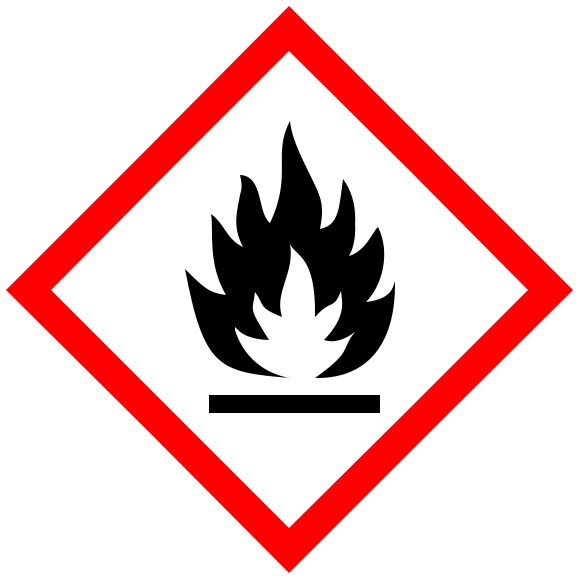
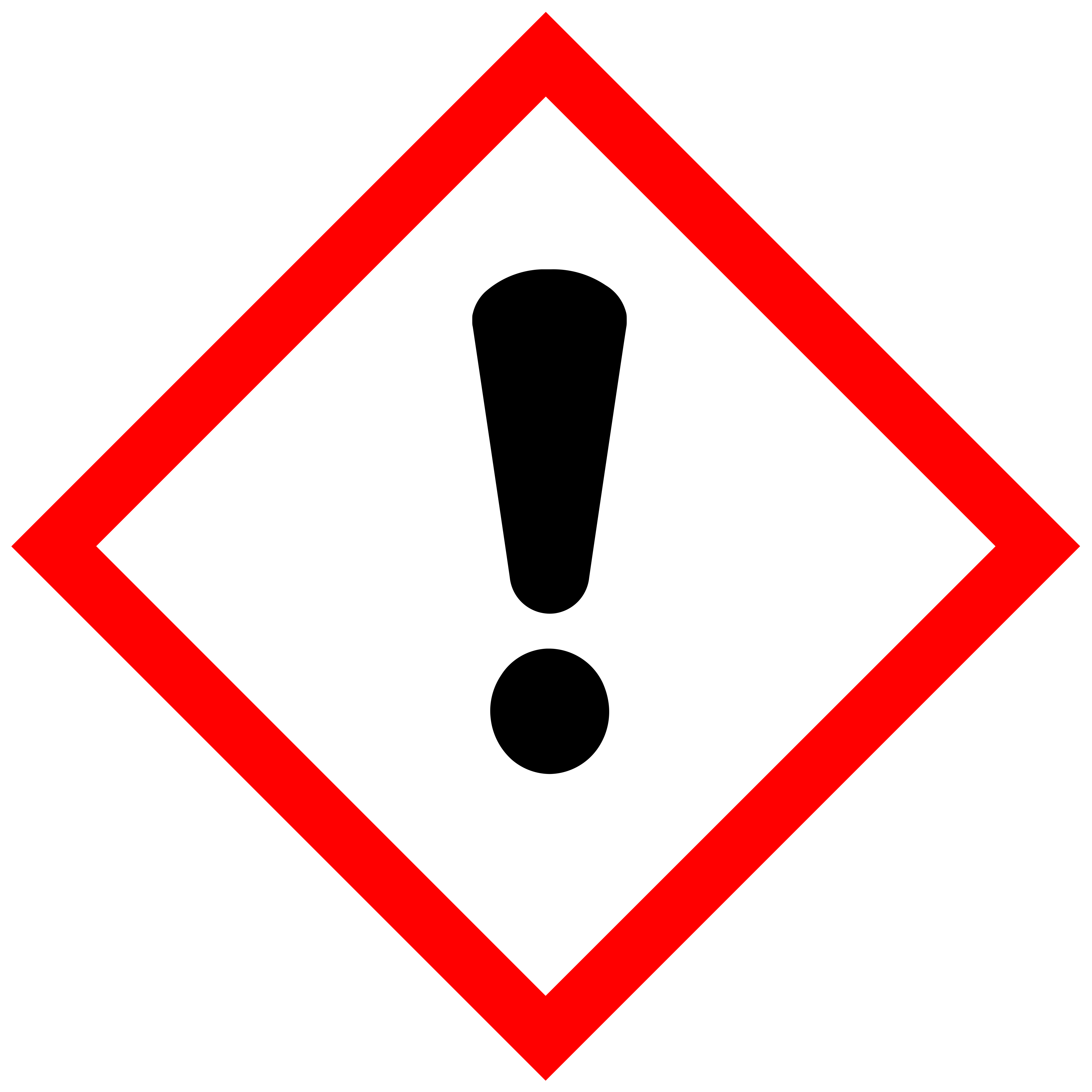
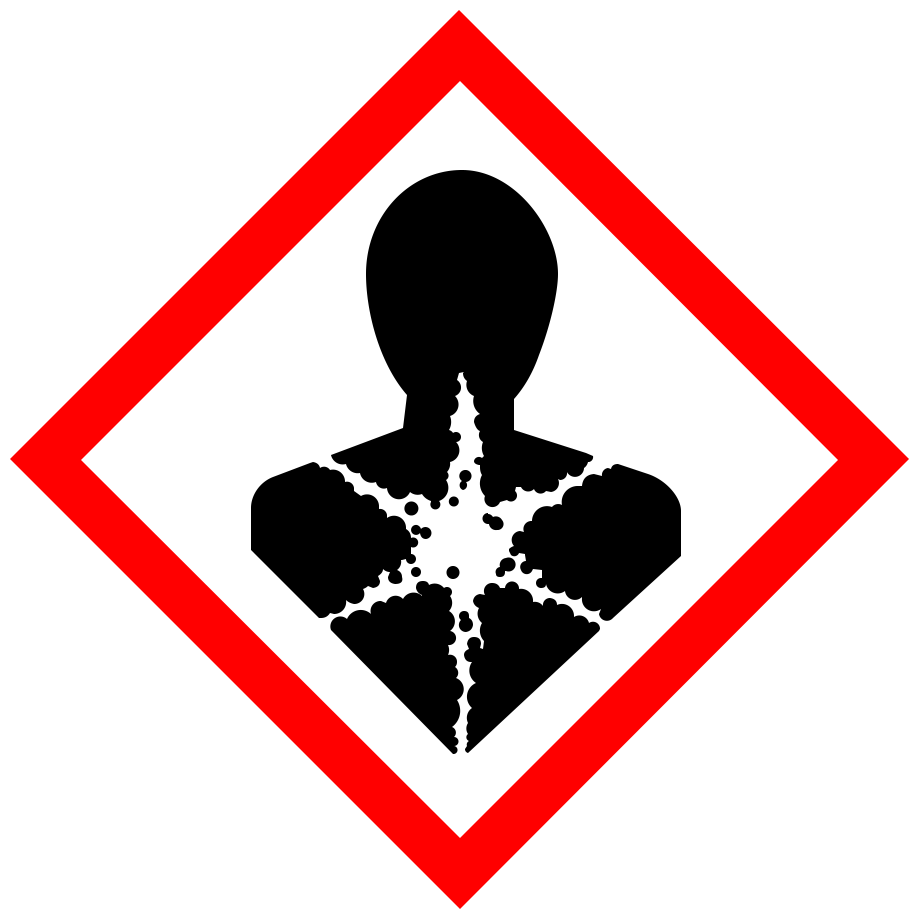
When we create or update chemical disposal entries, our H-code hazard list is generous. We list hazards that may be just below regular cutoffs and would otherwise normally be unlisted. We do this to provide hobbyists a wider scope of safety risks that may still be relevant, despite normally being omitted. Our GHS icons, however, are congruent with typical legal labeling requirements of the respective chemical.
High
- H225: Highly flammable liquid and vapor
- H315: Causes skin irritation
- H319: Causes serious eye irritation
- H332: Harmful if inhaled
- H336: May cause drowsiness or dizziness
- H350: May cause cancer
- H360: May damage fertility or the unborn child
- H372: Causes damage to organs through prolonged or repeated exposure
Disposal Method
For paint thinner, the safest and easiest way to dispose is via a household hazardous waste (HHW) facility. Any significant quantities absolutely must be taken to a HHW facility and should never be poured down any drains, never pour into soil, driveway, pavement, etc. Do not burn.Alternatively, you can let it settle and store it for reuse in the future. If allowed to sit for a few days, solids will settle to the bottom. You can then carefully decant the clear solvent on the top and reuse it in the future.For very small quantities, alternatives are available only if absolutely necessary.
- For a few tablespoons up to perhaps 1/2 cup, the solvent can be evaporated in a controlled manner. Place in a shallow metal container, allow to evaporate outdoors, keep away from any ignition sources, and do not leave unattended. The vapors are very flammable and harmful.
- Allow container to remain open outdoors. Let all the liquid to evaporate completely (read above). Once completely dried and hardened small, dried residues may be able to be disposed of in regular trash. Check local regulations.
Neutralizing Agent
N/A. For spills: Wear PPE and ensure adequate ventilation. Remove any sources of heat or ignition and remove any flammable materials from the area. Use an inert absorbent like kitty litter, vermiculite, or dry earth to absorb the solvent. Leave the saturated absorbent in an open container until dry, at which point it can be disposed of regularly. Follow the evaporation precautions listed above.
Storage Precautions
Keep in a metal container (original container is ideal). Keep in a dry, well-ventilated area. Keep container tightly closed. Keep away from heat, electric equipment, open flames, sparks, and flammable materials. Avoid excess heat.
Ideal Storage Container
Metal Container. Review our chemical storage container guide for more information about container types and materials.
Other Names
White spirits, stoddard solvent, petroleum spirits, solvent naphtha, varsol, mineral turpentine
Additional Tips
- Odorless mineral spirits are more refined. This means more aromatic compounds have been removed and the solvent may be less irritating. However, the solvent is still flammable and environmentally harmful.
- Used mineral spirits from brush cleaning can be reused to save money. Let it settle overnight or over several nights. The paint solids will settle to the bottom, and the top layer (clear) of solvent can be decanted. This clear decanted solvent is ready for reuse.
- Once contaminated with oil-based paint, it contains resins and pigments. It also may contain heavy metals. This makes it more hazardous.
- Once dry paint is completely hardened and solvent-free, many municipalities allow disposal with household trash. Check your local regulations and guidance.
- Vapor accumulation is a significant risk. Vapors are heavier than air and may pool near the floor and travel to an ignition source like a static charge, power tool, pilot light, etc. This makes garages a high-risk environment for storage. Always make sure the cap is tightly sealed and the area is well-ventilated.
- Vapors can ignite away from the container, and the flame can travel back to the container in something known as a ‘flash back.’
Incompatible Chemicals/Dangerous Combinations
- Strong Oxidizers (Nitric Acid, Chromic Acid, Peroxides) Oxidation Hazard – Strong oxidizers can react violently with mineral spirits, generating heat and potentially igniting the mixture. Because mineral spirits are hydrocarbons, they serve as fuel in redox reactions.
- Chlorine Toxic – Chlorine gas can react with hydrocarbons to form chlorinated compounds and hydrogen chloride gas. Reaction can generate heat and hazardous vapors.
- Strong Acids (Sulfuric Acid, Nitric Acid) Decomposition – Strong acids, especially oxidizing acids, can react with hydrocarbons under certain conditions, producing heat and potentially hazardous vapors.
- Alkali Metals (Sodium, Potassium) Fire Hazard – While bulk mineral spirits may not immediately react, alkali metals are highly reactive and can ignite in hydrocarbon environments, especially if moisture is present.