Always consult a manufacturer SDS. Read our Full Liability Disclaimer
Hazard Level & Hazards:
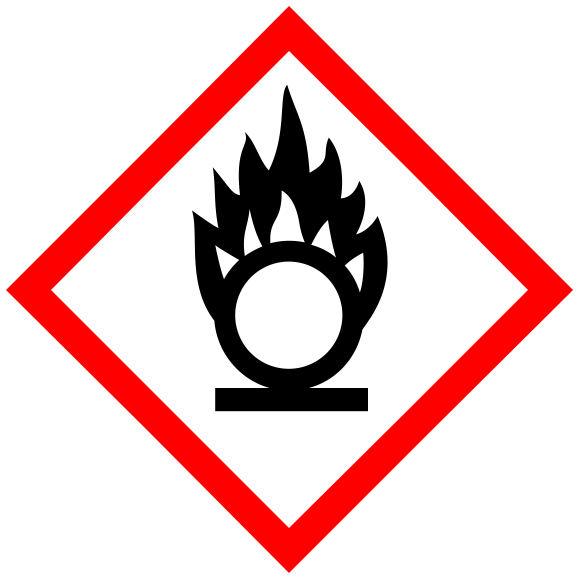
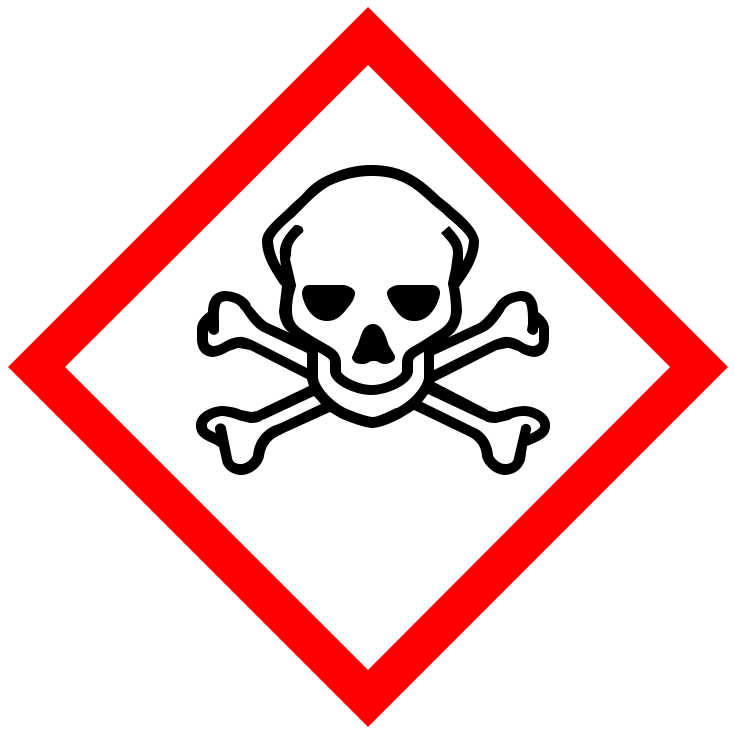
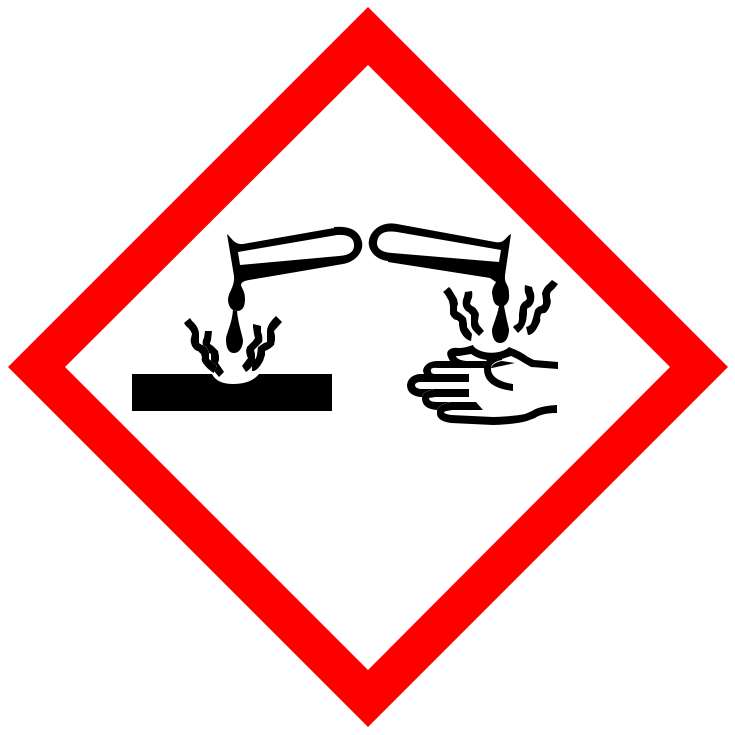
When we create or update chemical disposal entries, our H-code hazard list is generous. We list hazards that may be just below regular cutoffs and would otherwise normally be unlisted. We do this to provide hobbyists a wider scope of safety risks that may still be relevant, despite normally being omitted. Our GHS icons, however, are congruent with typical legal labeling requirements of the respective chemical.
High
- H272: May intensify fire; oxidizer
- H290: May be corrosive to metals
- H314: Causes severe skin burns and eye damage
- H318: Causes serious eye damage
- H330: Fatal if inhaled
- H331: Toxic if inhaled
Disposal Method
Nitric Acid is rarely dilute enough or in small enough quantity to dispose of at home. Any substantial quantity, or concentration above 10%, or nitric acid with any impurities, will need to be taken to a local household hazardous waste (HHW) facility.Ideal container type is PTFE. Common industry practice is amber borosilicate glass. Keeping nitric acid in HDPE can eventually lead to cracking, but for short-term storage (like for transport to a HHW facility) it can be used.If alternative disposal is absolutely necessary:
- Add the nitric acid slowly to a large volume of cold water (never water into acid — always add acid into water).
- Add baking soda a little at a time while stirring. It will fizz intensely (CO₂). It will warm up slightly.
- Keep adding small amounts of baking soda until fizzing stops. If test strips available, pH should be between 6 and 8.
- The reaction forms sodium nitrate, water, and carbon dioxide.
- Once fully neutralized and diluted it can typically be poured into a sanitary sewer drain with plenty of running water (check local regulations).
If the acid has dissolved:
- Copper
- Silver
- Nickel
- Lead,
- Any other metals
Neutralizing Agent
Baking Soda (Sodium Bicarbonate)
Storage Precautions
PTFE ideal. Amber borosilicate can be used. Keep in a dry, well-ventilated space. Vented caps required for long-term storage. Do not store near combustible materials. Do not store in metal.
Ideal Storage Container
PTFE. Review our chemical storage container guide for more information about container types and materials.
Other Names
Aqua Fortis, Hydrogen nitrate, Hydrogen nitrate, azotic acid, spirit of niter, 7697-37-2, Metal etching solution, Jewelry refining acid, Pickling acid (sometimes)
Additional Tips
- Nitric acid is both an acid and an oxidizer. This is the reason for so many dangerous combinations. Take extra care when working with nitric acid.
- Fresh nitric acid is colorless. If it is yellow, orange, brown, or visibly fuming, it contains dissolved NO₂. This is toxic, more reactive, and indicative of decomposition.
- If nitric acid has been used to dissolve metals (Blue = copper, green = nickel or mixed metals, colorless but used = possible dissolved ions), then it is now a metal nitrate solution. This is a much more serious hazardous waste and must be taken to a HHW regardless of neutralization.
- Nitric acid slowly degrades in storage. It can pressurize containers and form NO₂. Old acid can be more hazardous than when purchased.
- Silver testing acid is not always pure nitric acid. Confirm ingredients before disposal.
- If spilled on concrete, wood, fabric, or other porous materials, it can continue reacting. Repeated rinsing may be required for neutralizing the surface.
- After neutralization, nitric acid becomes nitrate salt solution. Small, diluted amounts are usually manageable in wastewater systems. Larger amounts can contribute to nutrient loading, algae blooms, and negatively impact groundwater nitrate levels.
Incompatible Chemicals/Dangerous Combinations
- Organic Materials (paper, wood, cloth, sawdust) Fire / Ignition – May cause spontaneous ignition or smoldering. It can also nitrate organic compounds, forming unstable and potentially explosive byproducts.
- Alcohols (ethanol, methanol, isopropanol) Violent Oxidation – Heat and toxic nitrogen oxides can be generated. In some cases, nitrate ester formation can occur, producing shock-sensitive materials.
- Acetone and Ketones Explosive – Nitric acid can nitrate ketones, potentially forming unstable and highly energetic compounds. Heat and toxic gases may also be released.
- Metals (copper, zinc, iron, nickel) Toxic Gas – Nitric acid reacts with many metals to produce nitrogen oxides (NO and NO₂), which are toxic brown gases.
- Strong Bases (sodium hydroxide, potassium hydroxide) Heat Generation – Neutralization produces significant heat. Rapid mixing can cause boiling and splattering of corrosive liquid.
- Ammonia Heat Sensitive – Neutralization with ammonia forms ammonium nitrate, which is an oxidizer that can become hazardous under heat or contamination. Reaction is exothermic.
- Cyanides Toxic Gas – Contact with cyanide salts produces toxic hydrogen cyanide gas, especially under acidic conditions.
- Sulfides Toxic Gas – Acidification of sulfide compounds releases hydrogen sulfide gas. Toxic and flammable.
- Bleach (sodium hypochlorite) Toxic Gas – Mixing strong acids with bleach can generate chlorine gas and other hazardous chlorine-containing vapors.
- Reducing Agents (powdered metals, sulfites, thiosulfates) Violent Reaction – Reducing agents can react rapidly with nitric acid, producing heat, toxic gases, and explosive conditions if confined.
- Glycerin and Polyols Highly Exothermic – Concentrated nitric acid can nitrate polyols, forming highly energetic nitrate esters. The reaction can become very exothermic.
- Turpentine / Organic Solvents Fire / Explosion – Nitric acid oxidizes many organic solvents. Heat and unstable nitrated products may form, increasing fire or explosion risk.
Resources
- Flinn Scientific Nitric Acid SDS
- NOTE: Current Fisher Scientific nitric acid SDS provides misleading information regarding storage and ideal containers. The organization has been notified. (2/25/2026)