Always consult a manufacturer SDS. Read our Full Liability Disclaimer
Hazard Level & Hazards:
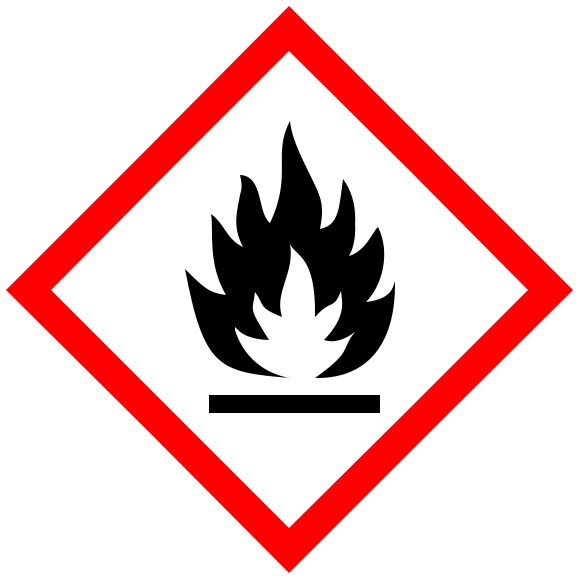
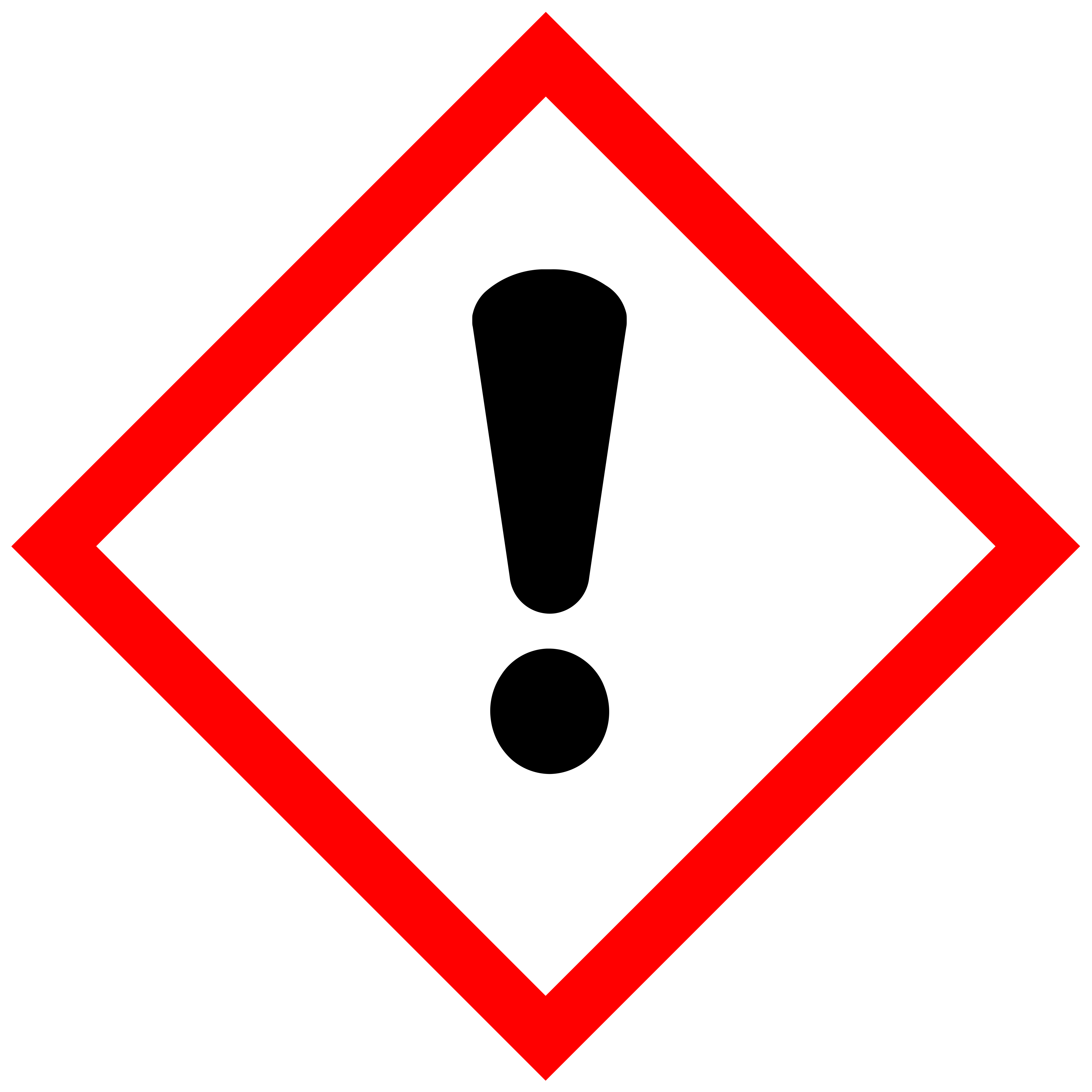
When we create or update chemical disposal entries, our H-code hazard list is generous. We list hazards that may be just below regular cutoffs and would otherwise normally be unlisted. We do this to provide hobbyists a wider scope of safety risks that may still be relevant, despite normally being omitted. Our GHS icons, however, are congruent with typical legal labeling requirements of the respective chemical.
High
- H225: Highly flammable liquid and vapor
- H319: Causes serious eye irritation
- H336: May cause drowsiness or dizziness
Disposal Method
You can evaporate very small amounts outside in a well-ventilated area. Lay soaked rags flat on a non-combustible surface (like concrete) outside. Once they are bone-dry and crispy, they can go in the regular trash. Double check with your local municipality’s regulations.For large amounts, take in a sealed container to your local household hazardous waste (HHW) facility.
Neutralizing Agent
N/A – For spills: You can use clay-based kitty litter or activated carbon to absorb the liquid. Avoid combustibles like sawdust. Once contained collect in a sealed double bag and dispose.
Storage Precautions
Store in a sealed metal container. Store in a cool, dry area. Never store MEK in a basement or a living space. A detached garage or a specialized outdoor chemical shed is best. For large containers (5 gallons+), make sure the container is grounded to prevent static sparks when pouring
Ideal Storage Container
Metal Container. Review our chemical storage container guide for more information about container types and materials.
Other Names
MEK, 2-Butanone, MEK Solvent / MEK Thinner
Additional Tips
- MEK doesn’t just glue plastics. it welds them. If you are working with ABS (like LEGOs or pipe) or Polystyrene (model kits), a bit of MEK will melt the two surfaces together into a single solid piece. You can make your own plastic putty by dissolving scrap pieces of ABS plastic in a small jar of MEK until it reaches a gooey consistency. Use it to fill gaps and once it evaporates, the material that’s left is the same as what you started with.
- If you are stripping paint or cleaning a large surface, acetone often dries before you can wipe the gunk away. MEK stays liquid longer, giving you a bigger working window to actually get the cleaning done without using twice as much product.
- For real protection, you need Butyl rubber or Silvershield gloves. If you only have nitrile, treat them as “splash protection” only. If you get MEK on them, change them immediately
- MEK vapors are heavier than air. The room might smell fine at head height, the flammable vapors can actually be pooling on the floor like invisible water.
- MEK is among the best degreasers on the planet for metal parts. It leaves zero residue.
Incompatible Chemicals/Dangerous Combinations
- Strong Oxidizers (Bleach, Peroxides, Nitric Acid) Fire – Causes immediate combustion or explosion
- Strong Acids (Sulfuric, Hydrochloric) Violent – Rapid heating (exothermic) and splashing of the solvent
- Strong Bases (Drain cleaner, Caustic Soda) Heat -Dangerous buildup of temperature and pressure.
- Amines & Ammonia Toxic Gas – Forms irritating and potentially toxic nitrogenous vapors.
- Potassium tert-butoxide Ignition – Causes the MEK to catch fire immediately upon contact.
- Isocyanates Heat – Rapid polymerization that generates lots of heat.