Always consult a manufacturer SDS. Read our Full Liability Disclaimer
Hazard Level & Hazards:
When we create or update chemical disposal entries, our H-code hazard list is generous. We list hazards that may be just below regular cutoffs and would otherwise normally be unlisted. We do this to provide hobbyists a wider scope of safety risks that may still be relevant, despite normally being omitted. Our GHS icons, however, are congruent with typical legal labeling requirements of the respective chemical.
High
- H225: Highly flammable liquid and vapor
- H301: Toxic if swallowed
- H311: Toxic in contact with skin
- H331: Toxic if inhaled
- H370: Causes damage to organs
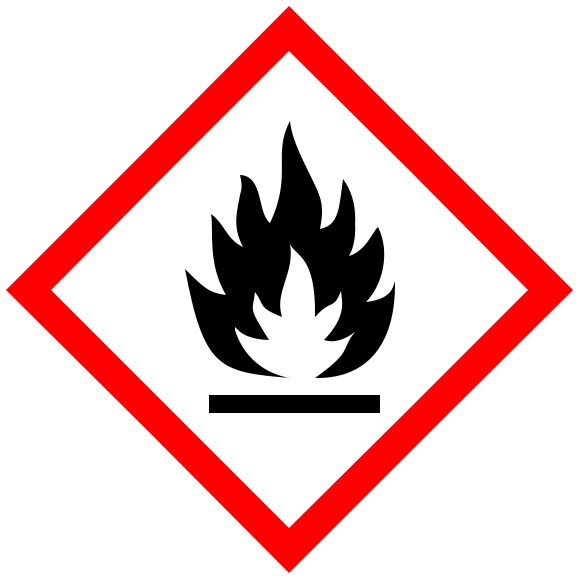
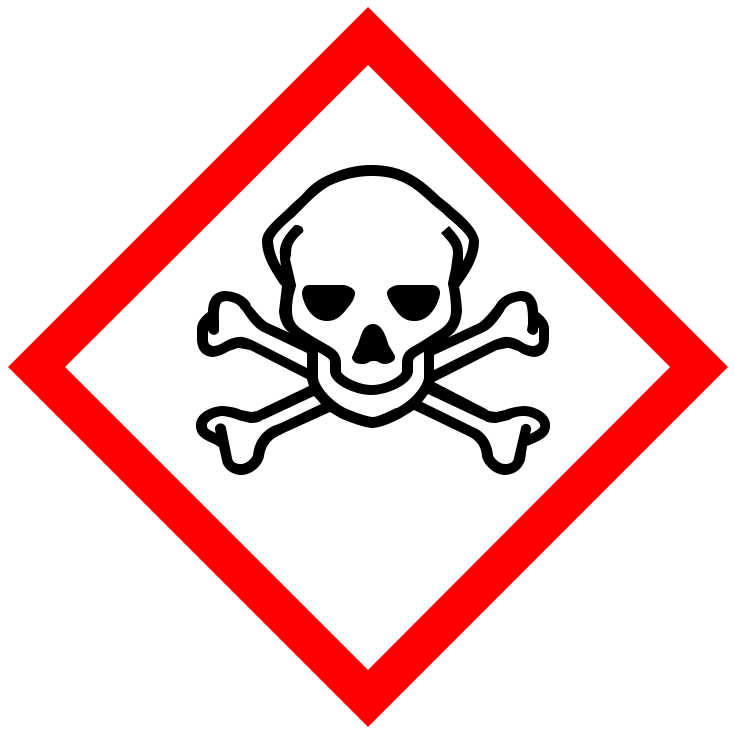
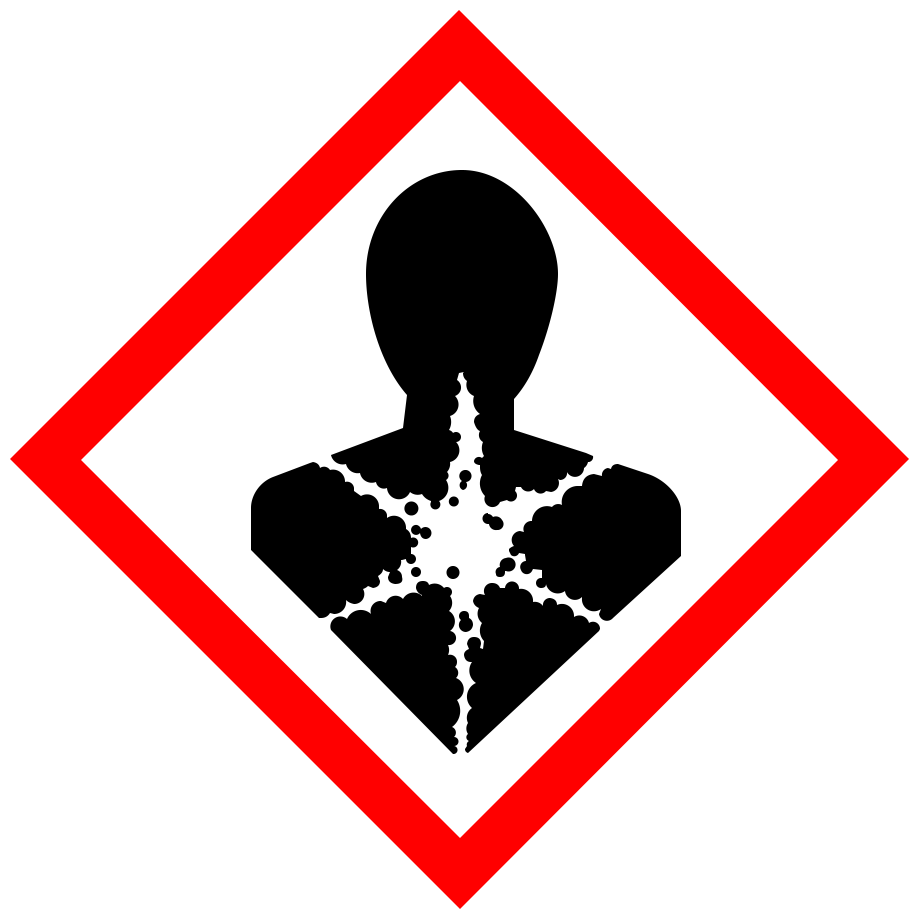
Disposal Method
For small amounts, you can place the methanol in a wide-mouth open container outdoors with ample ventilation and evaporate it. Make sure no flammable materials or sources of sparks or flames are nearby. For very small amounts, like residue in a beaker, you can rinse and dilute with 20 times the amount of water. This is acceptable down the drain in most municipalities.For any substantial amount, never pour down any drains. This can be dangerous in sewer systems and septic tanks. Take the methanol in a labeled and sealed HDPE or borosilicate container to a local household hazardous waste (HHW) facility.
Neutralizing Agent
N/A. For spills, immediately remove any ignition sources and ensure ample ventilation. Use a non-flammable absorbent like cat litter, sand, or earth to absorb the liquid. Rinse the area with water and double-bag and dispose of any waste materials.
Storage Precautions
Storage in an amber borosilicate container is ideal. Keep in a cool, dry, dark place. Keep away from any ignition, heat, or flame sources.
Ideal Storage Container
Borosilicate Glass. Review our chemical storage container guide for more information about container types and materials.
Other Names
methyl alcohol, wood alcohol, wood spirit, carbinol, hydroxymethane, methyl hydrate, methyl hydroxide, pyroligneous spirit, wood naphtha
Additional Tips
- Since methanol burns with an invisible blue flame, it is easy to walk into a fire or reach over a burning spill without knowing it. You can mix a tiny amount of lithium chloride or a splash of isopropyl alcohol (which burns yellow/orange) into your utility methanol. This adds a visible color to the flame, making a leak or accidental ignition apparent.
- Only use Nitrile gloves (the thicker, the better). Methanol permeates latex almost instantly. Nitrile provides a much better breakthrough time. You should still change your gloves immediately if they get soaked.
- Methanol vapors are slightly heavier than air (1.11 relative to air). If you are working on a benchtop without a fume hood, don’t just crack a window. Use a fan to pull air across the bench and away from you. Vapors tend to pool in low spots like sinks or open drawers. If you are leaning over your work, you are breathing the highest concentration of toxic fumes
Methanol is hygroscopic. It pulls water out of the air. If you are using it for extractions or as a fuel, water contamination will ruin your results. Put 3A molecular sieves into your storage bottle. They have pores small enough to trap water molecules but too small to take in the methanol. This keeps your solvent dry (anhydrous) for much longer.
Incompatible Chemicals/Dangerous Combinations
- Nitric Acid (HNO₃) Explosive – Mixing methanol with concentrated nitric acid can produce methyl nitrate, a volatile and sensitive liquid explosive
- Sodium / Potassium Explosive – Methanol reacts with alkali metals to form sodium methoxide and hydrogen gas. In a confined container, the pressure will cause a rupture. In an open container, the heat of the reaction can ignite the escaping hydrogen.
- Hydrogen Peroxide (H₂O₂) Explosive – High-strength peroxides mixed with organic solvents like methanol create impact-sensitive mixtures. They can detonate with friction or heat.
- Perchloric Acid (HClO₄) Explosive – Perchloric acid is a violent oxidizer. Contact with methanol usually results in an immediate and powerful explosion upon mixing. It creates unstable methyl perchlorate esters.
- Chromic Acid (H₂CrO₄) / Potassium Permanganate (KMnO₄) – Reacts aggressively with alcohols. If you add solid KMnO₄ to methanol, the reaction can generate enough heat to ignite the solvent vapors instantly without an external spark.