Always consult a manufacturer SDS. Read our Full Liability Disclaimer
Hazard Level & Hazards:
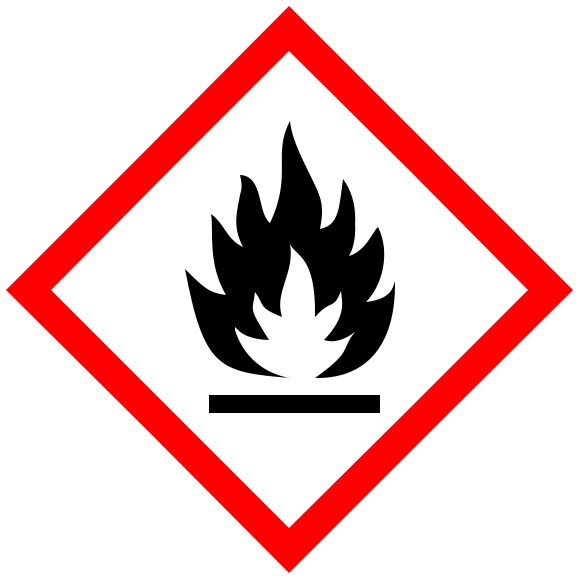
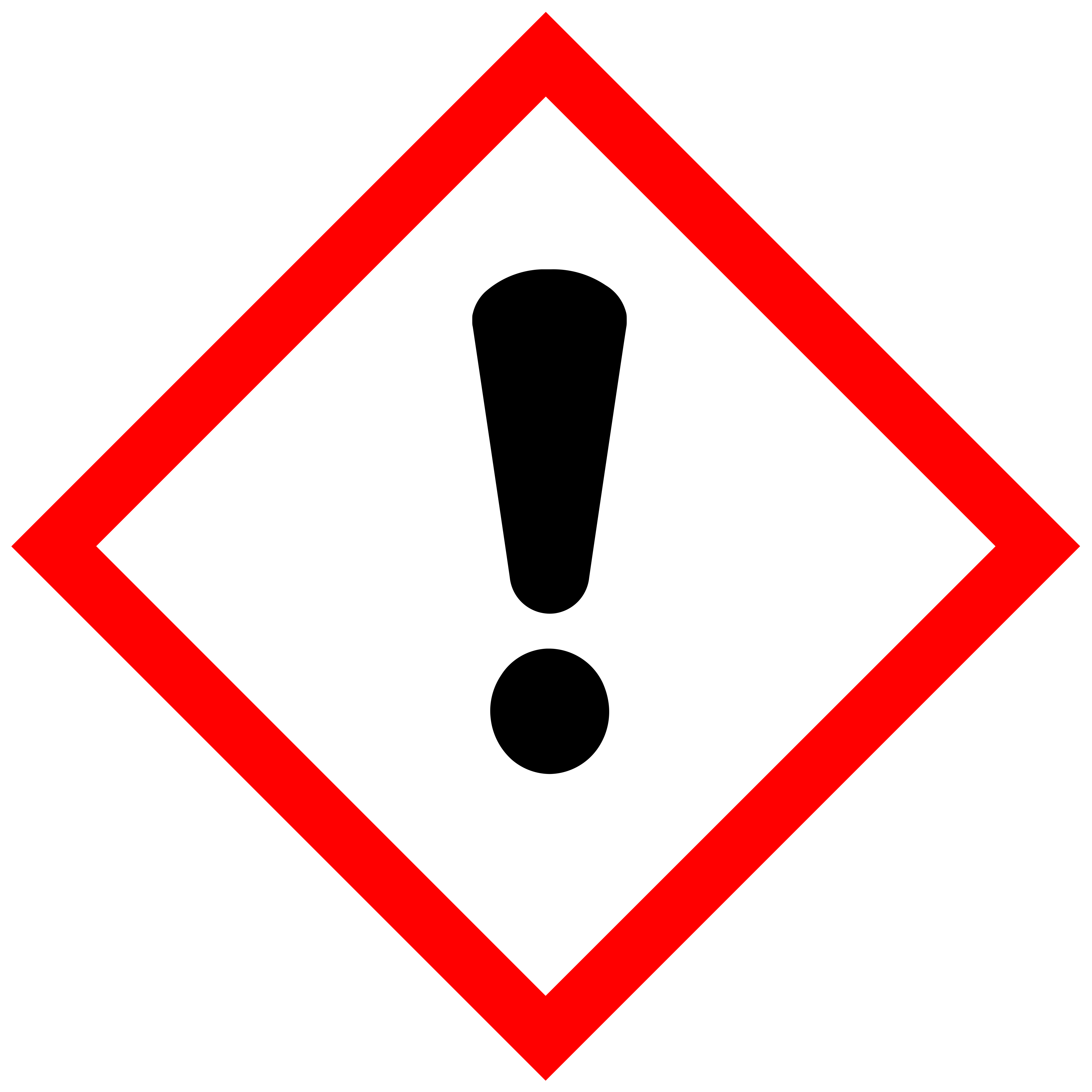
When we create or update chemical disposal entries, our H-code hazard list is generous. We list hazards that may be just below regular cutoffs and would otherwise normally be unlisted. We do this to provide hobbyists a wider scope of safety risks that may still be relevant, despite normally being omitted. Our GHS icons, however, are congruent with typical legal labeling requirements of the respective chemical.
Medium
- H225: Highly flammable liquid and vapor
- H319: Causes serious eye irritation
- H336: May cause drowsiness or dizziness
Disposal Method
Very small amounts may be evaporated in a controlled manner and environment.
- Work in a well-ventilated area
- Keep away from flames, heat, and flammable materials
- Pour into a wide shallow container
- Allow to evaporate naturally
- Do not leave unattended around children or pets
Neutralizing Agent
N/A. For spills: Ensure adequate ventilation. Clear the area of any flames, heat, or flammable materials. Use an inert absorbent like kitty litter, dry earth, vermiculite, or sand. After it has soaked up, put the absorbent into a sealable container. Leave the container open until dried. Then you can dispose with the regular trash.
Storage Precautions
For long term storage, keep in a sealed HDPE container away from any heat, flammable materials, or flames. Keep the area well-ventilated. To avoid ignition by static, keep any metal parts or equipment grounded.
Ideal Storage Container
HDPE. Review our chemical storage container guide for more information about container types and materials.
Other Names
Ethyl Alcohol, grain alcohol, alcohol (ethyl), grain spirit, Everclear, high-proof alcohol, anhydrous ethanol, USP ethanol, denatured alcohol, bioethanol, 64-17-5
Additional Tips
- Ethanol vapors are heavier than air. Fumes can creep along a desk or other surface and travel to an ignition source.
- The higher the concentration, the lower the flash point. This means that more concentrated solutions are significantly more combustible.
- Ethanol is hygroscopic and will absorb water from the air if it is able.
- Hardware-store “denatured alcohol” may contain: Ethanol, methanol, IPA, acetone, MEK. Check the ingredients before making disposal and storage decisions.
- While ethanol is biodegradable, it is regulated since it can overwhelm wastewater systems and increase oxygen demand in water.
- Ethanol extracts plasticizers. It can soften certain plastics, leach additives, and contaminate solutions. HDPE and PTFE are safe, unknown plastics are not.
- Pouring ethanol from plastic containers can build static charge and ignite vapors. This is particularly important when working with quantities above a typical household amount.
Incompatible Chemicals/Dangerous Combinations
- Nitric Acid Violent Oxidation – The reaction can become exothermic and dangerous, especially if confined. Under certain conditions, energetic nitrate esters may form.
- Potassium Permanganate Exothermic – Ethanol reacts with strong oxidizers like permanganate, generating heat and reaction products that may increase fire risk.
- Hydrogen Peroxide Oxidation Hazard – Can undergo oxidation. Under certain catalytic conditions, reaction rates increase and may become hazardous.
- Chromic Acid / Dichromates Fire Risk – Strong oxidizers like chromic acid react with ethanol to generate heat and potentially ignite the mixture. This combination is often used in oxidation reactions and can proceed rapidly.
- Sodium Hypochlorite (Bleach) Toxic Gas – Ethanol can react with bleach to form chloroform and other chlorinated byproducts, especially under acidic conditions. Heat and toxic vapors may result.
- Strong Acids (Sulfuric Acid) Heat – Mixing ethanol with concentrated sulfuric acid produces heat and dehydration reactions. Under certain conditions, flammable gases or organic byproducts may form.
- Acetyl Chloride / Acid Chlorides Violent – Ethanol reacts rapidly with acid chlorides, releasing heat and hydrogen chloride gas. Reaction can be vigorous if not controlled.
- Alkali Metals (Sodium, Potassium) Explosive gas – Metallic sodium or potassium reacts with ethanol to form alkoxides and hydrogen gas. Hydrogen is highly flammable and can ignite.
- Perchlorates / Strong Oxidizers Explosion – Ethanol mixed with powerful oxidizers can form highly combustible mixtures. Under confinement or with ignition sources, explosive conditions may be present.
- Aluminum Powder (Finely Divided) Combustion – While bulk aluminum is stable with ethanol, finely divided metal combined with ethanol vapors and ignition sources can cause rapid combustion