Always consult a manufacturer SDS. Read our Full Liability Disclaimer
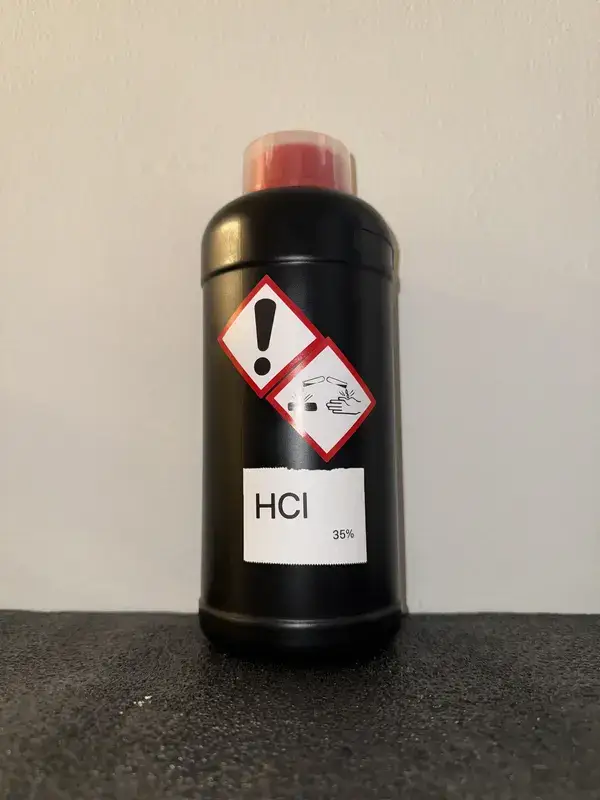
Hazard Level & Hazards:
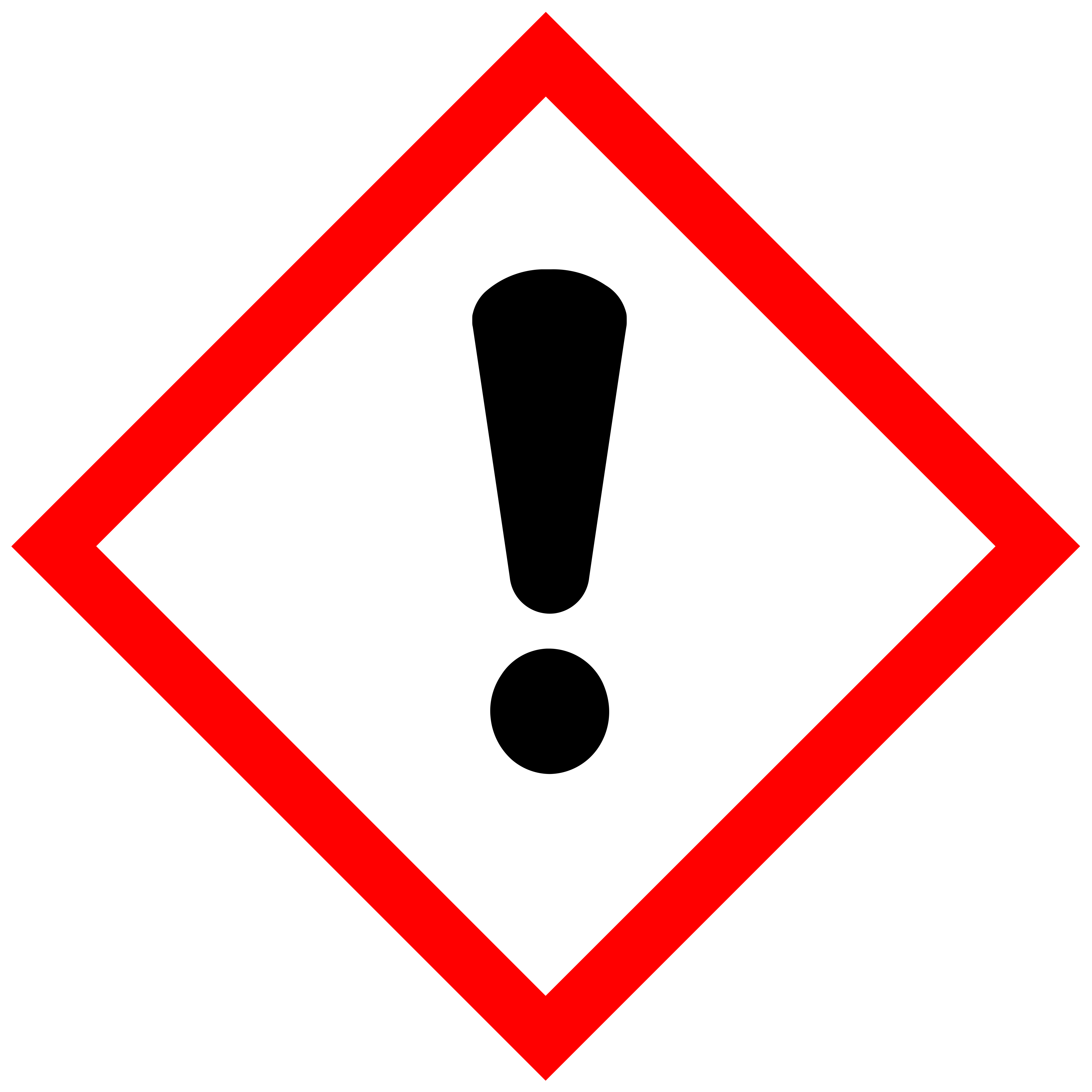
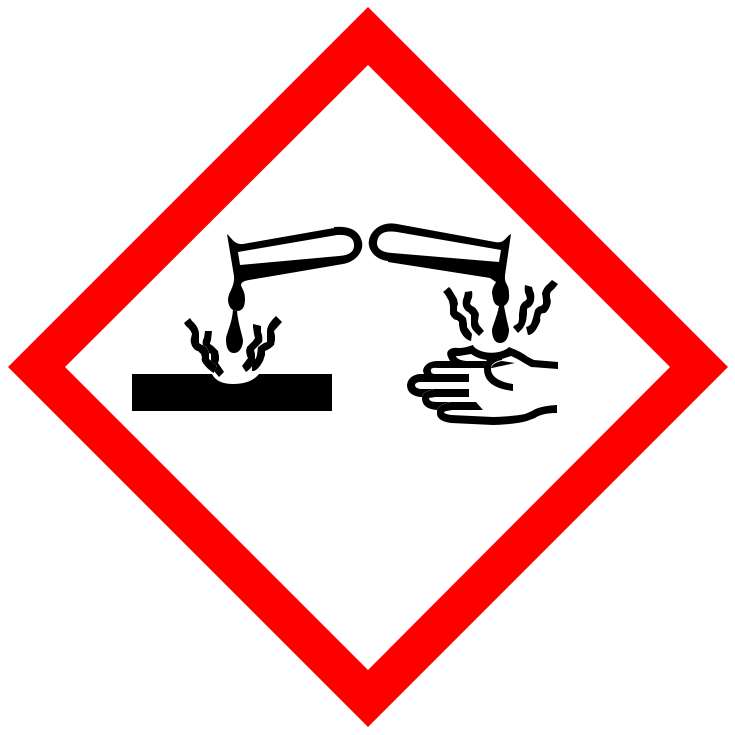
When we create or update chemical disposal entries, our H-code hazard list is generous. We list hazards that may be just below regular cutoffs and would otherwise normally be unlisted. We do this to provide hobbyists a wider scope of safety risks that may still be relevant, despite normally being omitted. Our GHS icons, however, are congruent with typical legal labeling requirements of the respective chemical.
High
- H290: May be corrosive to metals
- H314: Causes severe skin burns and eye damage
- H318: Causes serious eye damage
- H335: May cause respiratory irritation
Disposal Method
Do not pour full strength HCl (Muriatic Acid) down the drain. For every 1 part (like a cup), mix with 15 parts (like 15 cups) water. Add the water to the mixing container first. After waiting 5 minutes, you can pour the diluted mixture down the drain with cold water running for 1 minute before and 3 minutes after you are done.For high concentrations or large quantities, take to a household hazardous waste (HHW) facility.
Neutralizing Agent
Baking soda, soda ash, lime
Storage Precautions
Store in its original container with a tight seal. Do not store in any metal containers. Keep the container in a cool, well-ventilated area. Keep away from bleach, bases, and metals.
Ideal Container Type
HDPE. Review our chemical storage container guide for more information about container types and materials.
Other Names
Hydrochloric Acid, Spirits of Salt, Hydronium Chloride
Additional Tips
- Hobbyists often think that because Muriatic acid is used to clean concrete, it’s safe for garage floors. This is not entirely true. If you spill a concentrated amount and don’t neutralize it immediately with a base (like lime or soda ash), it will continue to react with the calcium carbonate in the concrete, turning it into Calcium Chloride. This salt is hygroscopic (it pulls moisture from the air) leaving you with a patch of concrete that stays permanently damp and sweats forever.
- Muriatic Acid fumes in the air. If you store it in a garage near your tools, the fumes alone will rust every screwdriver and saw blade in the room.
- Always Add Acid (AAA) to water, never water to acid. Adding water to concentrated HCl can cause a violent spatter.
- Can be neutralized with Baking Soda (Sodium Bicarbonate) orSoda Ash until it stops fizzing, at which point it becomes salt water.
Incompatible Chemicals / Dangerous Combinations
- Bleach (Sodium Hypochlorite) Lethal Gas – The #1 household killer. Mixing these releases massive amounts of Chlorine Gas (Cl₂), which can cause fatal pulmonary edema (fluid in the lungs) in minutes.
- Cyanide Salts Lethal Gas – Instantly releases Hydrogen Cyanide (HCN), a highly toxic gas that prevents cellular respiration. This is extremely dangerous in a home lab.
- Concentrated Sulfuric Acid (H₂SO₄) Toxic Fumes – Sulfuric acid is a dehydrating agent. If it is added to Muriatic acid, it will dehydrate the HCl solution, causing a massive, violent release of pure HCl gas.
- Potassium Permanganate (KMnO₄) Explosion / Toxic Gas – A violent reaction that produces heat and creates large volumes of chlorine gas. It can be explosive if the Permanganate is in a closed container.
- Active Metals (Al, Zn, Mg) Fire/Explosion – Muriatic acid eats these metals rapidly, producing heat and Hydrogen Gas (H₂). In an enclosed space, this creates an explosion risk.
- Formaldehyde Carcinogen Formation – Mixing HCl with Formaldehyde can form BCME (Bis-chloromethyl ether), which is a potent human carcinogen even at very low exposure levels
- Carbonates (Baking Soda) Pressure/Foaming – While used for neutralization, adding it too fast causes a violent volcano of CO₂ foam that can spray acid everywhere.