Always consult a manufacturer SDS. Read our Full Liability Disclaimer
Hazard Level & Hazards:
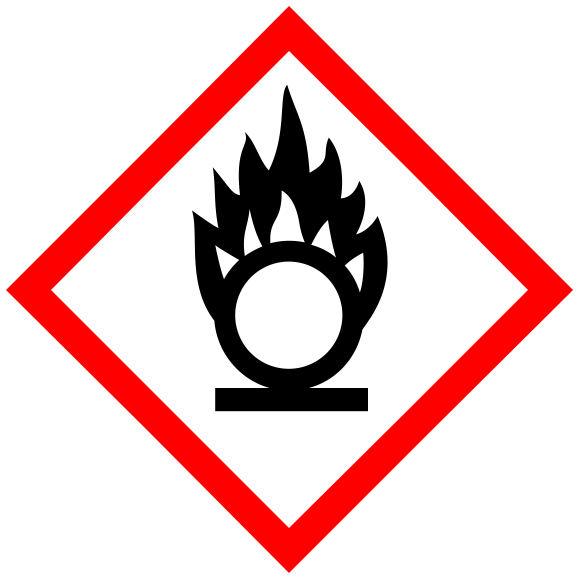
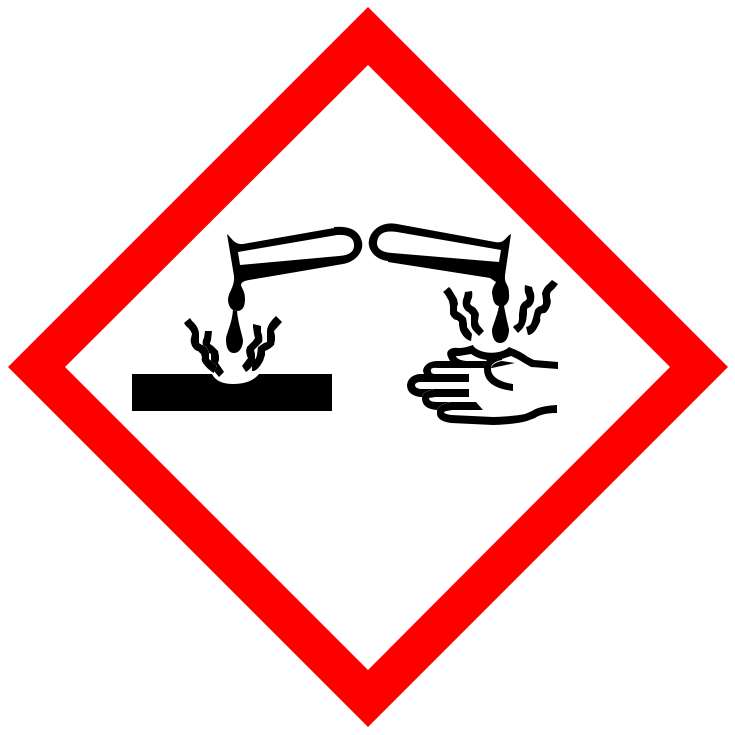
When we create or update chemical disposal entries, our H-code hazard list is generous. We list hazards that may be just below regular cutoffs and would otherwise normally be unlisted. We do this to provide hobbyists a wider scope of safety risks that may still be relevant, despite normally being omitted. Our GHS icons, however, are congruent with typical legal labeling requirements of the respective chemical.
Medium
- H271: May cause fire or explosion; strong oxidizer
- H272: May intensify fire; oxidizer
- H302: Harmful if swallowed
- H314: Causes severe skin burns and eye damage
- H318: Causes serious eye damage

Disposal Method
Household strength (3%-6%)
- You can pour small amounts (a bottle or two) down the sink. First, turn on the cold water. Slowly pour it with the water running and continue letting the water run for 3 minutes. On septic systems, do this same process but for small increments over several days.
- Never pour hydrogen peroxide at this concentration directly down a drain. First dilute it to 3% in a bucket. Add the water before the hydrogen peroxide. If you are unable to do the math, dilute at a 1:15 ratio. For every cup of hydrogen peroxide, add 15 cups of water to the bucket first. After it has been diluted (and let sit for 5 minutes) you can pour down the drain following the instructions above.
- For large quantities (several gallons+), take the containers to a household hazardous waste (HHW) facility.
Neutralizing Agent
To quench: Sodium Metabisulfite, Sodium Thiosulfate, Sodium Bisulfite, ascorbic acid (vitamin C). Catalysts: Catalase Enzyme, Manganese Dioxide, Activated Carbon, baking yeast, bleach (violent)
Storage Precautions
Ideally keep refrigerated, necessary for higher concentrations. Avoid heat. Keep away from any light. High density polyethylene is the gold standard, Vented caps necessary for concentrations above 5%. Avoid glass containers. Keep away from organics and metals and keep below eye-level.
Ideal Container Type
PTFE. Review our chemical storage container guide for more information about container types and materials.
Other Names
Hydrogen Dioxide, Dihydrogen Dioxide, Dioxidane, Oxidanyl, Perhydroxic Acid, Oxygenated Water, Perhydrol, Oxydol, Superoxol
Additional Tips
- Hobbyists often harvest Manganese Dioxide (MnO₂) from alkaline batteries for experiments. If even a tiny speck of MnO₂ (which acts as a powerful catalyst) falls into a beaker of concentrated H₂O₂, the entire volume will decompose instantly. This results in a steam explosion of boiling hot oxygen and water that can spray corrosive peroxide several feet into the air
- Skin contact with 12%+ peroxide doesn’t hurt immediately but turns the skin white (oxidative bleaching) and causes a “pins and needles” sensation.
- Hydrogen Peroxide constantly decomposes into water and oxygen gas. If stored in a non-vented, air-tight glass bottle, it can become a “pressure bomb”
- If high-strength peroxide spills on organic material like a cotton rag or sawdust, it can start a fire without a spark.
Incompatible Chemicals / Dangerous Combinations
- Acetone (C₃H₆O) Explosion – Forms TATP (Acetone Peroxide), a notoriously unstable primary explosive. This can happen accidentally if cleaning glassware with acetone and peroxide residues are present.
- Alcohols (Ethanol, IPA, Isopropyl Alcohol) Explosion / Fire – Can form unstable organic peroxides or ignite violently. Mixing 30% H₂O₂ with Isopropyl Alcohol is a recipe for a runaway exothermic reaction
- Silver, Platinum, Copper Rapid Decomposition – These metals (and their oxides) act as catalysts. Contact can cause the peroxide to flash boil into steam and oxygen gas instantly.
- Strong Acids (H₂SO₄, HNO₃) Extreme Corrosion – Mixing with Sulfuric acid creates Piranha Solution. It is used to dissolve all organic matter and is dangerously reactive, often boiling or exploding if it encounters too much fuel.
- Potassium Permanganate Violent Reaction – A classic Elephant Toothpaste reaction but much more violent at high concentrations. Produces extreme heat and a massive, rapid release of oxygen gas.
- Bases (NaOH, KOH) Accelerated Decay – Peroxide is unstable in alkaline conditions. Adding a strong base can trigger a rapid, heat-generating decomposition
- Organic Solids (Sawdust, Paper) Spontaneous Fire – Concentrated H₂O₂ will dehydrate and oxidize cellulose materials until they ignite without an external flame source.
Resources