Always consult a manufacturer SDS. Read our Full Liability Disclaimer
Hazard Level & Hazards:
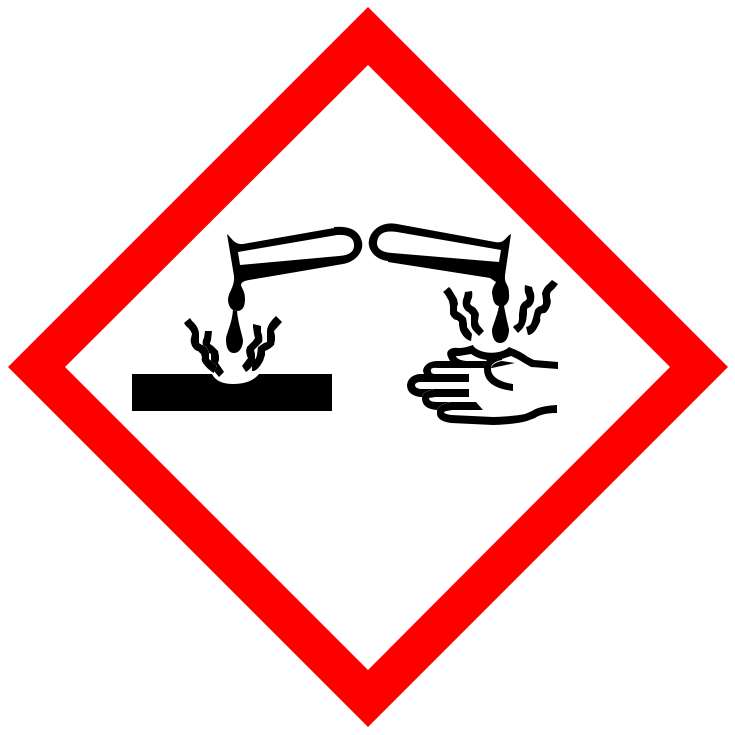
When we create or update chemical disposal entries, our H-code hazard list is generous. We list hazards that may be just below regular cutoffs and would otherwise normally be unlisted. We do this to provide hobbyists a wider scope of safety risks that may still be relevant, despite normally being omitted. Our GHS icons, however, are congruent with typical legal labeling requirements of the respective chemical.
Medium
- H318: Causes serious eye damage
Disposal Method
For the safest and most broadly compliant disposal, take unused or contaminated sodium bisulfate to a Household Hazardous Waste (HHW) facility. Visit our HHW facility page for more information about chemical transport and typical HHW facility procedures. and conventions. This is especially true for large quantities or impure (contaminated) solutions. Keeping the material in its original container helps with proper identification during disposal.For small quantities of pure sodium bisulfate:
- Slowly dissolve the sodium bisulfate in a large container of water. (At least 1 part sodium bisulfate to 20-50 parts water)
- Stir until completely dissolved
- Slowly add baking soda (sodium bicarbonate) until the pH is between ~6-8
- Gradually pour the diluted and neutralized solution down a sink or drain with the water running before, during, and after your pour. This is not recommended for septic systems.
Improper disposal can damage plumbing, corrode surfaces, or affect local water systems.
Neutralizing Agent
Baking Soda (Sodium Bicarbonate)
Storage Precautions
Store in sealed HDPE container. Keep in a cool, well-ventilated area. Keep away from metal.
Ideal Storage Container
HDPE. Review our chemical storage container guide for more information about container types and materials.
Other Names
Sodium Hydrogen Sulfate, sodium acid sulfate. dry acid, bisulfate of soda, niter cake, 7681-38-1
Additional Tips
- Adding water to a pile of dry acid can cause localized heating and splattering. Dissolve gradually by adding the powder to a larger volume of water.
- Fine particles can irritate the nose, throat, and lungs. Avoid creating dust when handling the powder and work in well-ventilated areas.
- The compound is hygroscopic and absorbs moisture from the air. Containers left open may form hardened clumps and acidic surface residue.
- When neutralizing solutions, bubbling (CO₂ release) indicates reaction progress when carbonates such as baking soda are used
- Many household cleaners contain bleach, ammonia, or oxidizers. Mixing them with acidic chemicals can release hazardous gases.
- Solutions left on concrete, metal, or stone can slowly etch surfaces. Rinse spills thoroughly with water.
Incompatible Chemicals/Dangerous Combinations
- Strong Bases (sodium hydroxide, potassium hydroxide, etc) Violent Reaction – Acid–base neutralization releases heat and can cause splattering or rapid boiling if concentrated solutions are mixed.
- Hypochlorites (Bleach, etc) Chlorine Gas – Sodium hypochlorite can release chlorine gas when acidified. Mixing sodium bisulfate with bleach-containing cleaners may produce toxic chlorine vapors.
- Oxidizing Agents (permanganates, chlorates, peroxides, etc) Exothermic – Strong oxidizers combined with acidic sulfate solutions may react more rapidly and generate heat or reactive byproducts.
- Reactive Metals (zinc, iron, aluminum) Hydrogen Gas – Acids can corrode reactive metals, generating combustible hydrogen gas. This is most likely when sodium bisulfate solutions contact metal surfaces or metal waste.