Always consult a manufacturer SDS. Read our Full Liability Disclaimer
Hazard Level & Hazards:
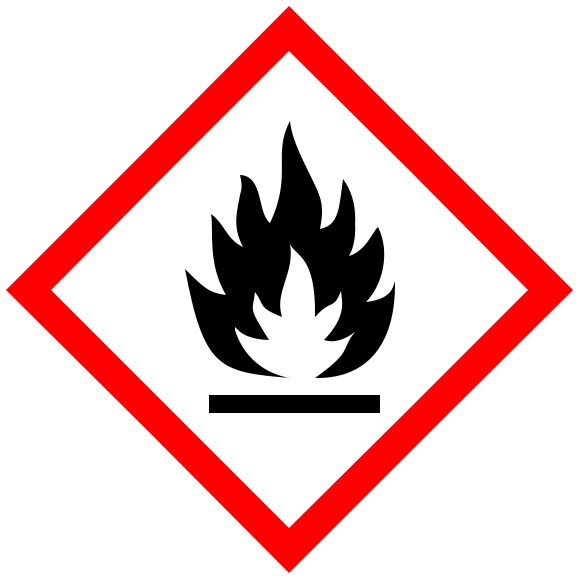
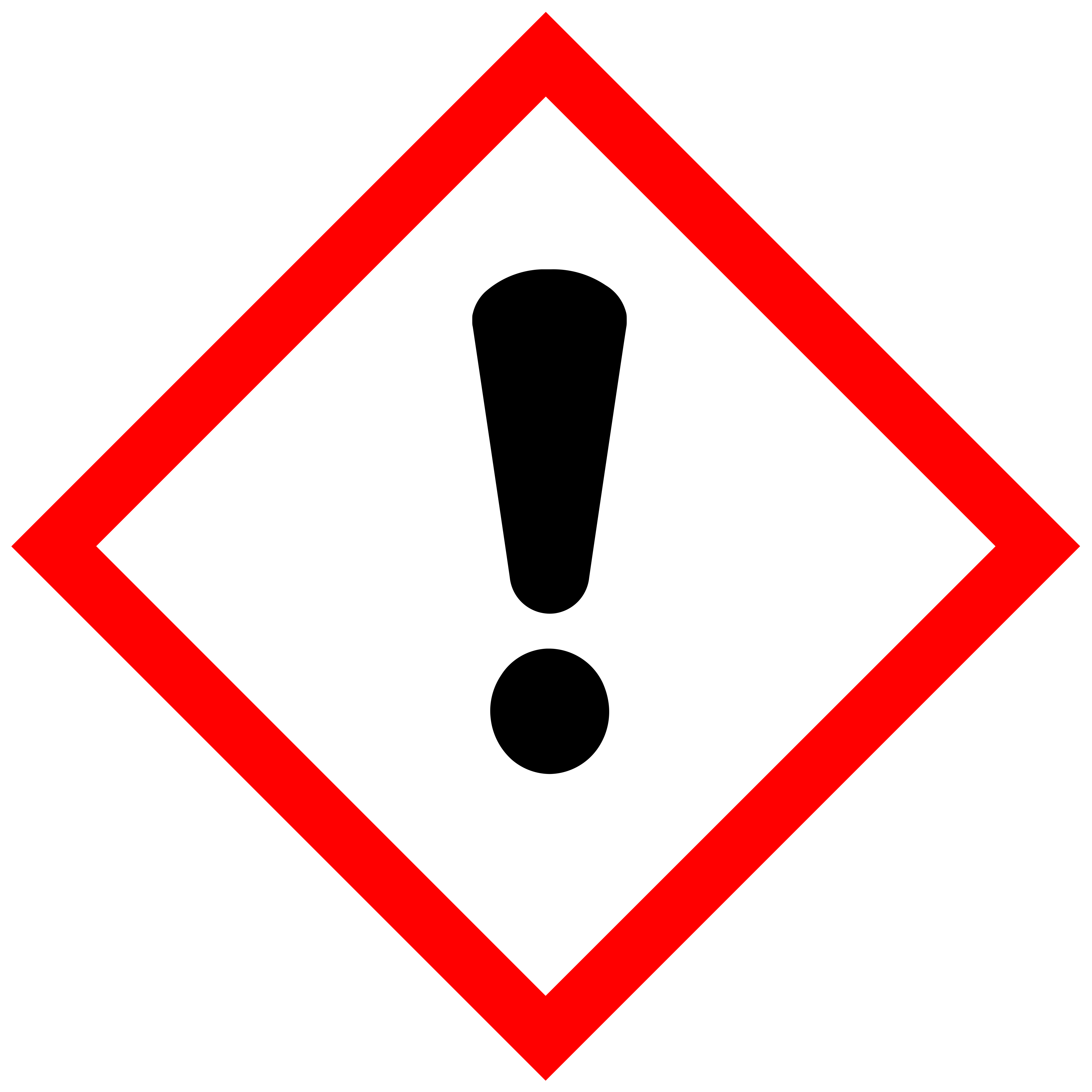
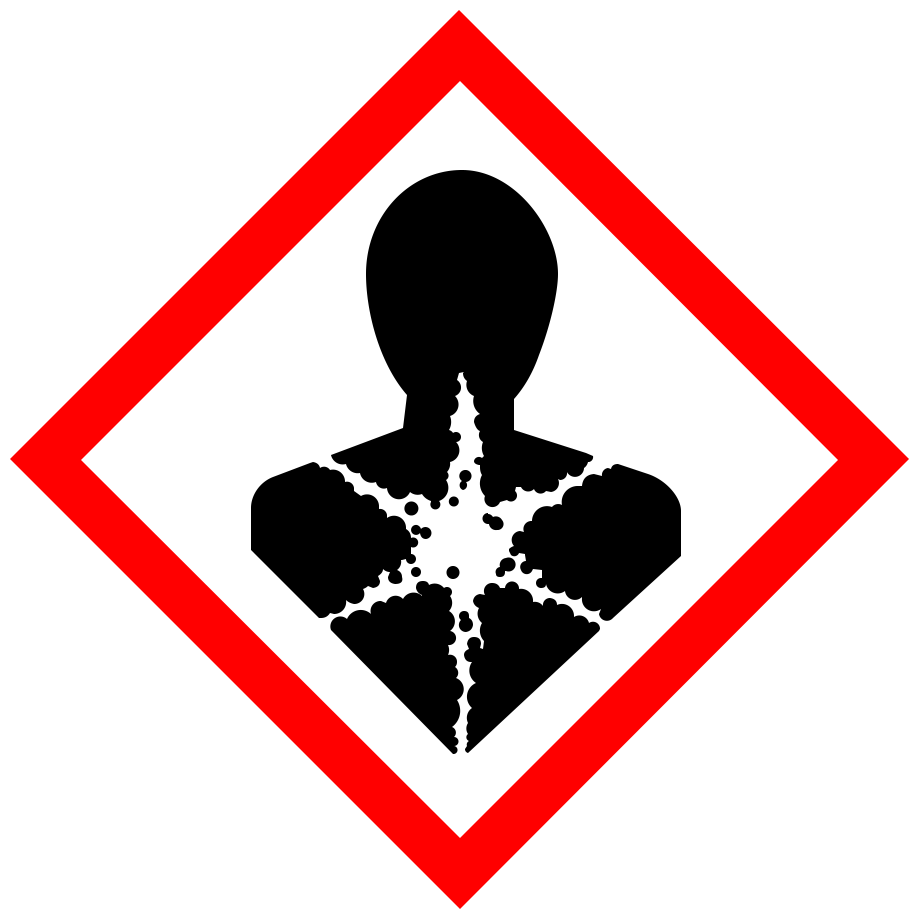
When we create or update chemical disposal entries, our H-code hazard list is generous. We list hazards that may be just below regular cutoffs and would otherwise normally be unlisted. We do this to provide hobbyists a wider scope of safety risks that may still be relevant, despite normally being omitted. Our GHS icons, however, are congruent with typical legal labeling requirements of the respective chemical.
Medium
- H225: Highly flammable liquid and vapor
- H304: May be fatal if swallowed and enters airways
- H315: Causes skin irritation
- H336: May cause drowsiness or dizziness
- H360: May damage fertility or the unborn child
- H372: Causes damage to organs through prolonged or repeated exposure
- H412: Harmful to aquatic life with long lasting effects
Disposal Method
If your toluene:
- Is old, contaminated, or mixed with other chemicals, OR
- Contains paint residues, adhesives, or oils, OR
- is an amount greater than ~100-200mL
- Place a large amount of absorbent non-flammable material (kitty litter, vermiculite, sand, spill absorbent) in a metal or chemical-resistant container.
- Slowly add the toluene to the absorbent.
- Mix thoroughly until no free liquid remains.
- Let the saturated absorbent sit outdoors or in a well-ventilated area until the odor is minimal.
- Seal the dry absorbent in a heavy plastic bag and place it in household trash if local regulations allow you to do so.
- Use at least 5–10 times more absorbent than solvent to prevent free liquid from remaining.
Neutralizing Agent
N/A. For spills: Wear proper PPE. Ensure adequate ventilation. Clear the area of any flammable materials, ignition sources, heat sources, electrical components, and oxidizers. Use a non-flammable absorbent (kitty litter, sand, vermiculite) to absorb the spill. Transfer the materials to a metal or chemical resistant container. Keep the container open and leave in a well-ventilated area until there is no longer an odor. Keep away from any sources of heat or ignition. When the odor is gone you can transfer the materials to a heavy plastic bag and dispose of with regular trash so long as local regulations permit.
Storage Precautions
Keep in amber borosilicate glass. HDPE can be used for short term transport but is not recommended for long-term storage. Steel or stainless steel can be used as well, however borosilicate is ideal. Keep the container in a cool, dry, well-ventilated place. Keep away from heat, sparks, flames, oxidizers, and flammable materials.
Ideal Storage Container
Borosilicate Glass. Review our chemical storage container guide for more information about container types and materials.
Other Names
Methylbenzene, toluol, phenylmethane, methacide, 108-88-3
Additional Tips
- Toluene vapor is significantly heavier than air (vapor density ≈3.1). Vapors can travel along floors and accumulate in low areas like basements, floor drains, and pits. Ignition sources across the room can ignite these vapors even if the liquid solvent is not nearby.
- Combining small amounts of leftover solvents (toluene, acetone, mineral spirits, or gasoline) may seem convenient but creates mixed solvent waste with unpredictable vapor pressure and ignition characteristics. This makes safe disposal more difficult.
- Some products labeled paint thinner or solvent may contain mixtures of hydrocarbons not just pure toluene. Disposal guidance can differ depending on the solvent blend, so always confirm the contents before attempting disposal.
- When immobilizing small amounts for disposal, use at least 5–10 times the solvent volume in absorbent material such as kitty litter or vermiculite. If liquid remains visible or the odor is still strong, additional absorbent is needed.
- Toluene evaporates relatively quickly Allowing it to evaporate indoors can produce hazardous vapor concentrations and fire risk. Any evaporation of residual solvent should occur outdoors in a well-ventilated area.
- Workplace safety standards set limits on airborne solvent exposure. The OSHA permissible exposure limit for toluene is 200 ppm averaged over an 8-hour workday, with a lower recommended exposure limit from occupational health agencies. Repeated hobby exposure in poorly ventilated spaces can approach these limits.
- Toluene fires are Class B flammable liquid fires. Water alone is ineffective. Appropriate extinguishers include dry chemical, carbon dioxide, or foam types designed for flammable liquids.
Incompatible Chemicals/Dangerous Combinations
- Strong Oxidizers (Permanganates, peroxides, chromates, perchlorates) Violent Oxidation – May generate heat, toxic gases, and may ignite flammable solvent vapors.
- Strong Halogenating Agents (Chlorine, bromine (especially with light or catalysts) Halogenation – Halogenation of the aromatic ring or side-chain can occur, producing hydrogen halides (HCl or HBr) and heat. Reaction rates increase with UV light, elevated temperature, or catalytic metals.
- Nitrating Acid Mixtures Explosive – Mixtures of nitric acid with strong dehydrating acids such as concentrated sulfuric acid create powerful nitrating conditions. Can form di- or tri-nitro derivatives, reactions that release significant heat and present runaway hazards.
- Lewis Acids (Aluminum chloride, ferric chloride) Heat – Lewis acids can catalyze Friedel–Crafts reactions involving aromatic hydrocarbons. In uncontrolled conditions this can cause heat generation and formation of heavier aromatic residues.
- Bleach (Sodium Hypochlorite) Oxidative chlorination – May react with aromatic hydrocarbons under certain conditions, especially in acidic environments. Mixing waste solvents with bleach can generate heat and produce chlorinated byproducts.