Always consult a manufacturer SDS. Read our Full Liability Disclaimer
Hazard Level & Hazards:
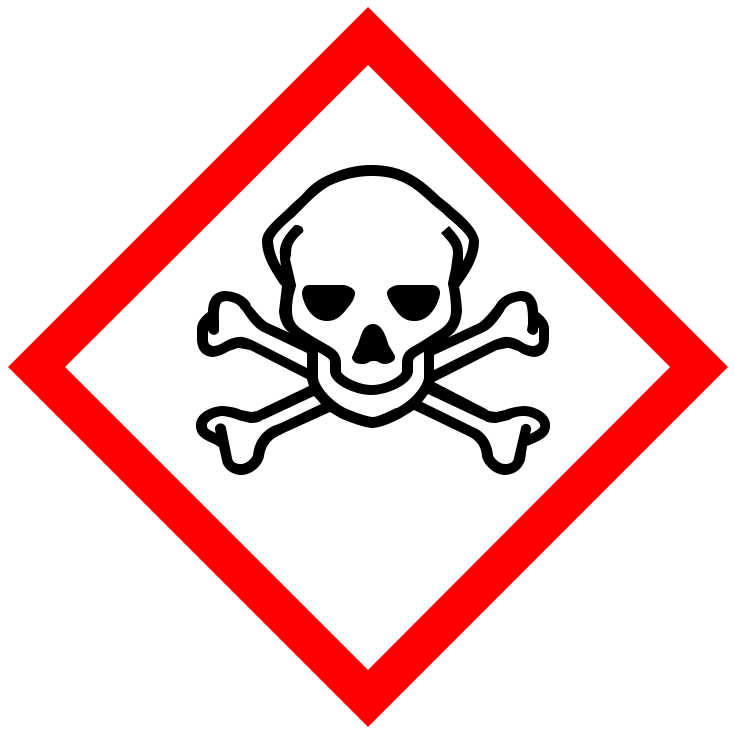
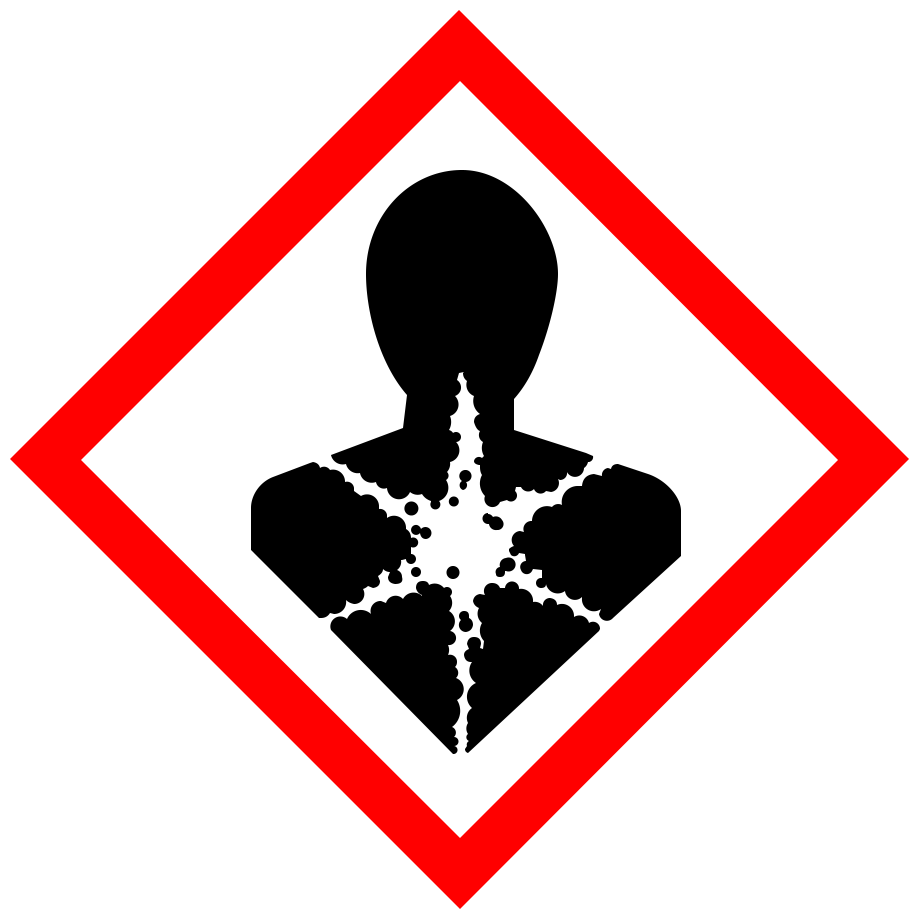
When we create or update chemical disposal entries, our H-code hazard list is generous. We list hazards that may be just below regular cutoffs and would otherwise normally be unlisted. We do this to provide hobbyists a wider scope of safety risks that may still be relevant, despite normally being omitted. Our GHS icons, however, are congruent with typical legal labeling requirements of the respective chemical.
High
- H290: May be corrosive to metals
- H330: Fatal if inhaled
- H360: May damage fertility or the unborn child
- H372: Causes damage to organs through prolonged or repeated exposure
- H410: Very toxic to aquatic life with long lasting effects
Disposal Method
There is no safe or compliant way to dispose of mercury at home. Do not attempt to dilute, solidify, evaporate, etc. While many chemicals should be taken to HHW facilities, we often provide alternative solutions for people who don’t have access to a HHW facility. Mercury does not have any alternative disposal options. Bioaccumulation and persistence in ecosystems make mercury a strict no when it comes to home disposal. Instructions for cleaning spills are outlined below.
Neutralizing Agent
N/A. For spills: Assess the scale of the spill immediately. If it Is a small spill (pea-sized, 1-2 grams, non-porous surface, no heating system involved). Wear all proper PPE. Clear out any people or animals. Isolate the room and turn off HVAC systems. Open windows for ventilation. Do not use a vacuum cleaner or a broom. Do not wash down any drains. Do not throw liquid mercury in the trash. Use index cards or stiff paper to group the beads together. Use an eyedropper or syringe without a needle to suck up the mercury. Hold a flashlight low near the surface to locate tiny droplets. You can use sticky tape to pick up small droplets. Transfer all mercury and contaminated materials into a sealed glass jar. Add a bit of water to reduce vapor release. Keep sealed. This is temporary, not disposal. For spills larger than this, spills on porous surfaces, or with other hazards present, call your local HHW facility or health department immediately.
Storage Precautions
Keep in a PTFE or HDPE container (borosilicate works but can break/shatter). Store in an airtight container. Keep well-ventilated and cool. If possible, add water or sulfur to the secondary containment container to suppress vapors.
Ideal Storage Container
HDPE. Review our chemical storage container guide for more information about container types and materials.
Other Names
Quicksilver, metallic mercury, liquid silver, hydrargyrum, azogue
Additional Tips
- In the event of a spill, use a low-angle flashlight to find hidden droplets. Mercury beads scatter and roll into micro-droplets that are nearly invisible under overhead light.
- Mercury’s vapor pressure increases significantly with temperature. This means at higher temperatures it will release much more fumes. Consider/avoid warm floors, direct sunlight, radiant heating, space heaters, etc.
- Mercury’s high density and low surface tension allow it to penetrate floorboard seams, tile grout lines, and subfloor gaps. Persistent vapor problems almost always trace back to droplets trapped in inaccessible crevices, not visible surface beads.
- Vacuuming permanently contaminates the vacuum. The vacuum becomes a continuous vapor emission source and must be treated as hazardous waste.
- Do not confuse elemental mercury with the mercury in fluorescent bulbs. Compact fluorescent lamps contain very small amounts of mercury bound differently than pooled liquid metal. Cleanup protocol is slightly less strict for this type of mercury.
- If a spill is larger than a tablespoon, it makes contact with carpet or upholstery, it has spread into HVAC, or if pregnant individuals or children are present, immediately call professional hazardous clean-up organizations, your local health department, or local household hazardous waste organization. Do not hesitate.
Incompatible Chemicals/Dangerous Combinations
- Strong Oxidizing Acids (Nitric Acid, Aqua Regia) Toxic Gas – Combination produces corrosive toxic gases. Creates spill scenarios that now involve both heavy metal contamination and acid gas exposure
- Strong Oxidizers (Potassium Permanganate, Hydrogen Peroxide, Sodium Hypochlorite) Mobilizes – Significantly worsens environmental mobility and toxicity.
- Acetylene Explosive – Mercury salts (not elemental directly) can form mercury acetylide. This is a shock-sensitive explosive compound.
- Akali Metals (Sodium, Potassium, etc) Violent – Formation of amalgams. With moisture present, alkali metals may react violently. Amalgam formation can accelerate or complicate uncontrolled reactions.