Always consult a manufacturer SDS. Read our Full Liability Disclaimer
Varies. Commonly: NaOCl, Ca(OCl)₂, C₃Cl₃N₃O₃, NaCl₂N₃O₃, LiOCl
Hazard Level & Hazards:
When we create or update chemical disposal entries, our H-code hazard list is generous. We list hazards that may be just below regular cutoffs and would otherwise normally be unlisted. We do this to provide hobbyists a wider scope of safety risks that may still be relevant, despite normally being omitted. Our GHS icons, however, are congruent with typical legal labeling requirements of the respective chemical.
Medium
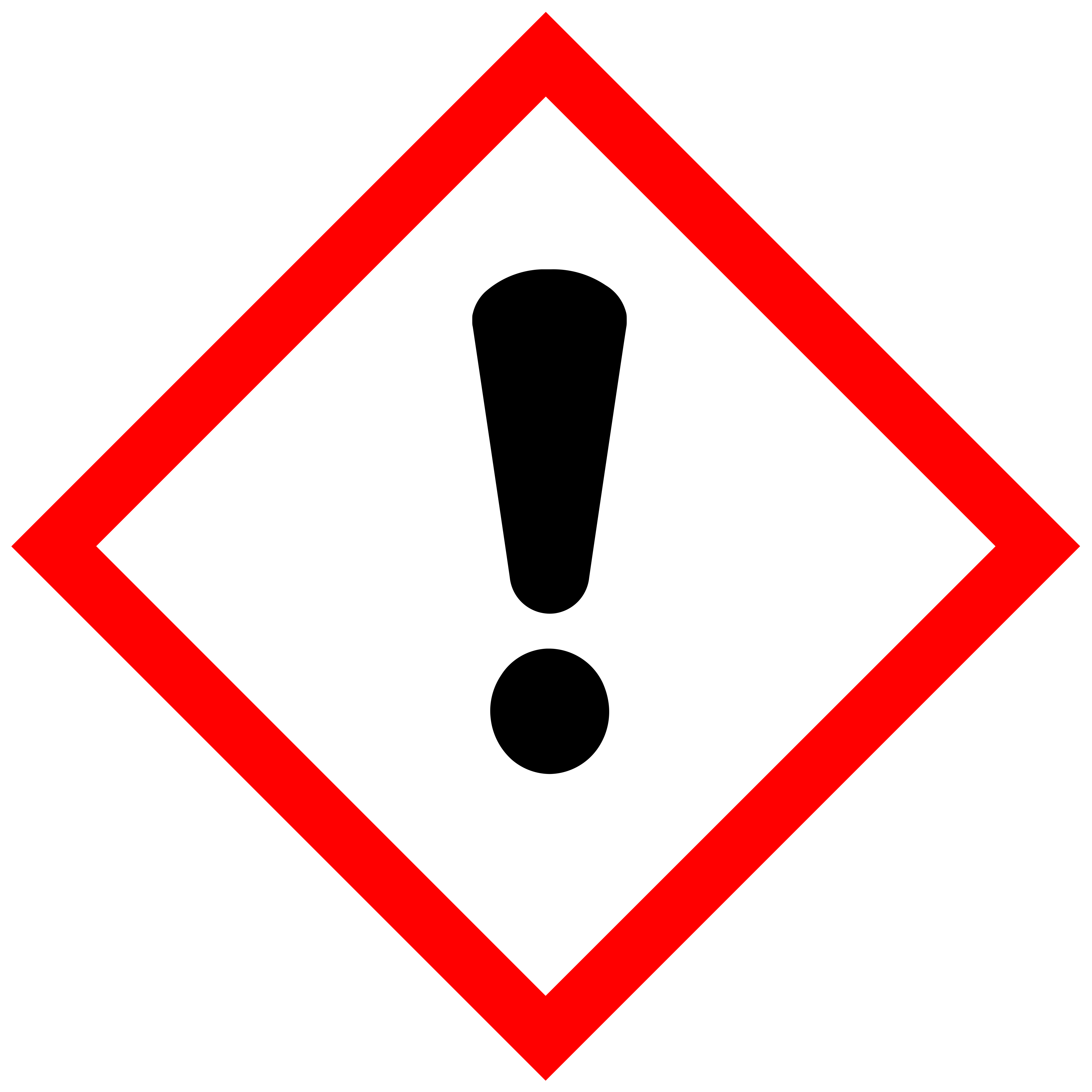
- H302: Harmful if swallowed
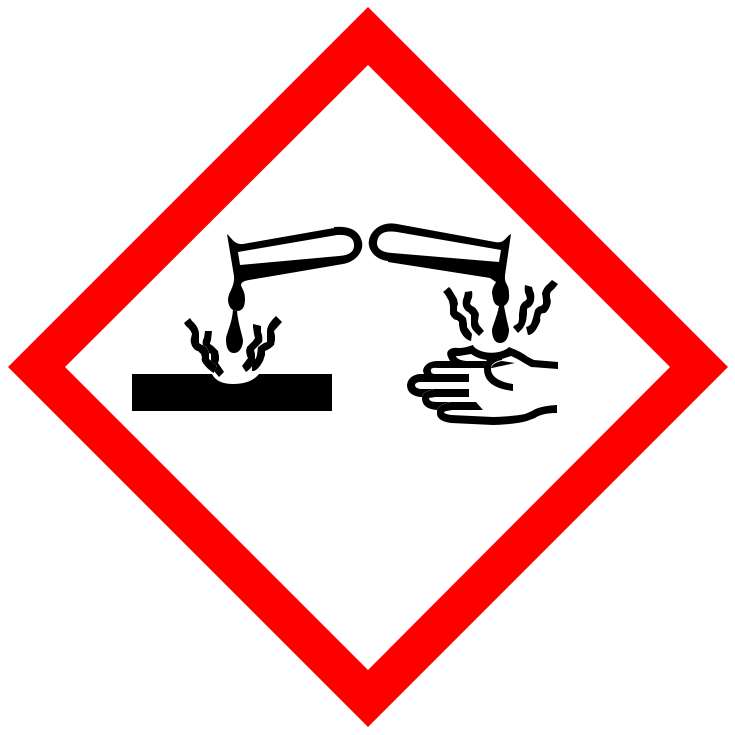
- H314: Causes severe skin burns and eye damage
- H332: Harmful if inhaled
- H335: May cause respiratory irritation
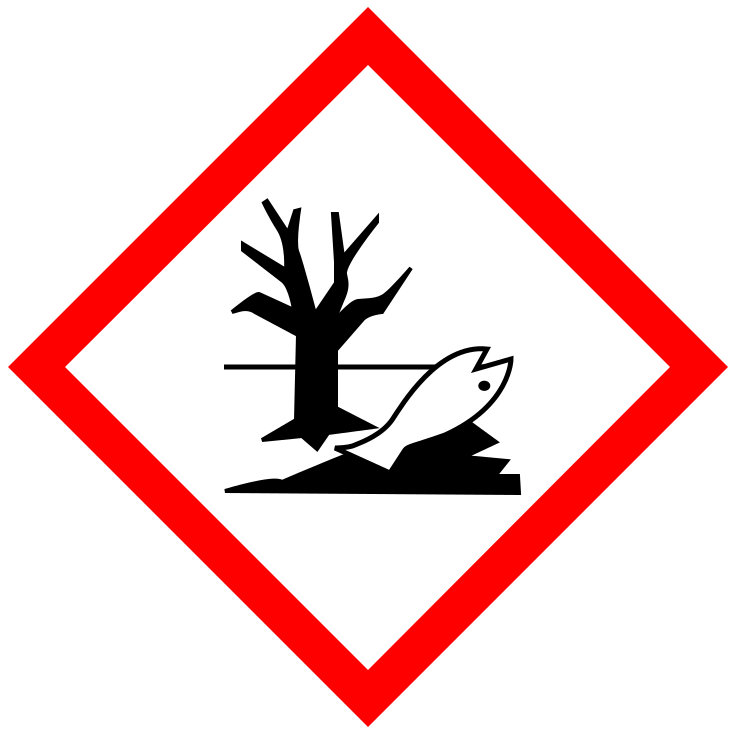
- H400: Very toxic to aquatic life
Disposal Method
Whenever possible, storing and using the product for its intended use is ideal. See storage instructions and precautions below.Any significant quantities, impure solutions/mixtures, or unknown mixtures should be taken to a household hazardous waste (HHW) facility. Visit our HHW information page for details about transport and conventions.For small amounts of liquid pool chlorine (sodium hypochlorite), you may do the following if local regulations permit
- Dilute heavily with water (at least 10:1 dilution).
- Slowly pour into a toilet connected to municipal sewer (never septic)
- Flush with additional water
- Do not pour into storm drains or septic systems
- Dissolve fully in a large volume of water outdoors.
- Ensure no organic debris is present. Keep away from heat, flammable materials, and sources of ignition.
- Slowly discharge to sanitary sewer with very large amounts of water.
- Never dispose of dry granules directly to trash.
Neutralizing Agent
Neutralization is appropriate only for small, known quantities and when you cannot reasonably use the product as intended. It is particularly useful for liquid sodium hypochlorite solutions and small dissolved quantities of calcium hypochlorite. Sodium thiosulfate, Sodium sulfite, Hydrogen peroxide.
Storage Precautions
Keep in a sealed HDPE container. Keep in a cool, well-ventilated area, away from sunlight. Without vented caps, relieve pressure weekly. Never store in metal containers.
Ideal Storage Container
HDPE. Review our chemical storage container guide for more information about container types and materials.
Other Names
Bleach, sanitizing granules, pool shock, hypochlorous acid
Additional Tips
- Buy only what you can use within 1-2 months. Strength can drop significantly over time, especially in summer heat.
- Keep pool chlorine physically separated from other pool chemicals.
- Never return used or unused product back to the original container. Even trace contaminants can accelerate breakdown.
- Use dedicated scoops and measuring equipment. (Don’t use equipment that you use for other chemicals)
- If the cap isn’t vented, pressure buildup can occur.
- Label and date all containers
Discard or send to HHW if you observe: Bulging container, Stronger-than-normal chlorine odor, Heat generation, Clumping in solid product, or Liquid turning very pale or losing strength
Incompatible Chemicals/Dangerous Combinations
- Strong Acids (Sulfuric Acid, Hydrochloric acid, Nitric acid, Phosphoric Acid) Toxic Gas – Acidification converts hypochlorite to chlorine gas (Cl₂), which is toxic and corrosive to lungs and eyes.
- Ammonia and Ammonium Compounds Toxic Gas – Forms chloramines and potentially nitrogen trichloride. These are toxic respiratory irritants that can accumulate in enclosed spaces.
- Organic Materials Combustion Risk – Contact with organics can cause spontaneous ignition or rapid combustion.
- Reducing Agents (Sodium Thiosulfate, Sodium Sulfite, Hydrogen Peroxide, Hydrazine) High Heat – While commonly used for neutralizing, improper technique can generate significant heat and oxygen gas. In confined containers, pressure buildup may rupture packaging.
- Solvents & Fuels (Gasoline, Paint Thinner, Acetone, Alcohols) Explosion Risk – Strong oxidizer + fuel source = rapid combustion potential.