Always consult a manufacturer SDS. Read our Full Liability Disclaimer
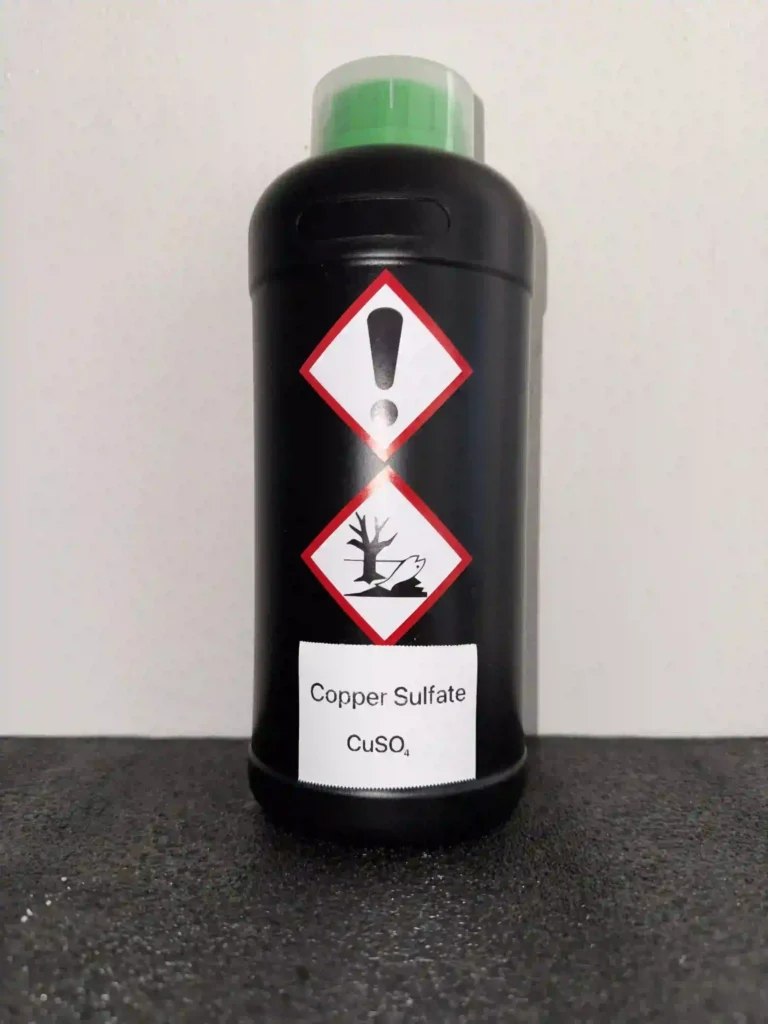
Hazard Level & Hazards:
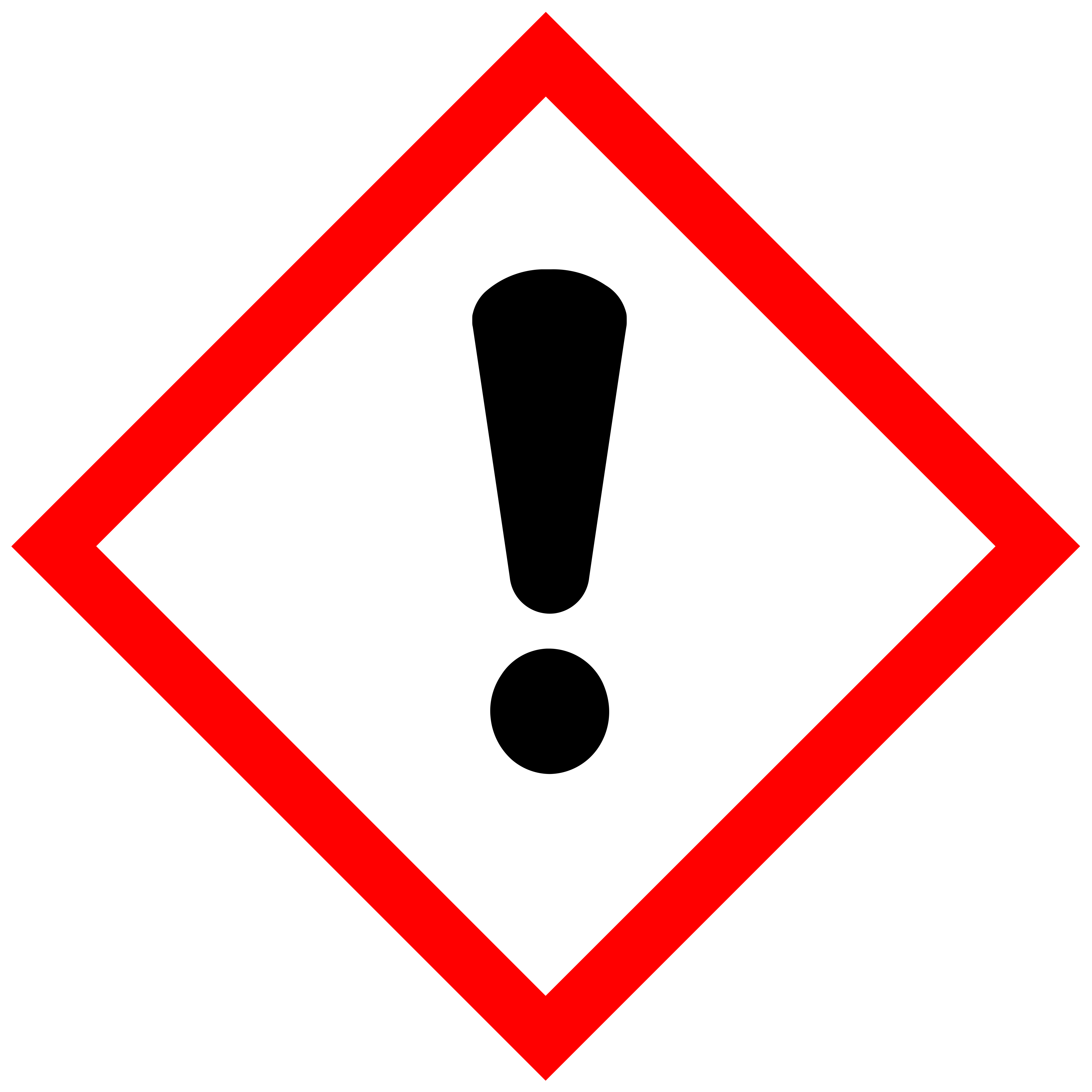
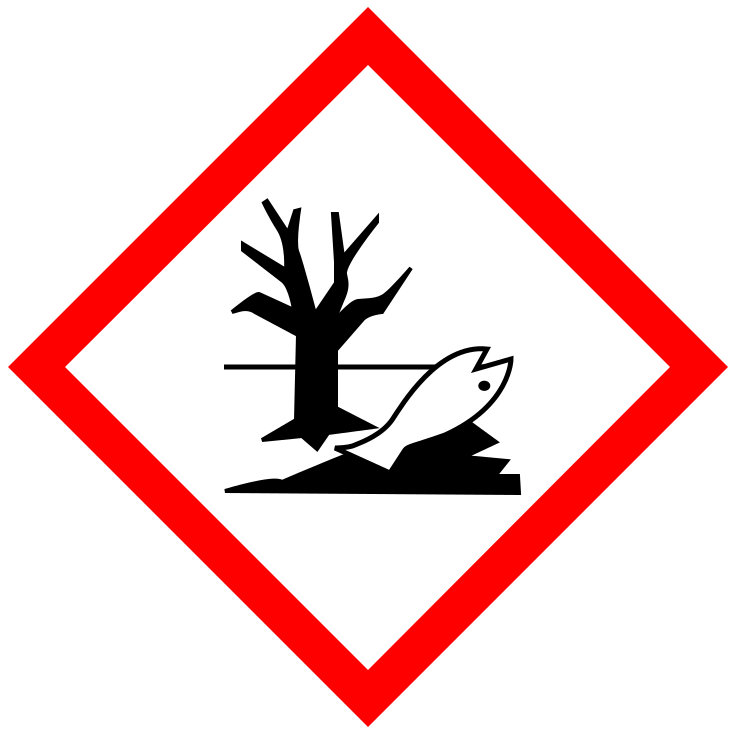
When we create or update chemical disposal entries, our H-code hazard list is generous. We list hazards that may be just below regular cutoffs and would otherwise normally be unlisted. We do this to provide hobbyists a wider scope of safety risks that may still be relevant, despite normally being omitted. Our GHS icons, however, are congruent with typical legal labeling requirements of the respective chemical.
Medium
- H302: Harmful if swallowed
- H315: Causes skin irritation
- H319: Causes serious eye irritation
- H410: Very toxic to aquatic life with long lasting effects
Disposal Method
- Reuse You can leave the solution to evaporate. Ensure ample ventilation and that the solution is on a sturdy surface away from any other objects. You can collect the dried crystals for uses such as:
- Ponds and Lakes While toxic to aquatic life, low concentrations are often used to kill algae. First, check the total alkalinity of the pond and make sure it is above 40 ppm and below 250 ppm. If it isn’t, don’t use Copper Sulfate. If it is, start with 1.0 ppm (2.72lbs/acre/foot). Divide that by 3 and treat 1/3 of the pond. Wait two weeks and if there are no adverse effects, you can treat another third. Keep the crystals in a cloth sack during application so none can sink to the bottom.
- Fungal Spray for Plants Add half a gram of copper sulfate per two liters of water. Ensure the solution is completely mixed and dissolved. It should be practically clear, not blue. Be sure not to hit the roots.
- Growing Crystals Copper sulfate produces stunning blue crystals. You can grow these with supplies at home and your copper sulfate
- Absorption The solution can be absorbed with something like kitty litter or sawdust. You can double bag the waste materials and dispose of regularly.
- Releasing the Copper If you add a ball of steel wool to the solution, slowly swirl and let it sit overnight, most of the copper will drop out of solution as a sludge and you will have Iron Sulfate instead. Do this overnight again with another ball of steel wool. The more solution you have, the more steel wool you need. The remaining sludge can be left to dry and thrown away as trash and the new liquid (Iron Sulfate) can be heavily diluted and poured down the drain.
- Larger Quantities Large quantities should be taken to a household hazardous waste (HHW) facility.
- Small Quantities Solid Copper Sulfate can be sealed and double bagged then thrown away with regular trash.
Neutralizing Agent
N/A. Use steel wool to replace the copper in solution with Iron.
Storage Precautions
Keep both solids and liquids in a sealed HDPE container, Store in a dry, cool, dark environment.
Ideal Storage Container
HDPE. Review our chemical storage container guide for more information about container types and materials.
Other Names
Copper(II) sulfate, Cupric sulfate, Copper monosulfate, Sulfuric acid, copper(2+) salt
Additional Tips
- If your crystals turn into a powdery white crust, they are dehydrating. This doesn’t mean they’re bad, but they’ve lost their water of crystallization. Store them in an airtight container.
- Copper is toxic to sheep and snails/slugs. If you use it for foot rot in cattle or as a fungicide, make sure sheep don’t graze in that area for several weeks.
- Copper is the culprit behind chlorine green hair. If you over treat your pool with copper sulfate, swimmers with light hair may see a green tint. Keep levels below 0.2 ppm to avoid this.
- To get museum quality crystal growing results, go slow. Cover your solution with a paper towel instead of a lid to let it evaporate slowly. Fast growth leads to jagged, opaque crystals. Slow growth leads to blue transparent gems.
- If you want to keep a crystal, it will eventually crumble into white powder if you leave it in dry air. Coat it in clear nail polish or a spray-on acrylic sealer to lock in the moisture and preserve the color
Incompatible Chemicals/Dangerous Combinations
- Strong Bases (Sodium Hydroxide, Ammonia) Violent Precipitation – Mixing with a base like lye (NaOH) starts double displacement reaction. This forms copper hydroxide and can generate heat and cause splashing
- Zinc, Magnesium, or Aluminum Corrosion – Displacement reaction. Copper sulfate will eat the solid metal to take its place, leading to structural failure of the metal container or tool.
- Hydroxylamine (H₃NO) Potentially Explosive – Hydroxylamine is a reducing agent. When it comes into contact with copper sulfate the reaction can ignite or explode.
- Phosphates Sludge – Commonly found with other fertilizers. It can cause a sludge buildup in pipes, tubes, or nozzles.
- Acetylene (C₂H₂) Friction/Impact Sensitive – Forms copper acetylide. A small tap can cause it to detonate.