Always consult a manufacturer SDS. Read our Full Liability Disclaimer
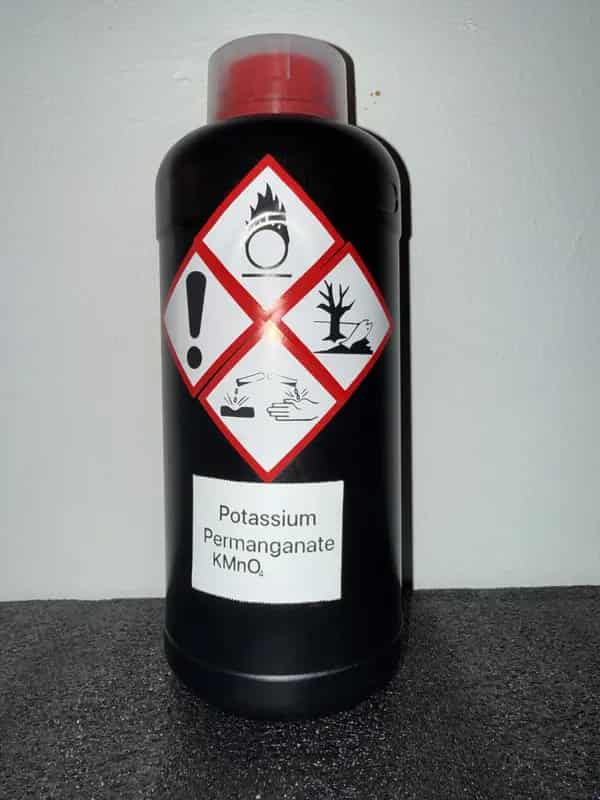
Hazard Level & Hazards:
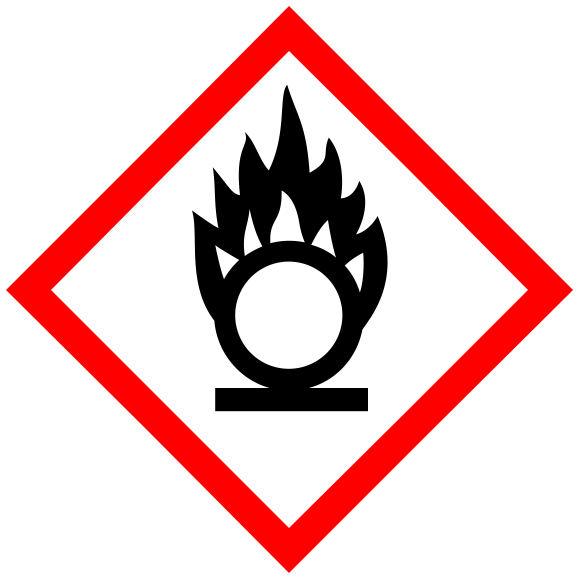
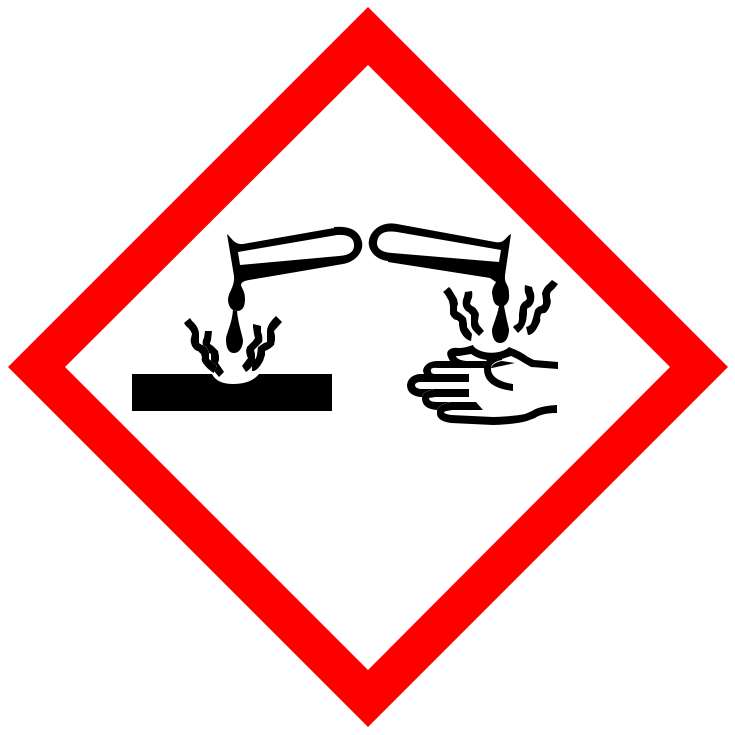
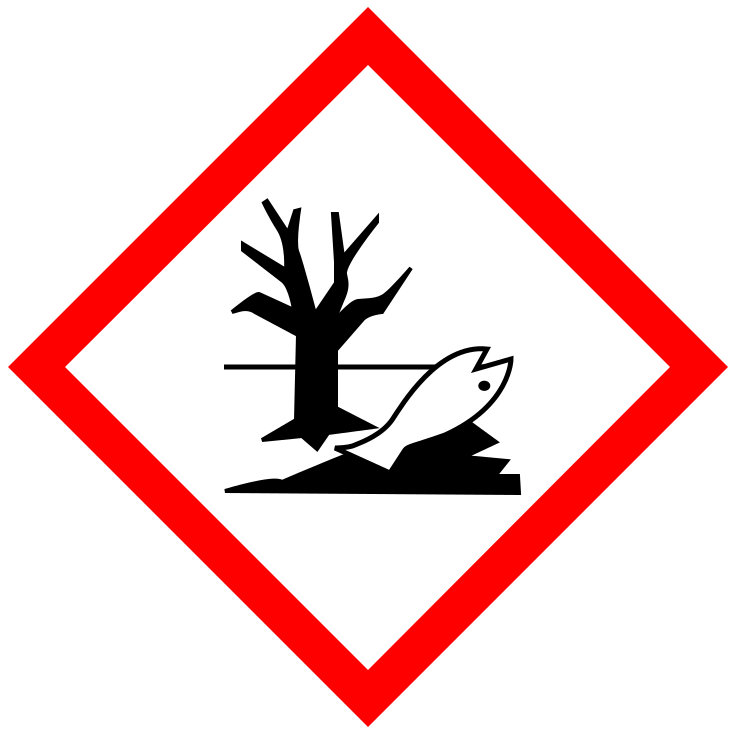
When we create or update chemical disposal entries, our H-code hazard list is generous. We list hazards that may be just below regular cutoffs and would otherwise normally be unlisted. We do this to provide hobbyists a wider scope of safety risks that may still be relevant, despite normally being omitted. Our GHS icons, however, are congruent with typical legal labeling requirements of the respective chemical.
High
- H272: May intensify fire; oxidizer
- H302: Harmful if swallowed
- H314: Causes severe skin burns and eye damage
- H410: Very toxic to aquatic life with long lasting effects

Disposal Method
Do not pour untreated potassium permanganate down any drains. If you have a small amount of diluted solution (like from a foot soak or aquarium treatment), the goal is to reduce it. When potassium permanganate reacts, it turns from purple/pink to a brown, muddy color (manganese dioxide) (MnO₂), which is much more stable.Small Dilute Solutions
Dilute: Make sure the solution is already dilute.
Add a Reducing Agent: Slowly add small amounts of hydrogen peroxide (H₂O₂) or sodium thiosulfate
The solution will fizz and turn from purple to clear or brown.
Once it’s no longer purple, the liquid is generally safe to flush with plenty of running water.
Any brown sludge (MnO₂) can be dried and disposed of in regular household trash in small amounts.
Neutralizing Agent
Hydrogen Peroxide, Sodium Thiosulfate
Storage Precautions
Containers should be kept tightly closed to prevent moisture absorption, which can cause clumping. Keep in original container. If transfer is necessary, transfer to a HDPE container. Store in a cool, dry, and ventilated place. Store away from incompatible materials such as combustible materials, oils, acids, and peroxides to avoid fire risk.
Ideal Storage Container
HDPE. Review our chemical storage container guide for more information about container types and materials.
Other Names
Permanganate of Potash, Condy’s Crystals, Purple Crystals, Cairoina
Additional Tips
- In a burette, we are taught to read the bottom of the meniscus. However, potassium permanganate is such a dark color that the bottom is very hard to see. Always read the upper meniscus for KMnO₄. Make sure you are consistent. If you start your measurement at the top line, end it at the top line.
- Permanganate eats organic matter quickly. Never use rubber stoppers or rubber-tubing connectors with concentrated solutions. They will degrade and contaminate your sample with brown sludge (MnO₂). Use ground glass joints or PTFE (Teflon) stopcocks. Avoid using standard vacuum grease. The KMnO₄ will oxidize it and cause the joints to seize.
- KMnO₄ is not a primary standard. Even if you weigh it perfectly, it reacts with trace organic impurities in your distilled water. After mixing a stock solution, let it sit for 24–48 hours. Then filter out any brown precipitate (MnO₂) through glass wool or a sintered glass funnel. Re-standardize your solution every few weeks since it slowly decomposes over time.
- Aquarists use KMnO₄ to burn organic load. The color of the water is your best sensor. If the water turns from pink to yellow/brown in less than 4 hours, your organic load was too high, and the chemical was exhausted before it could kill the parasites. You may need a second treatment after a 50% water change.
- If you see fish gasping or looking stressed during a treatment, you need an instant off button. Keep a bottle of Sodium Thiosulfate (tap water dechlorinator) or 3% Hydrogen Peroxide (H₂O₂) ready. Adding these will neutralize the permanganate instantly, turning the water clear/brown and stopping the oxidation of the fish’s gills.
- Permanganate doesn’t stain like a dye. It deposits a layer of Manganese Dioxide on surfaces. Soap won’t help. To remove brown stains from skin, glassware, or white clothing, use a reducing acid. For glass, a mix of dilute Hydrochloric Acid and Hydrogen Peroxide will make the brown vanish in seconds. For Skin/Clothes: A concentrated solution of Vitamin C (Ascorbic Acid) or Lemon Juice works wonders without the harshness of lab acids.
Incompatible Chemicals/Dangerous Combinations
- Glycerin (Antifreeze) Spontaneous Combustion – Delayed fire reaction. Mixing the two creates a flame after a few seconds of sizzling.
- Concentrated Acids Explosive – Mixing with sulfuric acid creates manganese heptoxide (Mn₂O₇), an oily green liquid that explodes on contact with organic matter
- Alcohols/Ethanol Fire/Explosion – Oxidation of the alcohol can lead to a violent flare or a pressure-build-up explosion in closed containers.
- Hydrogen Peroxide Violent Fizzing – While used for neutralization in dilute forms, mixing concentrated amounts releases heat and oxygen gas quickly.
- Sulfur / Phosphorus Friction Sensitive – Mixing solid crystals with powdered sulfur or phosphorus creates a flash powder that can ignite from a spark or impact.
- Formaldehyde Toxic Smoke – Often used in industrial bombing to disinfect rooms. It creates a boiling cloud of disinfectant gas and heat.
- Powdered Metals Flash Fire – Mixing with aluminum or magnesium powder creates a highly reactive mixture that burns at high temperatures.
- Sugar / Corn Syrup Slow Ignition – Like glycerin, these organic carbohydrates act as fuel. Under the right conditions, can smolder and eventually catch fire