Always consult a manufacturer SDS. Read our Full Liability Disclaimer
[NH₄]₂S₂O₃
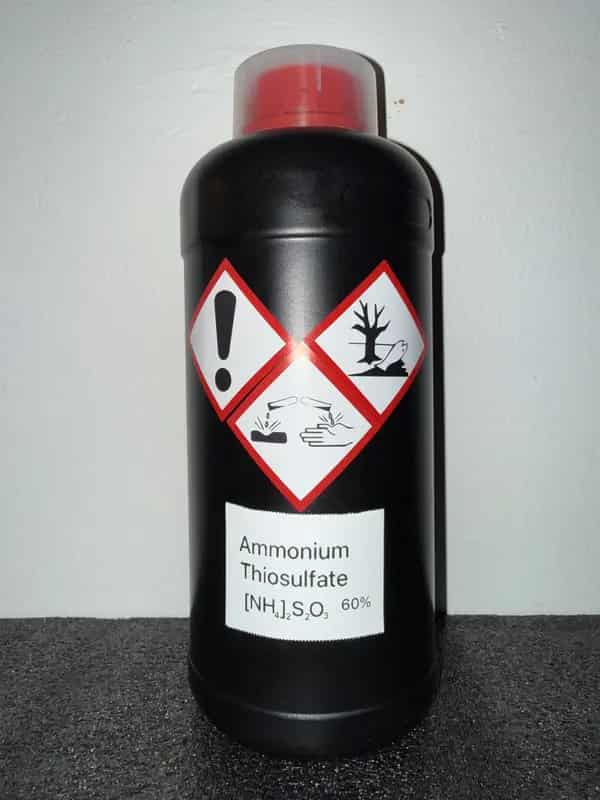
Hazard Level & Hazards:
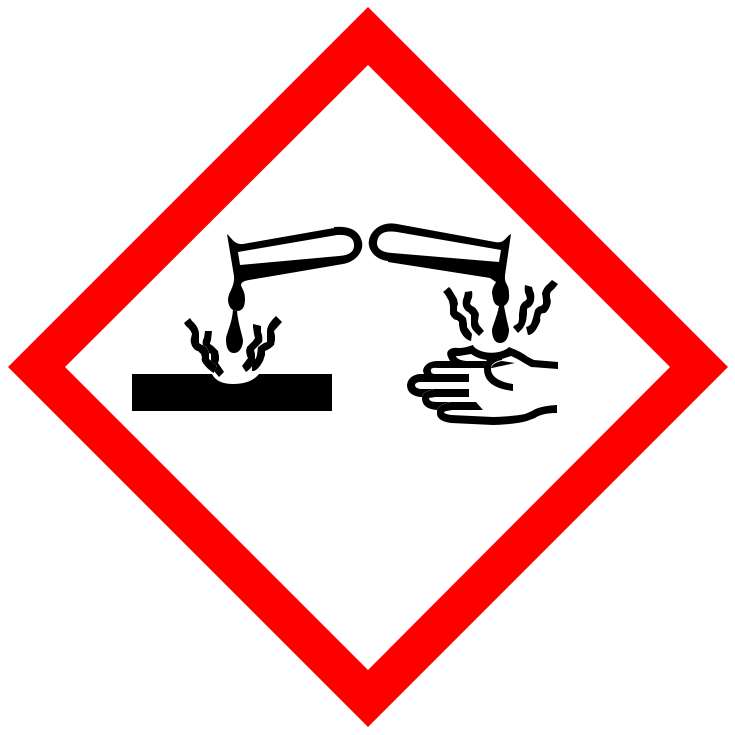
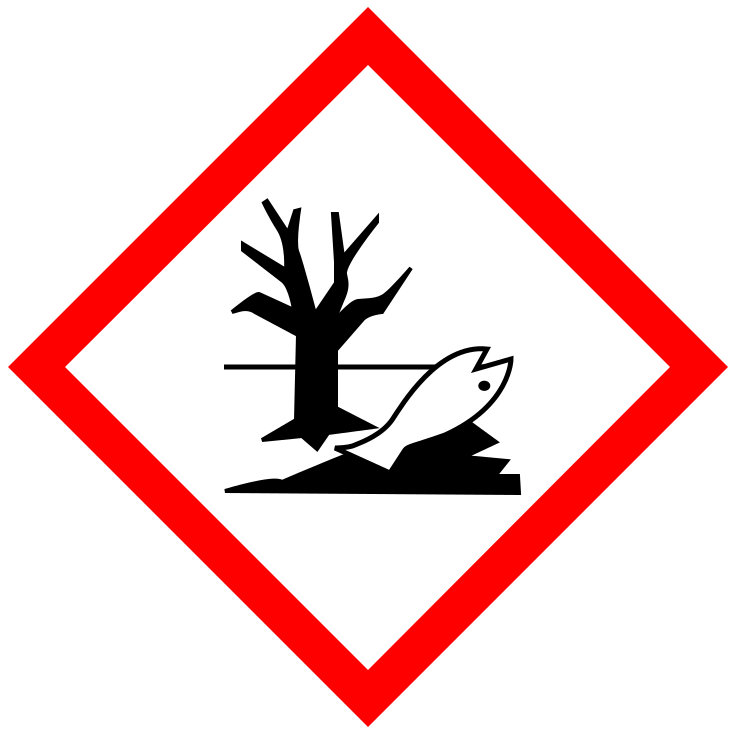
When we create or update chemical disposal entries, our H-code hazard list is generous. We list hazards that may be just below regular cutoffs and would otherwise normally be unlisted. We do this to provide hobbyists a wider scope of safety risks that may still be relevant, despite normally being omitted. Our GHS icons, however, are congruent with typical legal labeling requirements of the respective chemical.
Medium
- H302: Harmful if swallowed
- H314: Causes severe skin burns and eye damage
- H318: Causes serious eye damage
- H335: May cause respiratory irritation
- H400: Very toxic to aquatic life

Disposal Method
Before handling, ensure you are working in a well-ventilated area (near an open window or outdoors) as it can release ammonia fumes. Wear rubber or nitrile gloves and eye protection (goggles).
- Small, Diluted Amounts – Verify with your local regulations. If you are on a municipal city sewer system, you can typically dispose of small amounts down an indoor drain (like a utility sink). Turn on the faucet to a high flow. Slowly pour the solution into the running water to ensure maximum dilution. Flush the drain with at least 100 times the volume of water (e.g., if you pour 1 cup of chemical, run the water for at least 2 minutes). Do NOT pour this down the drain if you have a septic tank. It can disrupt the bacterial balance of the tank and potentially leach into groundwater.
- High Concentrations or Large Volumes –
- For small amounts: Mix the liquid with an inert absorbent like kitty litter, sand, or sawdust in a sturdy plastic container. Once all the liquid is absorbed and the mixture is dry, seal the container tightly. Label the container “Ammonium Thiosulfate – Solidified” and place it in your regular household trash (check local laws first, some states prohibit any chemical disposal in landfills).
- Bring in a sealed and labeled container to your local household hazardous waste (HHW) facility. Review the tips on our HHW page and check your HHW facilities website before your visit.
Neutralizing Agent
N/A. For spills: Ensure ventilation. Absorb the spill with baking soda or kitty litter. Wearing PPE, scoop the material and place it in a plastic bag for disposal at an HHW center.
Storage Precautions
Do not enter storage areas unless adequately ventilated. Store in a dry, cool and well-ventilated place. Store away from oxidizers, combustible materials, and all ignition sources. Store in corrosive resistant container like HDPE with a resistant inner liner.
Ideal Storage Container
HDPE. Review our chemical storage container guide for more information about container types and materials.
Other Names
Ammonium Hyposulfite, Diammonium Thiosulfate, Thiosulfuric Acid, Diammonium Salt, Thio-Sul, ATS
Additional Tips
- Ammonium thiosulfate is prone to a phenomenon called “sulfuring out,” where it decomposes into elemental sulfur (yellow sludge). This happens because the pH drops below 4.5 or the solution is exposed to too much oxygen. To extend the shelf life of a concentrate, gas the bottle. Use a heavy gas like canned air (duster) or argon to displace the oxygen in the headspace of the bottle before sealing it. This can extend the life of a half-full bottle from 3 months to over a year
- A healthy bottle of ammonium thiosulfate should have a faint but distinct ammonia smell. If you open a bottle and it smells like burnt matches or rotten eggs, the sulfur has already begun to precipitate. Using rotten thiosulfate in photography or chemistry can ruin an experiment by introducing unwanted sulfur solids into your reaction. If the smell is sulfur-heavy, discard it.
- Hobbyist photographers often reuse ammonium thiosulfate fixer to save money, but there is a hidden cliff. Once the silver concentration in the fixer reaches about 6–8 grams per liter, the chemical equilibrium shifts. Instead of removing silver halides from the film/paper, it begins to deposit insoluble silver-thiosulfate complexes back into the emulsion. These complexes cannot be washed out with water and will eventually turn your photos yellow or brown over 2–5 years. Use Potassium Iodide crystals to test saturation. Drop a 10% solution of Potassium Iodide into your used fixer; if a permanent cloudy precipitate forms, the fixer is exhausted and must be replaced.
- Solubility is highly temperature dependent. At 20°C, you can dissolve about 150g per 100ml. At 0°C, that drops significantly. Always mix with water warmed to 30°C–40°C. Never exceed 50°C (122°F). Above this temperature, the ammonium ions begin to liberate ammonia gas prematurely, weakening the solution and creating a respiratory hazard.
- It acts as a nitrification inhibitor. When applied to soil, it temporarily slows down the conversion of ammonium to nitrate. This keeps the nitrogen in the soil longer and prevents leaching (where nitrogen washes away in the rain). If you are mixing a custom liquid fertilizer, adding a small amount of thiosulfate can make your other nitrogen components more efficient.
Incompatible Chemicals/Dangerous Combinations
- Bleach (Sodium Hypochlorite) (NaClO) Toxic Gas – Reacts with the ammonium ions to produce chloramine gas. This gas causes immediate respiratory distress, eye irritation, and can lead to fluid in the lungs if inhaled.
- Strong Acids (e.g., Muriatic, Sulfuric) Toxic Gas – Rapidly decomposes the thiosulfate, releasing sulfur dioxide (SO₂) and hydrogen sulfide (H₂S). These gases have a rotten egg smell and are toxic to the nervous and respiratory systems.
- Sodium Chlorate (NaClO₃) Explosion Risk – When mixed and allowed to dry or heated, this combination creates an unstable shock-sensitive mixture that can undergo explosive decomposition.
- Strong Bases / Alkalis (e.g., Lye, Drain Cleaner) Poisonous Fumes – These force the release of ammonia gas from the solution. In high concentrations, ammonia can cause severe chemical burns to the throat, nose, and lungs.
- Aluminum or Magnesium Powder Fire / Explosion – Finely divided metals react vigorously with ammonium thiosulfate. If ignited or heated, they can cause an intense metal fire that is difficult to extinguish
- Copper, Zinc, or Brass Corrosion / Leakage – Not an immediate gas hazard. The chemical is corrosive to these metals. It will eat through metal pipes, storage tanks, or fittings, leading to environmental leaks.