Always consult a manufacturer SDS. Read our Full Liability Disclaimer
Hazard Level & Hazards:
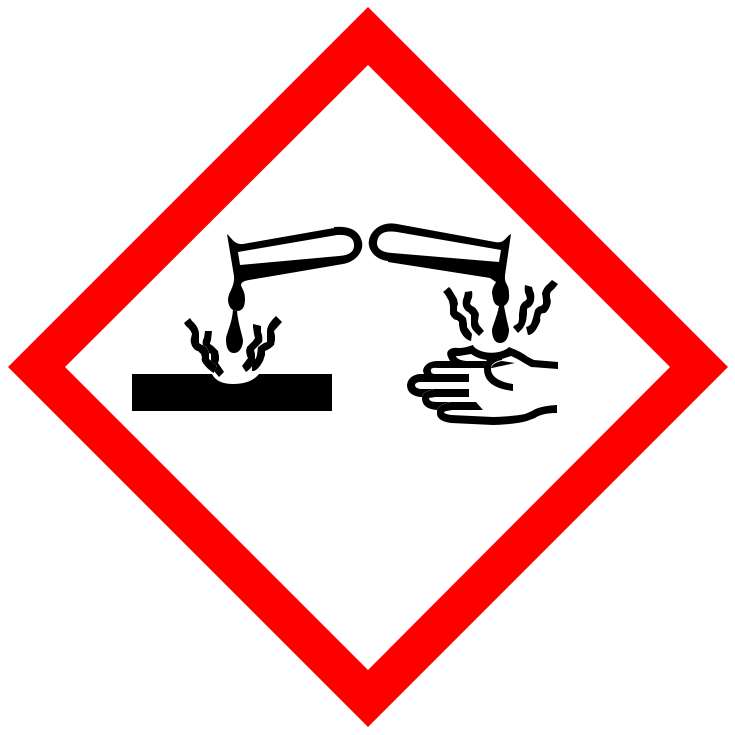
When we create or update chemical disposal entries, our H-code hazard list is generous. We list hazards that may be just below regular cutoffs and would otherwise normally be unlisted. We do this to provide hobbyists a wider scope of safety risks that may still be relevant, despite normally being omitted. Our GHS icons, however, are congruent with typical legal labeling requirements of the respective chemical.
High
- H290: May be corrosive to metals
- H314: Causes severe skin burns and eye damage
- H318: Causes serious eye damage
- H335: May cause respiratory irritation
Disposal Method
Highly Exothermic. Sulfuric acid generates lots of heat when mixed with water or neutralizers.
Always Add Acid to water, never water to acid.
Fill a large bucket with cold water. Slowly, drop by drop, add the acid to the water. If the container gets hot, stop and wait for it to cool.
Once diluted, slowly add Baking Soda. It will fizz (CO₂ release). Continue adding until the fizzing stops and the pH is between 6 and 8.
The resulting solution (Sodium Sulfate) is safe to flush with lots of water in most jurisdictions.
Any rags used to wipe sulfuric acid must be neutralized before being thrown away. They can char and start a fire in the trash.
Neutralizing Agent
Sodium Bicarbonate (Baking Soda) or Sodium Carbonate (Soda Ash)
Storage Precautions
Store in a cool, dry place. Use a PTFE stopper or liner. See more details about PTFE caps below. Keep away from any water sources to prevent accidental splash reactions. Store on a low shelf (never above eye level) in a secondary containment tray (like a heavy-duty plastic bin). Low concentrations can be kept in HDPE for short periods of time.
Ideal Storage Container
Borosilicate Glass. Review our chemical storage container guide for more information about container types and materials.
Other Names
Battery Acid, Oil of Vitriol, Hydrogen Sulfate
Additional Tips
- You can tell if your acid is concentrated (>90%) by slowly putting tiny a drop to a piece of wood or paper. This should only be done by experienced professionals. If it turns black (chars) within seconds, it is concentrated. With proper labeling and lab procedures this issue should not arise.
- Even a drop on the outside of the bottle will attract moisture from the air, making the bottle slimy and corrosive. Always wipe the neck of the bottle with a dry cloth (then neutralize the cloth).
- If buying “Liquid Fire” or other sulfuric drain openers, be aware they often contain buffers and/or dyes. For clean lab work, you may need to distill it.
- Sulfuric acid can cause permanent blindness in seconds. Wear a full-face shield when pouring large amounts.
- If you are in a pinch and don’t have a PTFE liner or stopper for your borosilicate container, you can temporarily use PTFE (Teflon) thread teal tape. It is the white tape commonly used by plumbers. Take a small piece and wrap it 2-3 times around the frosted portion of the glass stoper. Then firmly press the stopper into the neck of the bottle.
Incompatible Chemicals/Dangerous Combinations
- Sugar/Carbohydrates Dehydration / Fire – Will rapidly dehydrate sugar generating heat and steam
- Chlorates/Perchlorates Explosion – Mixing sulfuric acid with potassium chlorate creates Chloric Acid and Chlorine Dioxide gas, which can explode spontaneously
- Nitric Acid Nitration – Forms the nitronium ion. Used to make explosives, It is extremely dangerous for a hobbyist without a chilled, controlled setup
- Water – Splashing / Steam Explosion – Adding water directly to concentrated sulfuric acid causes the water to boil instantly, spraying concentrated acid everywhere
- Metals (Zinc, Iron) Flammable Gas – Reacts to produce Hydrogen gas (H₂). Fire/explosion hazard in enclosed spaces.