When choosing chemical storage containers, compatibility is paramount. The container must be inert to the substance it holds. This means the material that the container is made from must not react with the substance inside. In addition, whether something should be vented or sealed is crucial to preventing degradation or pressure buildup.
Storage Tips
- Always place your container inside a tray, bucket, or bin. In case of a leak, spill-over, or rupture, any leaking chemicals will be confined to the secondary containment
- Never rely on memory to recall what something is. Label with chemical resistant labels and ink. Label should include name, concentration, and date or acquisition
- Some chemicals like concentrated nitric acid or high-strength peroxide can off-gas. These chemicals require vented caps to ensure pressure buildup doesn’t occur.
- Always consult with manufacturer/supplier guidelines to ensure safety
Globally Harmonized System (GHS)
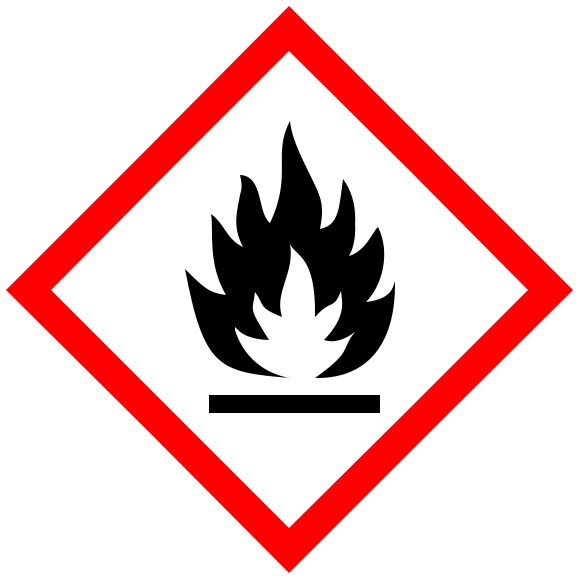
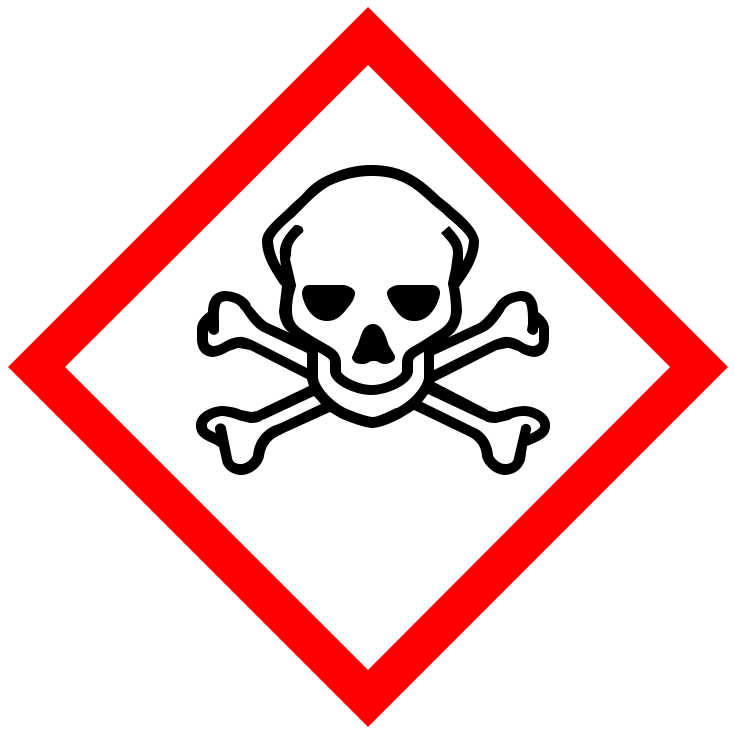
The GHS, or the Globally Harmonized System, has a set of pictograms (icons) like the ones shown below. These icons denote the potential hazards inside a container. You can purchase these for cheap on a site like Amazon. If family members or first responders ever come across the container, they can quickly identify the hazards. We are currently testing chemical-resistant GHS labeling solutions for hobbyists—stay tuned.

Headspace
Substances can expand or contract with temperature changes. Volatile substances can increase pressure inside the container. For these reasons, it’s important to leave 10%-15% of your container empty. Do not fill your containers to the max.
Caps
Like a chain, a container is only as strong as the weakest point. This is usually the cap liner. Your perfect borosilicate bottle means nothing if the cap has a cheap plastic liner. Acid can eat right through and either leak out or seal it shut.
For aggressive solvents or strong acids, a PTFE (see below) liner is essential to prevent the chemical from reacting with the plastic itself or leaking through the threads.
Container Types
Chemical compatibility means the container must not react with the chemical being stored inside. Keeping chemicals in their original container is almost always ideal. Consult with suppliers regarding ideal storage type for your chemical
High-Density Polyethylene (HDPE)
High density polyethylene (HDPE) is the bread-and-butter of labs. It is highly resistant to moisture, impact-resistant, and inert to many common chemicals. Industrially, HDPE from ethylene happens via one of two ways. 1) Ziegler-Natta polymerization or 2) Phillips slurry process. The Ziegler-Natta mechanism uses a combination of catalysts, like titanium tetrachloride, with gaseous ethylene to precipitate HDPE. The Phillips slurry process uses silica-based catalysts with a fast-moving hydrocarbon and polyethylene slurry to precipitate HDPE.
What HDPE works best for
HDPE works best for most dilute acids & bases, some strong acids & bases, oils, inorganic salts, and many aqueous solutions.
What HDPE is NOT good for
You should not store any strong oxidizers, especially at higher temperatures, in HDPE. Halogens should not be stored in HDPE. Some organic solvents like carbon tetrachloride, chloroform, benzene, toluene, xylene, or ketones should not be stored in HDPE.
Things to know
- As temperature increases, HDPE strength and resistance decreases. Keep HDPE containers as cool as possible
- Some HDPE containers are fluorinated for better chemical resistance. Fluorinated HDPE containers can leach PFAS (Per- and Polyflouralkyl Substances) into the contents. PFAS have potential links to several health concerns.
- CP Lab safety provides a thorough resin/plastic compatibility list with many common chemicals.
Borosilicate Glass
When it comes to purity, glass is the pinnacle. Lab-grade borosilicate containers are much more resistant to thermal shock than any other common types of glass. This means they can handle temperature differences that would crack most glass. Borosilicate glass is almost entirely inert. This means there are very few chemicals that would degrade the container.
What borosilicate glass is good for
You can safely keep strong acids, except for HF, in borosilicate glass. Moderate alkalis, bases, salts, and organics can be safely kept in borosilicate glass. Volatile substances can also be kept in borosilicate glass
What borosilicate glass is NOT good for
Above all else, HF should NEVER be kept in borosilicate glass. It actively dissolves the container. Strong, hot alkalis and bases can etch and eventually compromise the container. Hot, concentrated acids can etch and eventually compromise the borosilicate glass. Acidic fluorides and chlorine trifluoride should not be kept in borosilicate glass. Molten salts/metals and sodium hydride should not be kept in these containers.
Things to know
- Brief base washes are fine. Long term storage of concentration bases is problematic.
- Beware that small quantities of heavy metals can leach into solution under acidic conditions.
- Photosensitive chemicals should be kept in amber borosilicate glass to filter out UV and blue light.
Metal Containers
Metal chemical storage containers have a niche but important set of uses. Specific organic solvents and fuels can only be kept in metal containers.
What metal containers are good for
Motor oils, lighter fluids, and turpentine are ideal for metal storage. Large quantities of organic solvents like: Acetone, ethanol, hexanes, methanol, toluene, ethyl acetate, petroleum ether, chloroform, dichloromethane, and diethyl ether. Some strong bases can be kept in steel containers. Solid, nonreactive, inorganic compounds can be kept in metal containers.
What metal containers are NOT good for
Strong acids should never be kept in metal containers. Oxidizers should not be kept in metal containers. Water-reactive substances along with corrosives should not be kept in metal containers.
Things to know
- Beware of any environmental/atmospheric pollutants or chemicals that can react with the metal externally
Polytetrafluoroethylene (PTFE)
PTFE is the last line of defense against aggressive chemicals. PTFE is virtually immune to all chemical attack. PTFE is composed solely of carbon and fluorine atoms. PTFE is produced by free-radical polymerization of tetrafluoroethylene.
What PTFE containers are good for
PTFE containers are often used to store strong acids, bases, most organic solvents, halogens, and for transfer of highly pure lab substances.
What PTFE containers are NOT good for
You should never store alkali metals, elemental fluorine or fluorinating agents, or finely divided metals.
Things to know
- Avoid keeping a PTFE container in high temperatures. PTFE begins to break down around 260°C, 500°F.
- Adding oils/grease to PTFE prevents its inherent self-lubrication and can speed up damage from wear.
PTFE Lined Lids (Stoppers, Liners, etc)
Certain chemicals like Silver Nitrate should be stored in borosilicate glass bottles but with a PTFE lined lid.
This is a combination of lab equipment that many people do not have. There are many options to address the concerns in the short term and in the long term.
PTFE Stoppers & Liners
You can find the taper size etched into the neck of the bottle. With the taper size, you can find an appropriate stopper or liner online for long term storage of the Silver Nitrate. Liners act as a barrier between the glass stopper and the neck of the bottle. Stoppers of course replace the glass stopper entirely. They can be lined with PTFE or made entirely of PTFE.
Short-Term Solutions
While you wait for an appropriate liner or stopper to come in there are alternative temporary options
- PTFE (Teflon) Thread Seal Tape – This is the white tape often used in plumbing. You can take a small piece of the tape and wrap it around the frosted part of your glass stopper 2-3 times. Firmly press the stopper into the neck of the bottle and this will prevent the stopper from locking the bottle shut.
- Teflon Film – Take a small roll of 0.05mm or 0.1mm thick PTFE film and cut a square of the film 2 or 3 times larger than the opening of the bottle. Lay it flat over the mouth of the bottle then press the glass stopper into it.