Always consult a manufacturer SDS. Read our Full Liability Disclaimer
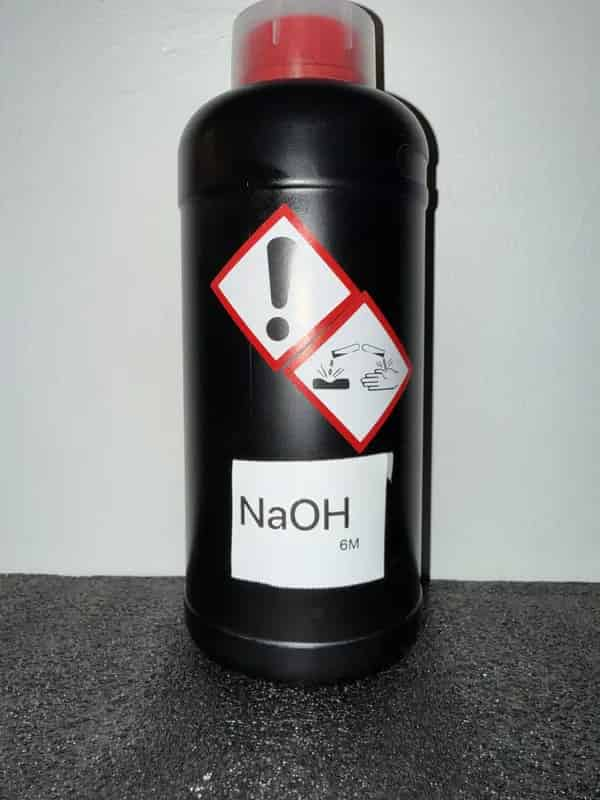
Hazard Level & Hazards:
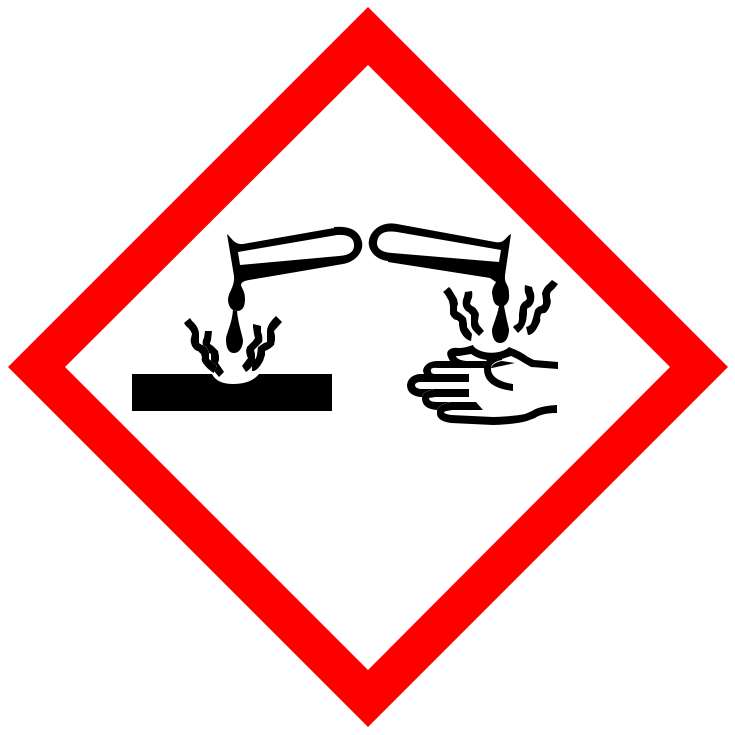
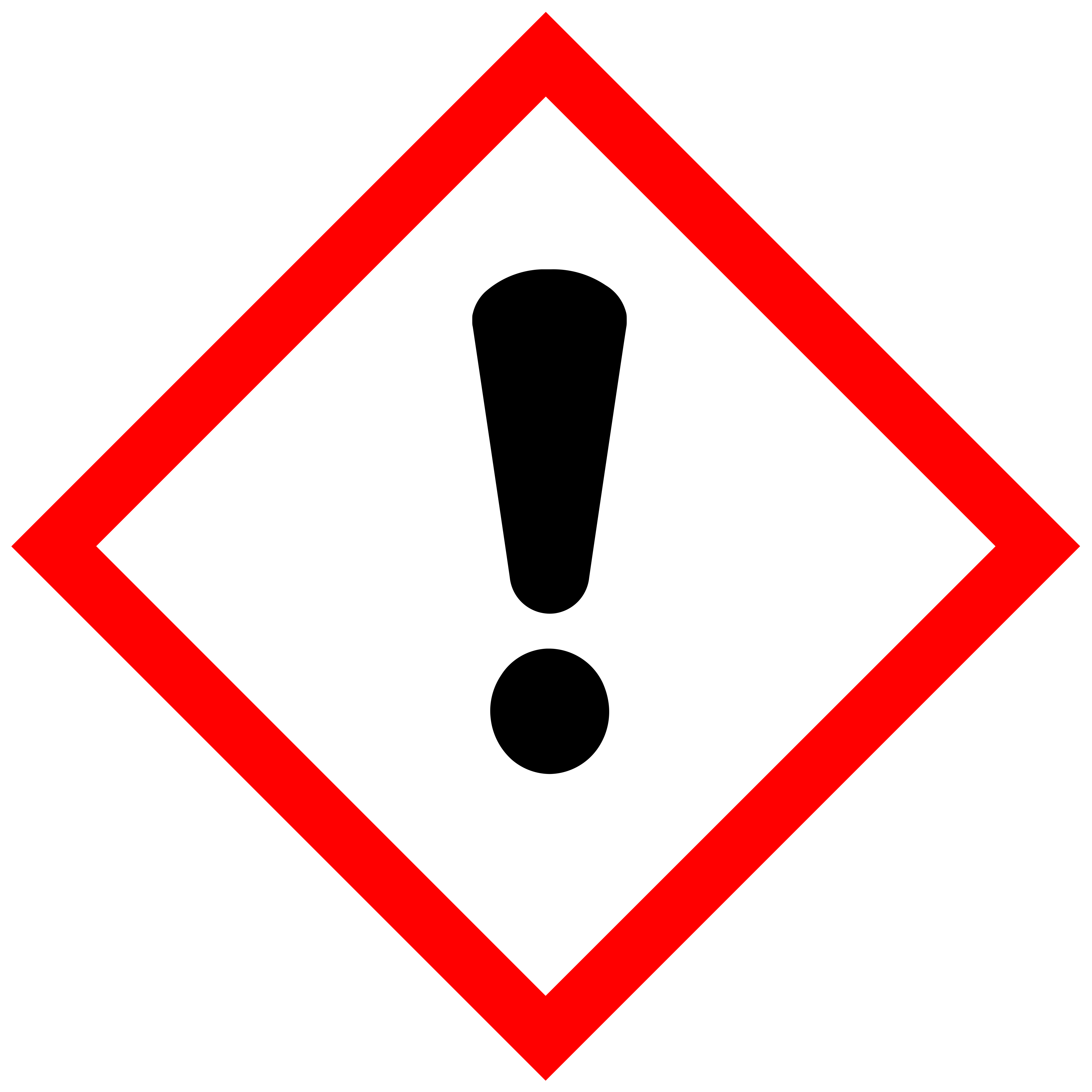
When we create or update chemical disposal entries, our H-code hazard list is generous. We list hazards that may be just below regular cutoffs and would otherwise normally be unlisted. We do this to provide hobbyists a wider scope of safety risks that may still be relevant, despite normally being omitted. Our GHS icons, however, are congruent with typical legal labeling requirements of the respective chemical.
High
- H290: May be corrosive to metals
- H314: Causes severe skin burns and eye damage
- H318: Causes serious eye damage
- H402: Harmful to aquatic life
Aluminum Warning:
Sodium Hydroxide, also known as “Lye,” is extremely reactive to aluminum. Keep away from any aluminum and do not put in any aluminum or metal containers.
Disposal Method
Dispose in accordance with local regulations.
- Small amounts can be neutralized by slowly adding it to a large amount of a weak acid like vinegar or dilute citric acid until a pH of 7 is reached. Small amounts of dilute NaOH solutions can be poured down the drain if the solution itself is cool and there is cold water running before during and after. This is not recommended for septic systems. If you are unsure the strength, dilute with 20 parts of water for every part NaOH before pouring. Never pour any concentration of NaOH that is warm down a drain.
- Large quantities, contaminated solutions, or high concentrations should be taken to a household hazardous waste (HHW) facility. Label clearly as “Corrosive base: Sodium Hydroxide.” The solution should be in its original container with original labeling. If the original container isn’t available, it should be in a HDPE container. Keep the solution as cool as possible during transport and follow instructions on our HHW facility page for transport.
Neutralizing Agent
Acetic Acid (Vinegar), Citric Acid
Storage Precautions
Keep in an airtight HDPE container. Store in a cool, dry place away from any metals or acids. Employ secondary containment
Ideal Storage Container
HDPE. Review our chemical storage container guide for more information about container types and materials.
Other Names
Lye, Caustic Soda, White Caustic, Sodium Hydrate
Additional Tips
- The Glass-Lock Storage Trap: Never store concentrated NaOH solutions in glass bottles with ground-glass stoppers. The hydroxide slowly reacts with the silica in the glass to form sodium silicate (a “liquid glass” glue). Over time, this effectively welds the stopper to the bottle. Use high-density polyethylene (HDPE) or polypropylene (PP) containers with plastic screw caps.
- The Crush and Heat Dissolution Hazard: When dissolving solid NaOH pellets, the heat of solution is high. If you add water to a pile of pellets, the bottom layer can flash-boil the water, causing a caustic volcano that sprays concentrated lye. Always add the dry pellets slowly to lukewarm water while stirring, never the other way around.
- The Carbon Monoxide Stealth Risk: When concentrated NaOH solutions come into contact with sugars (like corn syrup, honey, or even certain beverage residues) in a closed or poorly ventilated space, the reaction can unexpectedly generate Carbon Monoxide (CO) gas. If you are using lye to clean a container that once held food or biological sugars, ensure there is active ventilation.
Incompatible Chemicals / Dangerous Combinations
- Amphoteric Metals (Al, Zn, Sn) Explosive Gas – NaOH reacts vigorously with Aluminum, Zinc, and Tin to produce Hydrogen gas (H₂). In a closed container, this will cause a pressure explosion
- Chlorinated Solvents (DCM, Chloroform) Explosion/Toxic Gas – Mixing lye with solvents like Dichloromethane or Chloroform can trigger a violent decomposition or form highly unstable, explosive chloroacetylenes.
- Concentrated Acids (H₂SO₄, HCl) Violent Spattering – This is a massively exothermic neutralization. Without slow, controlled addition and cooling, the mixture will boil instantly and spray hot corrosive liquid
- Nitro-Compounds (Nitromethane) Explosive Salts – Contact with nitromethane or other nitro-organics can form shock-sensitive, explosive nitronate salts.
- Ammonium Salts (NH₄Cl, etc.) Toxic Gas – Reacts to release large volumes of Ammonia gas (NH₃), which is a severe respiratory irritant and can be overwhelming in a hobby lab.
- Magnesium & Alkaline Earths High Heat – While less reactive than aluminum, NaOH can still react with Magnesium at high temperatures or in fine powder form, releasing hydrogen
Resources